L'Eremita
The Hermit
Introspezione, Guida
Risposta rapida
Il significato principale di L'Eremita è Cercare la verità nella solitudine. Al dritto, solitamente indica Introspezione, solitudine, ricerca della verità, guida. Simboleggia un ritiro te; rovesciata, potrebbe suggerire Isolamento, solitudine, rifiuto dei consigli, sensazione di smarrimento. Può ind.
Immagini della carta
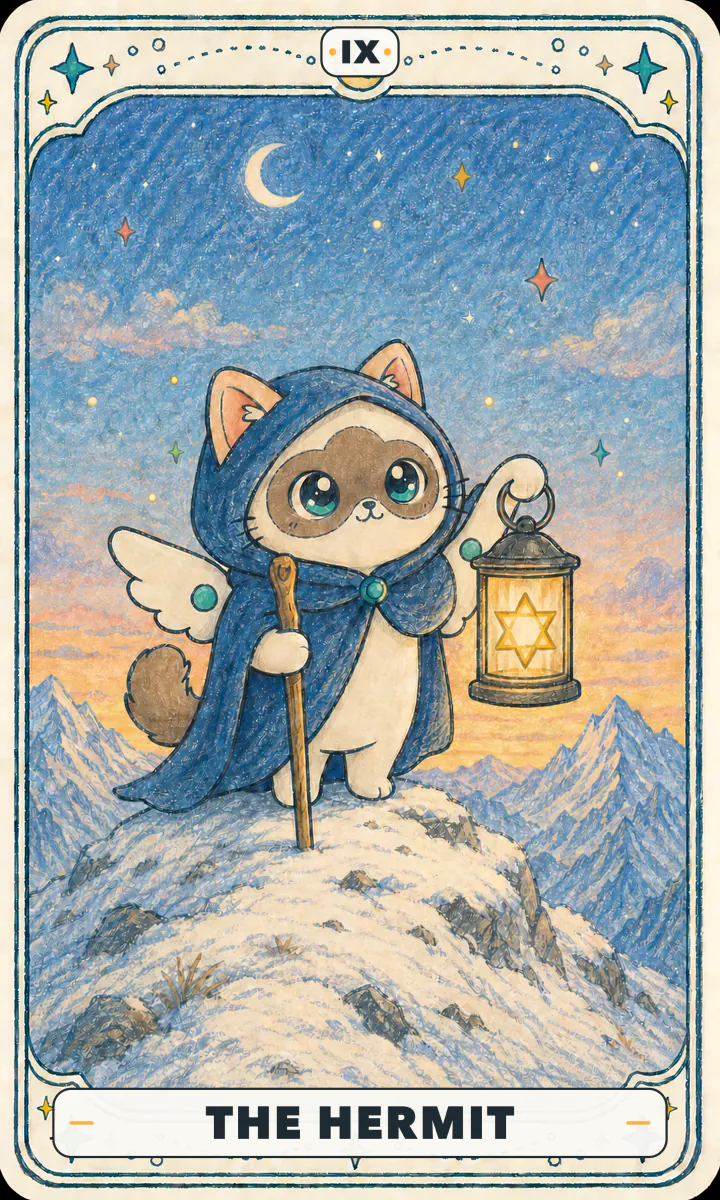
Un vecchio con un mantello grigio si trova su una cima di montagna coperta di neve. Si appoggia con la mano sinistra a un bastone e con la destra solleva una lanterna, all'interno della quale brilla una luminosa stella a sei punte.
Significato al dritto
Introspezione, solitudine, ricerca della verità, guida. Simboleggia un ritiro temporaneo nel mondo interiore per cercare risposte e sola luce spirituale.
Significato rovesciato
Isolamento, solitudine, rifiuto dei consigli, sensazione di smarrimento. Può indicare un ritiro eccessivo o un'ostinata ignoranza dell'aiuto del mondo esterno.
Amore, carriera, denaro e crescita
Amore
In amore, L'Eremita indica Cercare la verità nella solitudine. Rileggilo confrontandolo con il modo in cui si comporta effettivamente la relazione e con ciò che scegliete entrambi.
Carriera
In materia di carriera, L'Eremita indica Cercare la verità nella solitudine. Inizia individuando quali risorse controlli e quale sarà la tua prossima mossa.
Soldi
In materia di soldi, L'Eremita indica Cercare la verità nella solitudine. Non considerare una lettura simbolica come una conclusione di investimento: segui i fatti, il budget e la tua tolleranza al rischio.
Crescita personale
Per la crescita personale, L'Eremita indica Cercare la verità nella solitudine. Annota la domanda che solleva, quindi trasformala in un'azione che puoi effettivamente verificare.
Cosa prova l'altra persona
Quando L'Eremita indica cosa prova l'altra persona, il tema del suo atteggiamento verso di te è: Cercare la verità nella solitudine. Al dritto il sentimento è rivolto all'esterno e si vede; rovesciata, per ora resta dentro di lei. Non prenderla come una sentenza: verificala con il modo in cui si comporta davvero.
Sì o no
Al dritto
Forse
Rovesciata
No
Questa è la nostra lettura veloce, basata sulla direzione in cui tende il significato della carta. Le tradizioni non sono d'accordo sulle singole carte, e un "Forse" deve essere valutato rispetto alla posizione nello spread e alla situazione reale piuttosto che essere preso come una risposta di una sola parola.
Testo originale di Waite (1911)
Simbolismo interiore (originale)
La variazione rispetto ai modelli convenzionali in questa carta sta solo nel fatto che la lampada non è avvolta in parte nel mantello di chi la porta, il quale unisce l'idea dell'Antico dei Giorni a quella della Luce del Mondo. È una stella quella che brilla nella lanterna. Ho detto che questa è una carta di conquista spirituale, e per ampliare questa concezione la figura è vista mentre leva il suo faro su un'altura. Perciò l'Eremita non è, come spiegava Court de Gébelin, un saggio in cerca di verità e di giustizia; né è, come propone una spiegazione più tarda, un esempio particolare di esperienza. Il suo faro fa intendere che «dove sono io, potete essere anche voi».
È inoltre una carta che si intende in modo del tutto errato quando la si collega all'idea dell'isolamento occulto, come protezione del magnetismo personale da ogni contaminazione. È una delle interpretazioni frivole che dobbiamo a Eliphas Lévi. È stata adottata dall'Ordine Martinista francese, e alcuni di noi hanno sentito parlare a lungo della Filosofia Silenziosa e Sconosciuta, avvolta nel suo mantello e sottratta alla conoscenza dei profani. Nel vero martinismo, il senso dell'espressione Philosophe inconnu era di un altro ordine. Non si riferiva al proposito di celare i Misteri Istituiti, e tanto meno i loro surrogati, ma — come la carta stessa — alla verità che i Misteri Divini si proteggono da sé da coloro che non sono preparati.
Significato originale al dritto
Prudenza, circospezione; anche, e soprattutto, tradimento, dissimulazione, furfanteria, corruzione.
Significato originale invertito
Occultamento, travestimento, calcolo, paura, cautela irragionevole.
Citato da A. E. Waite, The Pictorial Key to the Tarot (1911), illustrato da Pamela Colman Smith. Il testo è di pubblico dominio.
Origini del mito e dei simboli
Ciò che reggeva in origine era una clessidra, l'attributo del Tempo. La lanterna è venuta dopo.
Iconografia documentata
Attestata da oggetti o testi giunti fino a noi
Prima che la clessidra diventasse una lanterna, era il Tempo
Nei primi mazzi italiani questa carta si chiama Il Vecchio, e compare anche come Il Gobbo. Nello schema più antico ciò che il vecchio solleva è una clessidra, il contrassegno fisso del Tempo (Il Tempo), e la personificazione classica del Tempo è proprio Saturno con la falce e la clessidra (il Crono greco). Solo quando la clessidra divenne una lanterna il peso della carta si spostò dal tempo che passa all'illuminare la strada e al cercare.
Fonte Il nome italiano antico Il Vecchio; lo schema classico e medievale del Tempo con la clessidra
Corrispondenza esoterica
Una tesi tradizionale con fonti, ma costruita dentro un sistema occulto
Nella lanterna c'è una stella, e due titoli fusi in una sola figura
Waite scrive che nella lanterna c'è «una stella che brilla nella lanterna», e che la figura «fonde l'idea dell'Antico dei Giorni con la Luce del Mondo». La prima viene da Daniele 7,9; la seconda è un titolo di Cristo. Dice anche che l'Eremita tiene la lanterna in alto, a significare «dove sono io, puoi essere anche tu»: l'opposto di un recluso che se ne sta per conto suo.
Fonte Daniele 7,9; Waite, The Pictorial Key to the Tarot, 1911, L'Eremita
Due letture più antiche, cancellate seduta stante dall'autore
In questa voce Waite nomina e respinge due uomini. Il primo è Court de Gébelin, colui che nel 1781 lanciò la teoria dell'origine egizia, che chiamava l'Eremita un saggio in cerca di verità e giustizia; Waite dice che non lo è. Il secondo è la tesi di Lévi sull'isolamento occulto, sul preservare il proprio magnetismo personale dalla mescolanza con quello altrui; Waite la definisce «una delle interpretazioni frivole che dobbiamo a Eliphas Lévi». Entrambe queste letture respinte circolano ancora oggi ampiamente nel materiale di seconda mano.
Fonte Waite, The Pictorial Key to the Tarot, 1911, L'Eremita (confronta l'originale nel pannello delle fonti di questa pagina)
La Vergine e la lettera Yod
La Golden Dawn associa l'Eremita alla Vergine (lettera ebraica Yod). Yod è la più piccola delle lettere ebraiche, a forma di un singolo punto, e viene spesso descritta come il tratto da cui ogni altra cosa ha inizio. Da qui viene il registro della selezione, della raffinatezza, delle piccole cose che hanno peso.
Fonte Attribuzioni zodiacali nel Book T della Golden Dawn
Scritto da BESTAROT, non citato da fonti storiche. Ogni affermazione è contrassegnata da quanto bene è dimostrata; gli strati interpretativi moderni sono utili per la lettura, ma non costituiscono l’origine storica della carta.
Studia il tema: Mito e origini dei simboli (Accademia capitolo 6)