Forza
Strength
Coraggio, pazienza
Risposta rapida
Il significato principale di Forza è Resilienza delicata sulla forza bruta. Al dritto, solitamente indica Coraggio, pazienza, compassione, gentilezza che supera la forza. Simboleggia il; rovesciata, potrebbe suggerire Insicurezza, debolezza, istinti selvaggi, impazienza. Può indicare di essere sop.
Immagini della carta
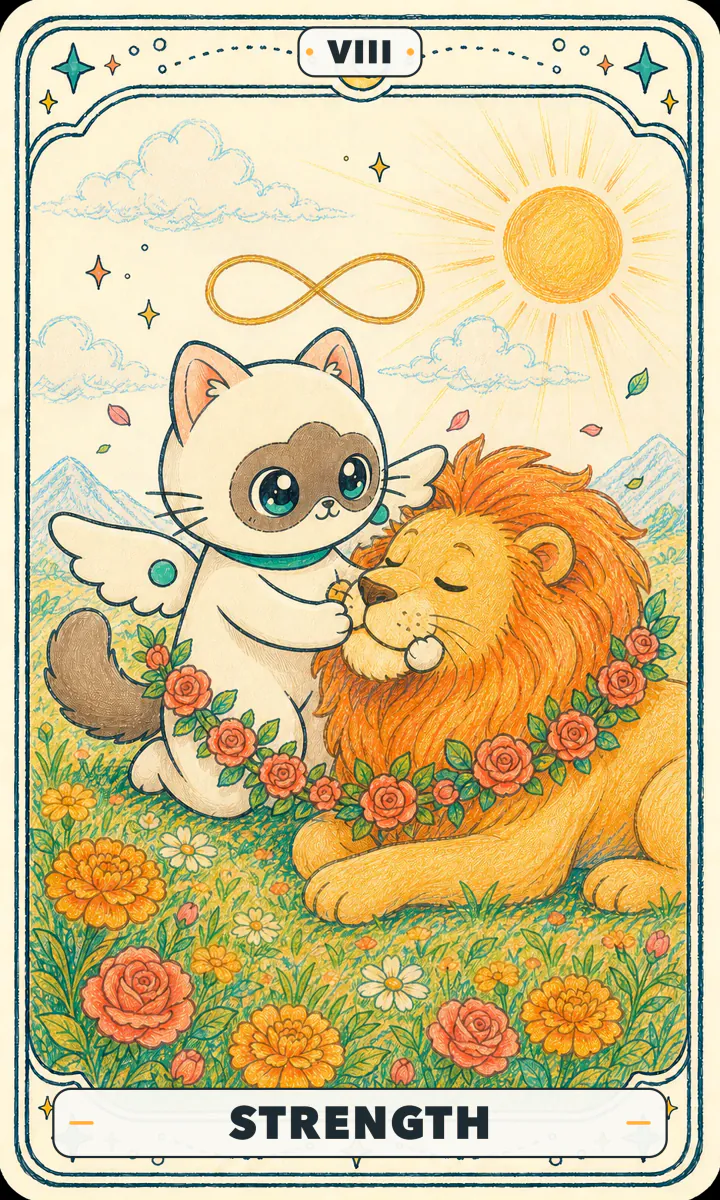
Una donna vestita di bianco accarezza delicatamente la testa di un leone e gli chiude dolcemente le mascelle. Il simbolo dell'infinito fluttua sopra la sua testa e una ghirlanda di fiori le circonda la vita.
Significato al dritto
Coraggio, pazienza, compassione, gentilezza che supera la forza. Simboleggia il domare i desideri e gli istinti crudi attraverso la resilienza interiore e l'amore piuttosto che la forza bruta.
Significato rovesciato
Insicurezza, debolezza, istinti selvaggi, impazienza. Può indicare di essere sopraffatti dalla paura o di gestire le questioni con mano troppo pesante o troppo timida.
Amore, carriera, denaro e crescita
Amore
In amore, Forza indica Resilienza delicata sulla forza bruta. Rileggilo confrontandolo con il modo in cui si comporta effettivamente la relazione e con ciò che scegliete entrambi.
Carriera
In materia di carriera, Forza indica Resilienza delicata sulla forza bruta. Inizia individuando quali risorse controlli e quale sarà la tua prossima mossa.
Soldi
In materia di soldi, Forza indica Resilienza delicata sulla forza bruta. Non considerare una lettura simbolica come una conclusione di investimento: segui i fatti, il budget e la tua tolleranza al rischio.
Crescita personale
Per la crescita personale, Forza indica Resilienza delicata sulla forza bruta. Annota la domanda che solleva, quindi trasformala in un'azione che puoi effettivamente verificare.
Cosa prova l'altra persona
Quando Forza indica cosa prova l'altra persona, il tema del suo atteggiamento verso di te è: Resilienza delicata sulla forza bruta. Al dritto il sentimento è rivolto all'esterno e si vede; rovesciata, per ora resta dentro di lei. Non prenderla come una sentenza: verificala con il modo in cui si comporta davvero.
Sì o no
Al dritto
Sì
Rovesciata
No
Questa è la nostra lettura veloce, basata sulla direzione in cui tende il significato della carta. Le tradizioni non sono d'accordo sulle singole carte, e un "Forse" deve essere valutato rispetto alla posizione nello spread e alla situazione reale piuttosto che essere preso come una risposta di una sola parola.
Testo originale di Waite (1911)
Simbolismo interiore (originale)
Una donna, sul cui capo aleggia lo stesso simbolo della vita che abbiamo visto nella carta dello Ierofante, sta chiudendo le fauci di un leone. L'unico punto in cui questo disegno differisce dalle rappresentazioni convenzionali è che la sua benefica fortezza ha già domato il leone, che viene condotto con una catena di fiori. Per ragioni che soddisfano me, questa carta è stata scambiata con quella della Giustizia, che di solito porta il numero otto. Poiché la variazione non comporta nulla che possa avere significato per il lettore, non c'è motivo di spiegarla. La Fortezza, in uno dei suoi aspetti più elevati, è legata al Mistero Divino dell'Unione; la virtù, naturalmente, opera su tutti i piani, e perciò attinge a tutti nel suo simbolismo. Si collega anche all'innocentia inviolata e alla forza che risiede nella contemplazione.
Questi significati più alti sono però frutto di deduzione, e non intendo dire che siano trasparenti sulla superficie della carta. Vi sono accennati in modo velato dalla catena di fiori, che significa, tra molte altre cose, il giogo soave e il carico leggero della Legge Divina, quando è stata accolta nel più profondo del cuore. La carta non ha nulla a che vedere con la fiducia in sé nel senso comune, benché questo sia stato suggerito — ma riguarda la fiducia di coloro la cui forza è Dio (Natura), che hanno trovato rifugio in Lui. C'è un aspetto per cui il leone significa le passioni, e colei che è chiamata Forza è la natura superiore nella sua liberazione. Essa ha camminato sull'aspide e sul basilisco e ha calpestato il leone e il drago.
Significato originale al dritto
Potere, energia, azione, coraggio, magnanimità; anche successo completo e onori.
Significato originale invertito
Dispotismo, abuso di potere, debolezza, discordia, talvolta perfino disonore.
Citato da A. E. Waite, The Pictorial Key to the Tarot (1911), illustrato da Pamela Colman Smith. Il testo è di pubblico dominio.
Origini del mito e dei simboli
Il suo titolo completo sulla carta è «Forza, o Fortezza», il nome di una delle virtù cardinali. E lo scambio fra l'otto e l'undici l'ha messo per iscritto Waite stesso.
Iconografia documentata
Attestata da oggetti o testi giunti fino a noi
Nacque come la virtù della Fortezza
Waite intitola questa carta «FORZA, O FORTEZZA». La Fortitudo è una delle quattro virtù cardinali classiche (le altre tre sono Prudenza, Giustizia e Temperanza), e Giustizia e Temperanza hanno ciascuna un proprio trionfo, quindi tre virtù cardinali erano in questo mazzo fin dall'inizio. Le personificazioni medievali della Fortezza avevano due forme fisse: spezzare una colonna di pietra, oppure domare un leone a mani nude. I tarocchi presero la seconda.
Fonte Le quattro virtù cardinali classiche; i due schemi medievali della virtù personificata; il titolo della carta è in Waite 1911
Il leone a mani nude sta a monte di Eracle
Il motivo del leone domato a mani nude ebbe il suo veicolo classico più famoso in Eracle e il leone di Nemea, dopo di che divenne il vocabolario visivo generale della forza e fu ripreso dalle immagini medievali delle virtù. L'ordine di discendenza è ciò su cui essere chiari: ciò che i tarocchi ereditano direttamente è la virtù personificata. Eracle è la fonte più a monte del motivo, non l'identità della donna sulla carta.
Fonte Il motivo classico di Eracle e il leone di Nemea e il suo riuso nelle immagini medievali delle virtù
Corrispondenza esoterica
Una tesi tradizionale con fonti, ma costruita dentro un sistema occulto
Otto e undici scambiati: le parole dell'autore sono «ragioni che soddisfano me»
Nella tradizione marsigliese la Giustizia è l'otto e la Forza l'undici. Waite scambiò le due, scrivendo nel libro: «per ragioni che soddisfano me, questa carta è stata scambiata con quella della Giustizia, che di solito porta il numero otto», e aggiungendo che il cambiamento «non comporta nulla che abbia significato per il lettore», per cui «non c'è motivo di dare spiegazioni». La vera ragione sta nelle attribuzioni zodiacali della Golden Dawn: la Forza deve prendere il Leone (lettera ebraica Teth) e la Giustizia la Bilancia, e nell'ordine zodiacale il Leone viene prima della Bilancia. Non è dunque un capriccio: è una rinumerazione per far seguire alla sequenza lo zodiaco.
Fonte Waite, The Pictorial Key to the Tarot, 1911, La Forza; attribuzioni zodiacali nel Book T della Golden Dawn
Lettura moderna
Diffusa solo dal Novecento; estranea alle origini della carta
«Domare la bestia interiore» è ciò che la carta è diventata dopo la psicologia
La lettura standard di oggi è «forza interiore», «domare l'animale che è in te». Il testo di Waite non arriva lì: dice che la carta «non ha nulla a che fare con la fiducia in sé nel senso ordinario», e che la ghirlanda rappresenta il giogo della legge divina che è soave e il cui peso è leggero. La lettura psicologizzata è utile, ma sostituisce un'immagine che parla di virtù e di legge con un'immagine che parla di autogestione.
Fonte Lettura moderna divulgativa; Waite 1911 respinge la lettura della «fiducia in sé» in questa stessa voce
Scritto da BESTAROT, non citato da fonti storiche. Ogni affermazione è contrassegnata da quanto bene è dimostrata; gli strati interpretativi moderni sono utili per la lettura, ma non costituiscono l’origine storica della carta.
Studia il tema: Mito e origini dei simboli (Accademia capitolo 6)