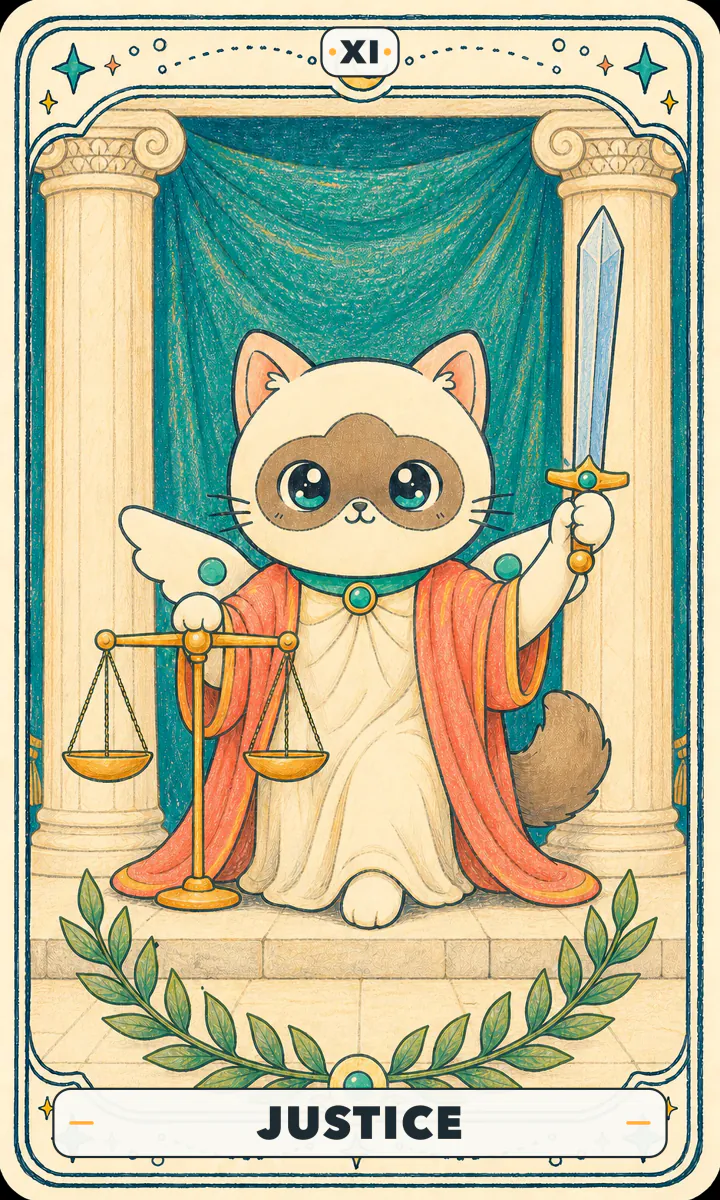
Giustizia
Justice
Correttezza, Verità
Risposta rapida
Il significato principale di Giustizia è L’equilibrio oggettivo di causa ed effetto. Al dritto, solitamente indica Giustizia, verità, causa ed effetto, la legge. Simboleggia la valutazione oggett; rovesciata, potrebbe suggerire Ingiustizia, parzialità, elusione delle responsabilità, controversie legali. Può.
Immagini della carta
Una donna severa siede tra due pilastri di pietra davanti a un velo viola. La sua mano destra solleva una spada (ragione) mentre la sinistra tiene una bilancia (bilancia). Un piede esposto simboleggia l'azione.
Significato al dritto
Giustizia, verità, causa ed effetto, la legge. Simboleggia la valutazione oggettiva e le decisioni basate sui fatti, sottolineando la legge del karma: raccogli ciò che semini.
Significato rovesciato
Ingiustizia, parzialità, elusione delle responsabilità, controversie legali. Può indicare di essere stati trattati ingiustamente o di ingannare se stessi e rifiutarsi di affrontare la verità.
Amore, carriera, denaro e crescita
Amore
In amore, Giustizia indica L’equilibrio oggettivo di causa ed effetto. Rileggilo confrontandolo con il modo in cui si comporta effettivamente la relazione e con ciò che scegliete entrambi.
Carriera
In materia di carriera, Giustizia indica L’equilibrio oggettivo di causa ed effetto. Inizia individuando quali risorse controlli e quale sarà la tua prossima mossa.
Soldi
In materia di soldi, Giustizia indica L’equilibrio oggettivo di causa ed effetto. Non considerare una lettura simbolica come una conclusione di investimento: segui i fatti, il budget e la tua tolleranza al rischio.
Crescita personale
Per la crescita personale, Giustizia indica L’equilibrio oggettivo di causa ed effetto. Annota la domanda che solleva, quindi trasformala in un'azione che puoi effettivamente verificare.
Cosa prova l'altra persona
Quando Giustizia indica cosa prova l'altra persona, il tema del suo atteggiamento verso di te è: L’equilibrio oggettivo di causa ed effetto. Al dritto il sentimento è rivolto all'esterno e si vede; rovesciata, per ora resta dentro di lei. Non prenderla come una sentenza: verificala con il modo in cui si comporta davvero.
Sì o no
Al dritto
Forse
Rovesciata
No
Questa è la nostra lettura veloce, basata sulla direzione in cui tende il significato della carta. Le tradizioni non sono d'accordo sulle singole carte, e un "Forse" deve essere valutato rispetto alla posizione nello spread e alla situazione reale piuttosto che essere preso come una risposta di una sola parola.
Testo originale di Waite (1911)
Simbolismo interiore (originale)
Poiché questa carta segue il simbolismo tradizionale e porta soprattutto i suoi significati evidenti, c'è poco da dire al riguardo oltre alle poche considerazioni raccolte nella prima parte, alle quali si rimanda il lettore.
Si vedrà tuttavia che la figura siede tra due colonne, come la Papessa, e per questo sembra opportuno indicare che il principio morale che rende a ciascuno secondo le sue opere — pur essendo, naturalmente, in stretta analogia con le cose più alte — differisce nella sua essenza dalla giustizia spirituale implicata nell'idea dell'elezione. Quest'ultima appartiene a un ordine misterioso della Provvidenza, in virtù del quale è possibile per certi uomini concepire l'idea di consacrarsi alle cose più alte. Il suo operare è come il soffio dello Spirito che spira dove vuole, e non abbiamo alcun canone di giudizio né alcun fondamento di spiegazione al riguardo. È analogo al possesso dei doni fatati, dei doni alti e dei doni graziosi del poeta: li abbiamo o non li abbiamo, e la loro presenza è un mistero quanto la loro assenza. La legge della Giustizia, tuttavia, non è coinvolta in nessuna delle due alternative. In conclusione, le colonne della Giustizia si aprono su un mondo e le colonne della Papessa su un altro.
Significato originale al dritto
Equità, rettitudine, probità, potere esecutivo; trionfo in giudizio della parte che ha ragione.
Significato originale invertito
La legge in tutte le sue branche, complicazioni legali, bigotteria, parzialità, severità eccessiva.
Citato da A. E. Waite, The Pictorial Key to the Tarot (1911), illustrato da Pamela Colman Smith. Il testo è di pubblico dominio.
Origini del mito e dei simboli
La dea classica della giustizia porta spada e bilancia, ma non è bendata: la benda fu aggiunta secoli dopo.
Iconografia documentata
Attestata da oggetti o testi giunti fino a noi
La Giustizia fra le virtù cardinali, secondo uno schema classico
La Giustizia (Iustitia) è una delle quattro virtù cardinali classiche, e insieme alla Forza (Fortezza) e alla Temperanza ha in questo mazzo un trionfo tutto suo. La personificazione con spada e bilancia è la forma fissa fin da Roma: la bilancia pesa, la spada fa eseguire. Sul versante greco le figure sono due: Temi governa la legge e l'ordine divini, Dike il giusto verdetto fra gli esseri umani; Roma raccolse tutta questa linea in Iustitia.
Fonte Le quattro virtù cardinali classiche; l'iconografia classica e le competenze di Iustitia / Temi / Dike
Non è bendata, e questo conta
La Giustizia che oggi sta davanti ai tribunali di solito è bendata, ma quell'aggiunta si diffuse solo dopo il Cinquecento, e nacque con una punta satirica (il sottinteso era che il giudice non ci vede). La Giustizia dei tarocchi ha gli occhi aperti e guarda dritto chi legge. La carta dunque non parla di rifiutarsi di guardare in nome dell'imparzialità, ma di vedere con chiarezza e poi pesare: i due schemi differiscono per un solo gesto, e i significati finiscono molto lontani.
Fonte La Giustizia bendata è uno sviluppo iconografico successivo al Cinquecento; la Giustizia dei tarocchi non è bendata
Corrispondenza esoterica
Una tesi tradizionale con fonti, ma costruita dentro un sistema occulto
Anche lei siede fra due colonne, ma si aprono altrove
Waite osserva che la figura è «seduta fra colonne, come la Papessa», e ha cura di tracciare il confine: la Giustizia riguarda il principio morale di rendere a ciascuno secondo le sue opere, ed è ciò che «differisce nella sua essenza» dalla giustizia spirituale dell'elezione che appartiene alla Papessa. La sua conclusione sta in una sola frase: «le colonne della Giustizia si aprono su un mondo e le colonne della Papessa su un altro». L'attribuzione della Golden Dawn è la Bilancia (lettera ebraica Lamed).
Fonte Waite, The Pictorial Key to the Tarot, 1911, La Giustizia; attribuzioni zodiacali nel Book T della Golden Dawn
Lettura moderna
Diffusa solo dal Novecento; estranea alle origini della carta
Il «regolamento dei conti karmico» è stato introdotto dopo
Leggere la Giustizia come karma e retribuzione cosmica è la stessa merce della «ruota del karma» sulla Ruota della Fortuna: la fusione seguita all'importazione teosofica, a fine Ottocento, delle idee indiane sul karma nell'esoterismo occidentale. La dea classica pesa e giudica il caso che ha davanti. Regolare i conti attraverso più vite non è affar suo.
Fonte Lettura moderna divulgativa, senza fondamento storico
Scritto da BESTAROT, non citato da fonti storiche. Ogni affermazione è contrassegnata da quanto bene è dimostrata; gli strati interpretativi moderni sono utili per la lettura, ma non costituiscono l’origine storica della carta.
Studia il tema: Mito e origini dei simboli (Accademia capitolo 6)