Il diavolo
The Devil
Schiavitù, Desiderio
Risposta rapida
Il significato principale di Il diavolo è Le tentazioni del mondo materiale. Al dritto, solitamente indica Bondage, materialismo, desiderio, dipendenza. Simboleggia l'essere controllati d; rovesciata, potrebbe suggerire Liberarsi, risvegliarsi, liberarsi dalla dipendenza, affrontare l'ombra. Può ind.
Immagini della carta
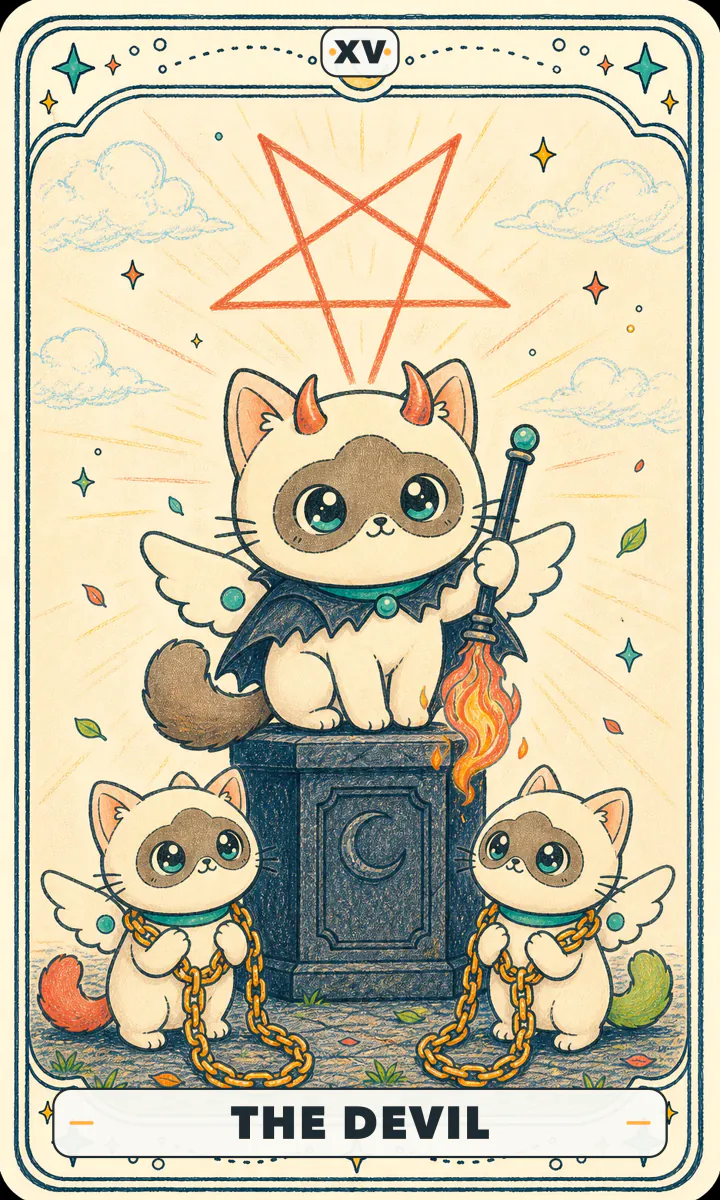
Un enorme diavolo (Baphomet) è accovacciato su un cubo nero, con un pentagramma rovesciato sopra la sua testa. Sotto, un uomo e una donna sono incatenati in modo allentato (catene che potrebbero apparentemente scivolare via da sole), a cui sono cresciute corna e code.
Significato al dritto
Bondage, materialismo, desiderio, dipendenza. Simboleggia l'essere controllati da desideri materiali o paure e rendersi conto che tale schiavitù spesso deriva dai propri attaccamenti.
Significato rovesciato
Liberarsi, risvegliarsi, liberarsi dalla dipendenza, affrontare l'ombra. Può indicare che si sta iniziando a vedere la radice del problema e si sta cercando di sfuggire a una relazione o un'abitudine malsana.
Amore, carriera, denaro e crescita
Amore
In amore, Il diavolo indica Le tentazioni del mondo materiale. Rileggilo confrontandolo con il modo in cui si comporta effettivamente la relazione e con ciò che scegliete entrambi.
Carriera
In materia di carriera, Il diavolo indica Le tentazioni del mondo materiale. Inizia individuando quali risorse controlli e quale sarà la tua prossima mossa.
Soldi
In materia di soldi, Il diavolo indica Le tentazioni del mondo materiale. Non considerare una lettura simbolica come una conclusione di investimento: segui i fatti, il budget e la tua tolleranza al rischio.
Crescita personale
Per la crescita personale, Il diavolo indica Le tentazioni del mondo materiale. Annota la domanda che solleva, quindi trasformala in un'azione che puoi effettivamente verificare.
Cosa prova l'altra persona
Quando Il diavolo indica cosa prova l'altra persona, il tema del suo atteggiamento verso di te è: Le tentazioni del mondo materiale. Al dritto il sentimento è rivolto all'esterno e si vede; rovesciata, per ora resta dentro di lei. Non prenderla come una sentenza: verificala con il modo in cui si comporta davvero.
Sì o no
Al dritto
No
Rovesciata
Sì
Questa è la nostra lettura veloce, basata sulla direzione in cui tende il significato della carta. Le tradizioni non sono d'accordo sulle singole carte, e un "Forse" deve essere valutato rispetto alla posizione nello spread e alla situazione reale piuttosto che essere preso come una risposta di una sola parola.
Testo originale di Waite (1911)
Simbolismo interiore (originale)
Il disegno è un compromesso, un punto medio o un'armonia tra diversi motivi menzionati nella prima parte. Il Caprone Cornuto di Mendes, con ali simili a quelle di un pipistrello, sta ritto su un altare. Alla bocca dello stomaco c'è il segno di Mercurio. La mano destra è alzata e tesa, rovescio di quella benedizione che lo Ierofante impartisce nella quinta carta. Nella mano sinistra c'è una grande torcia fiammeggiante, capovolta verso terra. Sulla fronte c'è un pentagramma rovesciato. Davanti all'altare c'è un anello, dal quale due catene arrivano al collo di due figure, un uomo e una donna. Sono analoghe a quelle della quinta carta, come Adamo ed Eva dopo la Caduta. Qui sta la catena e la fatalità della vita materiale.
Le figure hanno la coda, a significare la natura animale, ma nei volti c'è intelligenza umana, e colui che è innalzato sopra di loro non sarà per sempre il loro padrone. Già ora anche lui è uno schiavo, sostenuto dal male che è in lui e cieco alla libertà del servizio. Con una derisione più grande del solito verso le arti che fingeva di rispettare e di interpretare da maestro, Eliphas Lévi afferma che la figura bafomettica è la scienza occulta e la magia. Un altro commentatore dice che nel mondo divino essa significa la predestinazione, ma in quel mondo non c'è corrispondenza con le cose che quaggiù appartengono al bruto. Ciò che essa significa davvero è il Guardiano della Soglia fuori dal Giardino Mistico, quando ne vengono cacciati coloro che hanno mangiato il frutto proibito.
Significato originale al dritto
Devastazione, violenza, veemenza, sforzi straordinari, forza, fatalità; ciò che è predestinato ma non per questo è male.
Significato originale invertito
Fatalità malvagia, debolezza, meschinità, cecità.
Citato da A. E. Waite, The Pictorial Key to the Tarot (1911), illustrato da Pamela Colman Smith. Il testo è di pubblico dominio.
Origini del mito e dei simboli
Il caprone di questa carta è il Baphomet disegnato da Lévi nel 1856. Non è il dio greco Pan.
Corrispondenza esoterica
Una tesi tradizionale con fonti, ma costruita dentro un sistema occulto
Il «Caprone di Mendes» viene da Lévi
Il testo di Waite lo dice apertamente: il Caprone cornuto di Mendes, con ali di pipistrello, in piedi su un altare. La figura è il Baphomet di Mendes disegnato da Eliphas Lévi nel 1856, che fonde il dio-ariete della città egizia di Mendes descritto da Erodoto con il Baphomet di cui furono accusati i Templari nei loro processi. Il segno di Mercurio sul ventre, la torcia rovesciata, il pentagramma capovolto sulla fronte: sono tutti elementi del disegno di Lévi. Detto in breve: il diavolo di questa carta ha poco più di cent'anni.
Fonte Waite, The Pictorial Key to the Tarot, 1911, Il Diavolo; la tavola del Baphomet in Eliphas Lévi, Dogme et Rituel de la Haute Magie, 1856
Le catene sono lente, e a dirlo è Waite
L'uomo e la donna davanti all'altare sono incatenati a un anello, e Waite dice che sono «analoghi a quelli della quinta carta, come se fossero Adamo ed Eva dopo la Caduta». Ma prosegue subito: i loro volti mostrano «intelligenza umana nei volti», la figura in trono sopra di loro «non sarà il loro padrone per sempre», e «già ora è anch'egli uno schiavo». I collari lenti, che si possono sfilare in qualsiasi momento, vengono esattamente da questo passo.
Fonte Waite, The Pictorial Key to the Tarot, 1911, Il Diavolo
Il Capricorno: l'altra identità del caprone
La Golden Dawn associa il Diavolo al Capricorno (lettera ebraica Ayin, letteralmente «occhio»). Il glifo stesso del segno è una capra, quindi la corrispondenza si posa sull'immagine senza il minimo attrito, ma l'ordine va tenuto chiaro. Lévi disegnò prima il diavolo dalla testa di caprone, e il sistema lo attribuì al Capricorno dopo, non il contrario.
Fonte Attribuzioni zodiacali nel Book T della Golden Dawn
Lettura moderna
Diffusa solo dal Novecento; estranea alle origini della carta
Pan: la figura più spesso identificata a torto
Molto materiale afferma che questa carta raffigura il dio greco Pan, a rappresentare l'istinto represso dalla civiltà. Pan ha sì le zampe e le corna di capra, e l'iconografia cristiana lo prese davvero a prestito nel costruire l'aspetto del diavolo. Ma la fonte diretta della figura su questa carta è il Baphomet di Lévi, con di mezzo un intero apparato di occultismo ottocentesco. «L'istinto represso» è ancora più tardo: viene dalle letture psicologizzate del Novecento.
Fonte Lettura moderna divulgativa; Pan appartiene al mito greco, una linea diversa dal Baphomet di Lévi
Scritto da BESTAROT, non citato da fonti storiche. Ogni affermazione è contrassegnata da quanto bene è dimostrata; gli strati interpretativi moderni sono utili per la lettura, ma non costituiscono l’origine storica della carta.
Studia il tema: Mito e origini dei simboli (Accademia capitolo 6)