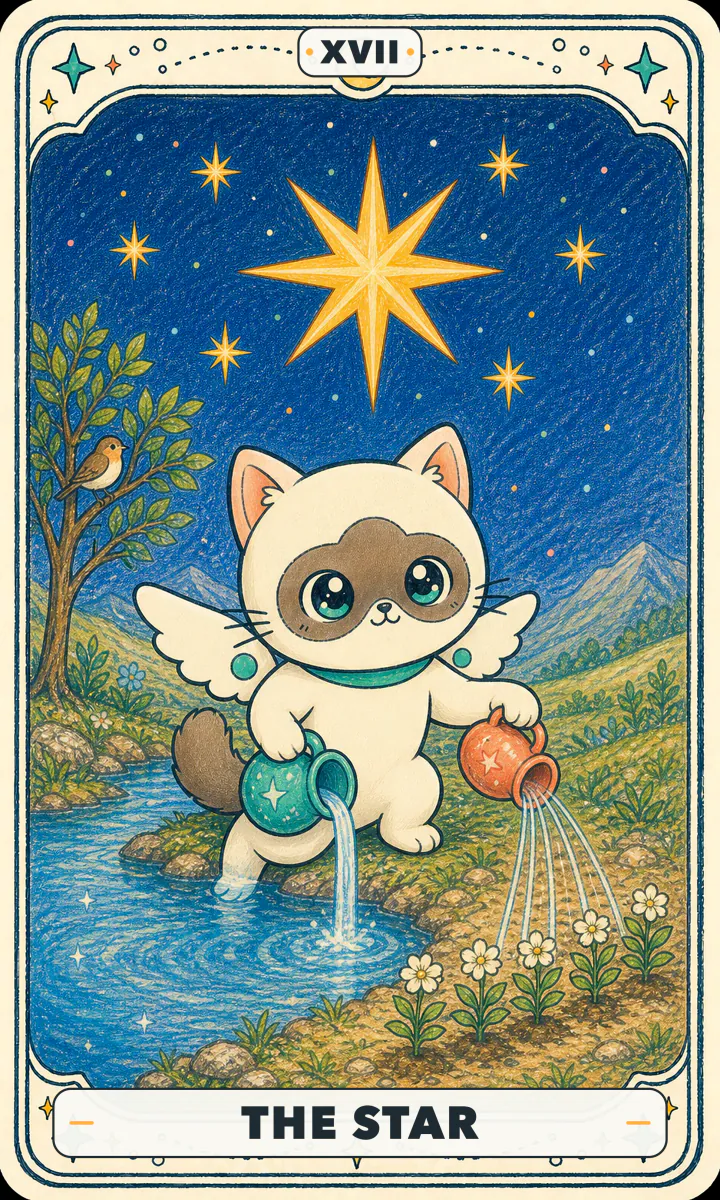
La stella
The Star
Speranza, ispirazione
Risposta rapida
Il significato principale di La stella è La luce tranquilla della guarigione. Al dritto, solitamente indica Speranza, ispirazione, guarigione, serenità. Simboleggia la calma dopo la distru; rovesciata, potrebbe suggerire Disperazione, mancanza di fede, occasioni mancate, speranze irrealistiche. Può i.
Immagini della carta
Una donna nuda si inginocchia su un ginocchio sotto un cielo stellato. Tiene due brocche, versandone una in una piscina (il subconscio) e l'altra sulla terra (il conscio). Sopra brillano una grande stella a otto punte e sette stelle più piccole.
Significato al dritto
Speranza, ispirazione, guarigione, serenità. Simboleggia la calma dopo la distruzione della Torre, la riconnessione con l'energia dell'universo, piena di fiducia nel futuro.
Significato rovesciato
Disperazione, mancanza di fede, occasioni mancate, speranze irrealistiche. Può indicare sentirsi persi o mantenere alte aspettative senza intraprendere azioni concrete.
Amore, carriera, denaro e crescita
Amore
In amore, La stella indica La luce tranquilla della guarigione. Rileggilo confrontandolo con il modo in cui si comporta effettivamente la relazione e con ciò che scegliete entrambi.
Carriera
In materia di carriera, La stella indica La luce tranquilla della guarigione. Inizia individuando quali risorse controlli e quale sarà la tua prossima mossa.
Soldi
In materia di soldi, La stella indica La luce tranquilla della guarigione. Non considerare una lettura simbolica come una conclusione di investimento: segui i fatti, il budget e la tua tolleranza al rischio.
Crescita personale
Per la crescita personale, La stella indica La luce tranquilla della guarigione. Annota la domanda che solleva, quindi trasformala in un'azione che puoi effettivamente verificare.
Cosa prova l'altra persona
Quando La stella indica cosa prova l'altra persona, il tema del suo atteggiamento verso di te è: La luce tranquilla della guarigione. Al dritto il sentimento è rivolto all'esterno e si vede; rovesciata, per ora resta dentro di lei. Non prenderla come una sentenza: verificala con il modo in cui si comporta davvero.
Sì o no
Al dritto
Sì
Rovesciata
No
Questa è la nostra lettura veloce, basata sulla direzione in cui tende il significato della carta. Le tradizioni non sono d'accordo sulle singole carte, e un "Forse" deve essere valutato rispetto alla posizione nello spread e alla situazione reale piuttosto che essere preso come una risposta di una sola parola.
Testo originale di Waite (1911)
Simbolismo interiore (originale)
Una grande stella radiosa di otto raggi, circondata da sette stelle minori — anch'esse di otto raggi. La figura femminile in primo piano è completamente nuda. Ha il ginocchio sinistro sulla terra e il piede destro sull'acqua. Versa l'Acqua della Vita da due grandi brocche, irrigando il mare e la terra. Dietro di lei il terreno sale, e sulla destra c'è un arbusto o un albero su cui si posa un uccello. La figura esprime l'eterna giovinezza e la bellezza. La stella è l'étoile flamboyante, che compare nel simbolismo massonico, ma vi è stata confusa. Ciò che la figura comunica alla scena vivente è la sostanza dei cieli e degli elementi. Si è detto giustamente che i motti di questa carta sono «Acque della Vita gratuitamente» e «Doni dello Spirito».
La sintesi di diverse spiegazioni dozzinali dice che è una carta di speranza. Su altri piani è stata attestata come immortalità e luce interiore. Per la maggior parte delle menti preparate, la figura apparirà come il tipo della Verità svelata, gloriosa di una bellezza immortale, che versa sulle acque dell'anima una parte e una misura del suo inestimabile possesso. Ma in realtà ella è la Grande Madre nella Sephirah cabalistica Binah, che è l'Intelligenza Superna, la quale comunica alle Sephiroth sottostanti nella misura in cui possono ricevere il suo influsso.
Significato originale al dritto
Perdita, furto, privazione, abbandono; un'altra lettura dice: speranza e prospettive luminose.
Significato originale invertito
Arroganza, alterigia, impotenza.
Citato da A. E. Waite, The Pictorial Key to the Tarot (1911), illustrato da Pamela Colman Smith. Il testo è di pubblico dominio.
Origini del mito e dei simboli
Waite chiama la stella a otto punte la Stella Fiammeggiante massonica, e dice che la donna che versa l'acqua «è in realtà la Grande Madre» della Cabala.
Corrispondenza esoterica
Una tesi tradizionale con fonti, ma costruita dentro un sistema occulto
La stella a otto punte: Waite nomina la Massoneria
La carta mostra una grande stella a otto raggi circondata da sette stelle più piccole, anch'esse a otto raggi. Waite afferma che questa stella è l'étoile flamboyante, la Stella Fiammeggiante del simbolismo massonico, e aggiunge che il simbolo «è stato confuso» all'interno della Massoneria stessa. La donna che versa l'acqua è inginocchiata su un ginocchio con un piede sull'acqua, e svuota da due grandi anfore l'Acqua della Vita sul mare e sulla terra.
Fonte Waite, The Pictorial Key to the Tarot, 1911, La Stella; l'étoile flamboyante è un simbolo massonico
La lettura che dà è cabalistica, non greca
La maggior parte delle persone, dice Waite, prenderà la figura per la Verità svelata, «ma in realtà è la Grande Madre nella Sephirah cabalistica Binah», l'Intelligenza Superna, che riversa sulle Sephiroth inferiori la misura che ciascuna è in grado di portare. Il versare verso il basso della carta approda, nel libro originale, a quella catena cabalistica di discesa, e non a una divinità coppiera. La corrispondenza della Golden Dawn è l'Acquario, lettera ebraica Tzaddi; Crowley, seguendo la frase «Tzaddi non è la Stella» del Libro della Legge, scambiò le lettere della Stella e dell'Imperatore: una discussione interna ai sistemi del Novecento, che lascia intatta l'attribuzione originale della Golden Dawn.
Fonte Waite, The Pictorial Key to the Tarot, 1911, La Stella; attribuzioni zodiacali nel Book T della Golden Dawn
Lettura moderna
Diffusa solo dal Novecento; estranea alle origini della carta
L'autore stesso non crede molto alla «carta della speranza»
La lettura standard è Stella uguale speranza. La frase di Waite: «il riassunto di diverse spiegazioni dozzinali dice che è una carta di speranza», un tono tutt'altro che generoso. Ciò che propone invece sono l'immortalità e la luce interiore, insieme alla lettura di Binah qui sopra. «Speranza» non è sbagliato, ma è una goccia spremuta dalla carta, non il paragrafo che lui ha scritto davvero.
Fonte Il giudizio di Waite stesso sulla «carta di speranza» nella stessa voce, 1911; la lettura standard moderna
Ebe e l'Acquario: un'altra identificazione forzata
La donna che versa l'acqua viene spesso scambiata per Ebe, la dea greca della giovinezza e coppiera degli dèi, o letta senz'altro come l'Acquario personificato. È lo stesso problema in cui incappa la Temperanza: nella storia dell'iconografia il gesto di versare fu prima il segno di qualcos'altro, e solo in seguito vi fu applicato il nome di un dio.
Fonte Lettura moderna divulgativa; Ebe appartiene al mito greco
Scritto da BESTAROT, non citato da fonti storiche. Ogni affermazione è contrassegnata da quanto bene è dimostrata; gli strati interpretativi moderni sono utili per la lettura, ma non costituiscono l’origine storica della carta.
Studia il tema: Mito e origini dei simboli (Accademia capitolo 6)