La Luna
The Moon
Illusione, disagio
Risposta rapida
Il significato principale di La Luna è La nebbia del subconscio. Al dritto, solitamente indica Illusione, subconscio, disagio, intuizione. Simboleggia il camminare nella nebbi; rovesciata, potrebbe suggerire Illusioni dissipate, confusione, inganno smascherato, paura che si attenua. Può.
Immagini della carta
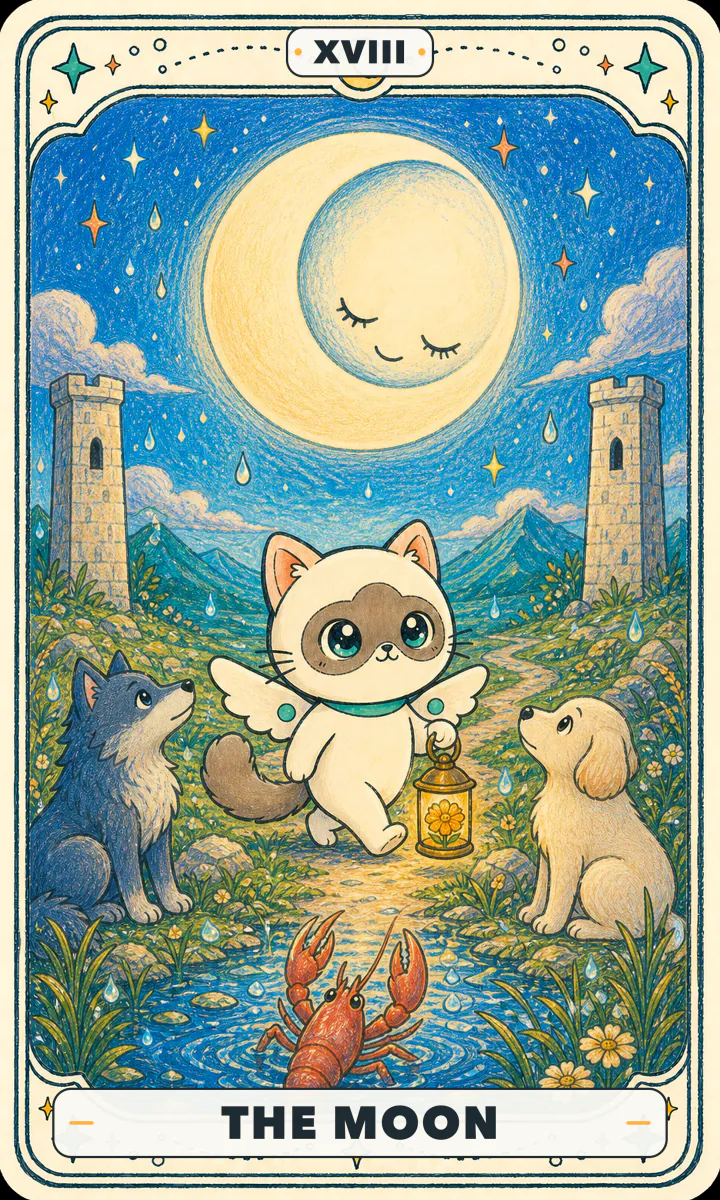
Una luna che unisce la falce, il disco intero e un volto addormentato è sospesa nel cielo. Sotto, un lupo e un cane ululano. Un gambero striscia da una pozza e in lontananza un sentiero si snoda tra le torri gemelle.
Significato al dritto
Illusione, subconscio, disagio, intuizione. Simboleggia il camminare nella nebbia dove le cose non sono quello che sembrano, invitandoti ad affrontare le paure e le ombre interiori.
Significato rovesciato
Illusioni dissipate, confusione, inganno smascherato, paura che si attenua. Può indicare il risveglio dallo smarrimento o l'essere tormentato da incubi e ansia.
Amore, carriera, denaro e crescita
Amore
In amore, La Luna indica La nebbia del subconscio. Rileggilo confrontandolo con il modo in cui si comporta effettivamente la relazione e con ciò che scegliete entrambi.
Carriera
In materia di carriera, La Luna indica La nebbia del subconscio. Inizia individuando quali risorse controlli e quale sarà la tua prossima mossa.
Soldi
In materia di soldi, La Luna indica La nebbia del subconscio. Non considerare una lettura simbolica come una conclusione di investimento: segui i fatti, il budget e la tua tolleranza al rischio.
Crescita personale
Per la crescita personale, La Luna indica La nebbia del subconscio. Annota la domanda che solleva, quindi trasformala in un'azione che puoi effettivamente verificare.
Cosa prova l'altra persona
Quando La Luna indica cosa prova l'altra persona, il tema del suo atteggiamento verso di te è: La nebbia del subconscio. Al dritto il sentimento è rivolto all'esterno e si vede; rovesciata, per ora resta dentro di lei. Non prenderla come una sentenza: verificala con il modo in cui si comporta davvero.
Sì o no
Al dritto
No
Rovesciata
Forse
Questa è la nostra lettura veloce, basata sulla direzione in cui tende il significato della carta. Le tradizioni non sono d'accordo sulle singole carte, e un "Forse" deve essere valutato rispetto alla posizione nello spread e alla situazione reale piuttosto che essere preso come una risposta di una sola parola.
Testo originale di Waite (1911)
Simbolismo interiore (originale)
La differenza tra questa carta e alcuni dei tipi convenzionali è che la luna cresce su quello che è chiamato il lato della misericordia, alla destra di chi osserva. Ha sedici raggi principali e sedici secondari. La carta rappresenta la vita dell'immaginazione separata dalla vita dello spirito. Il sentiero tra le torri è l'uscita verso l'ignoto. Il cane e il lupo sono le paure della mente naturale davanti a quel luogo d'uscita, quando ha solo una luce riflessa a guidarla.
Quest'ultimo riferimento è la chiave di un'altra forma di simbolismo. La luce intellettuale è un riflesso, e al di là di essa c'è il mistero ignoto che essa non può manifestare. Illumina la nostra natura animale, i cui tipi sono rappresentati in basso — il cane, il lupo e ciò che sale dagli abissi, la tendenza senza nome e ripugnante che sta più in basso della bestia selvaggia. Essa si sforza di giungere alla manifestazione, simboleggiata dallo strisciare dall'abisso delle acque verso la terra, ma di regola ricade da dove è venuta. Il volto della mente rivolge uno sguardo calmo sull'inquietudine sottostante; la rugiada del pensiero cade; il messaggio è: pace, calmati; e può darsi che sulla natura animale scenda la calma, mentre l'abisso sottostante smetterà di restituire una forma.
Significato originale al dritto
Nemici nascosti, pericolo, calunnia, oscurità, terrore, inganno, forze occulte, errore.
Significato originale invertito
Instabilità, incostanza, silenzio, gradi minori di inganno e di errore.
Citato da A. E. Waite, The Pictorial Key to the Tarot (1911), illustrato da Pamela Colman Smith. Il testo è di pubblico dominio.
Origini del mito e dei simboli
Waite la definisce la vita dell'immaginazione separata dalla vita dello spirito. Le dee lunari vi sono state accostate più tardi.
Iconografia documentata
Attestata da oggetti o testi giunti fino a noi
Due torri, due cani, un gambero: tutto già nei mazzi più antichi
Un sentiero che corre fra due torri, due canidi che ululano, un gambero che striscia fuori dall'acqua: questa configurazione era già stabilita nelle carte marsigliesi, e Waite la mantenne sostanzialmente com'era. L'unica differenza che segnala lui stesso è che la luna cresce «dal lato della misericordia» (a destra di chi guarda), e che ha sedici raggi principali e sedici secondari. L'immagine di questa carta, in altre parole, viene dalla tradizione del mazzo stesso, non da un testo mitologico.
Fonte La disposizione marsigliese della carta; Waite, The Pictorial Key to the Tarot, 1911, La Luna
Corrispondenza esoterica
Una tesi tradizionale con fonti, ma costruita dentro un sistema occulto
Colloca questa carta sotto l'immaginazione, non sotto l'inconscio
Waite la risolve in una sola frase: la carta «rappresenta la vita dell'immaginazione separata dalla vita dello spirito». Il sentiero fra le torri è «l'uscita verso l'ignoto», il cane e il lupo sono «le paure della mente naturale» davanti a quell'uscita, e la luce della ragione è solo luce riflessa, che cade sulla nostra natura animale. Nota le parole che usa: immaginazione e ragione, non inconscio. Quel vocabolario arriva solo nel Novecento.
Fonte Waite, The Pictorial Key to the Tarot, 1911, La Luna (confronta l'originale nel pannello delle fonti di questa pagina)
I Pesci e la creatura che striscia fuori dall'acqua
La Golden Dawn associa la Luna ai Pesci (lettera ebraica Qoph). Acqua, confini che non tengono, qualcosa che risale dalle profondità: questa corrispondenza si aggancia saldamente al gambero che esce dallo stagno sulla carta.
Fonte Attribuzioni zodiacali nel Book T della Golden Dawn
Lettura moderna
Diffusa solo dal Novecento; estranea alle origini della carta
Ecate e l'«ombra»: due strati di aggiunte moderne
Collegare questa carta a Ecate o a una triplice dea lunare è pratica comune nel materiale didattico moderno; leggerla come l'ombra junghiana, o come materiale inconscio, è ancora più tardo. Entrambe sono utili in un consulto, ma ciò che Waite scrisse è immaginazione e luce riflessa, e lo schema stesso della triplice dea viene da The White Goddess di Graves del 1948, cinquecento anni più giovane della carta.
Fonte Lettura moderna divulgativa; lo schema della triplice dea è di Robert Graves, The White Goddess, 1948
Scritto da BESTAROT, non citato da fonti storiche. Ogni affermazione è contrassegnata da quanto bene è dimostrata; gli strati interpretativi moderni sono utili per la lettura, ma non costituiscono l’origine storica della carta.
Studia il tema: Mito e origini dei simboli (Accademia capitolo 6)