Il sole
The Sun
Successo, gioia
Risposta rapida
Il significato principale di Il sole è Vitalità radiosa. Al dritto, solitamente indica Successo, gioia, vitalità, chiarezza. Simboleggia il puro piacere e la forza vit; rovesciata, potrebbe suggerire Nuvole temporanee, pessimismo, eccessiva fiducia, successo ritardato. Può indica.
Immagini della carta
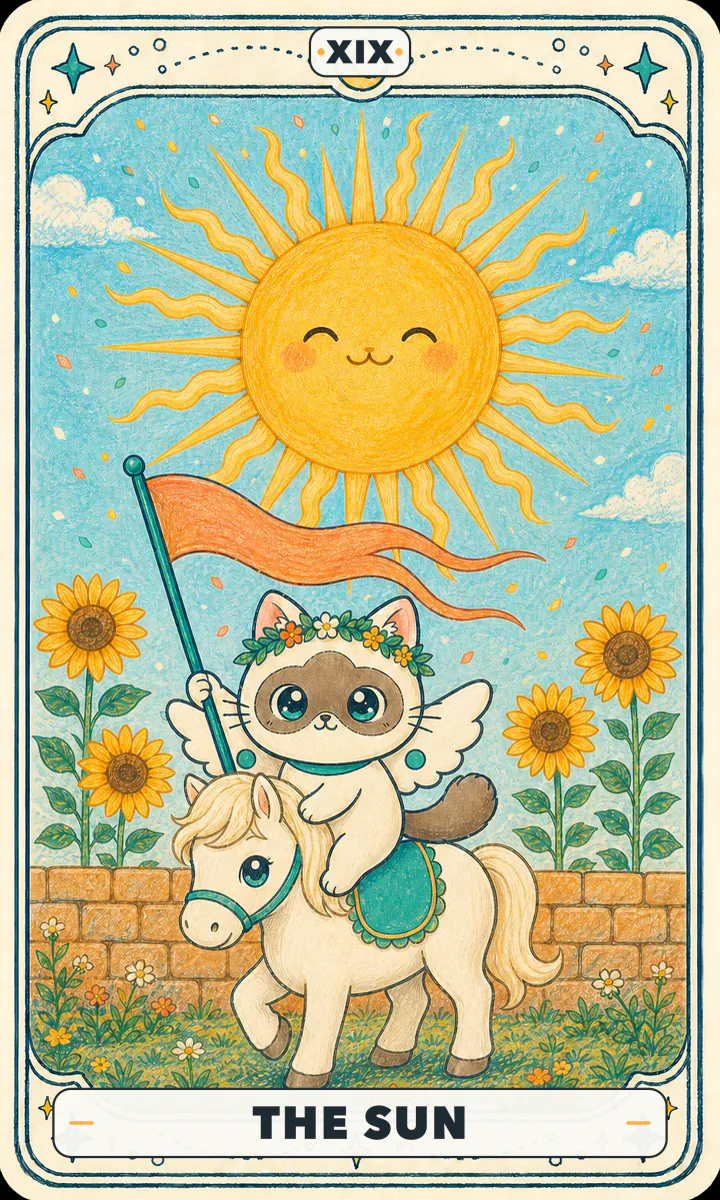
Un enorme sole riempie gran parte del cielo, sfolgorante di luce. Davanti al muro del giardino, un bambino nudo cavalca un cavallo bianco, sventolando uno stendardo rosso, coronato di fiori e una piuma.
Significato al dritto
Successo, gioia, vitalità, chiarezza. Simboleggia il puro piacere e la forza vitale; ogni ombra viene fugata e gli eventi si muovono nella direzione più positiva.
Significato rovesciato
Nuvole temporanee, pessimismo, eccessiva fiducia, successo ritardato. Può indicare che, sebbene la direzione generale sia buona, persistono piccole ombre o che la gioia sembra meno brillante del previsto.
Amore, carriera, denaro e crescita
Amore
In amore, Il sole indica Vitalità radiosa. Rileggilo confrontandolo con il modo in cui si comporta effettivamente la relazione e con ciò che scegliete entrambi.
Carriera
In materia di carriera, Il sole indica Vitalità radiosa. Inizia individuando quali risorse controlli e quale sarà la tua prossima mossa.
Soldi
In materia di soldi, Il sole indica Vitalità radiosa. Non considerare una lettura simbolica come una conclusione di investimento: segui i fatti, il budget e la tua tolleranza al rischio.
Crescita personale
Per la crescita personale, Il sole indica Vitalità radiosa. Annota la domanda che solleva, quindi trasformala in un'azione che puoi effettivamente verificare.
Cosa prova l'altra persona
Quando Il sole indica cosa prova l'altra persona, il tema del suo atteggiamento verso di te è: Vitalità radiosa. Al dritto il sentimento è rivolto all'esterno e si vede; rovesciata, per ora resta dentro di lei. Non prenderla come una sentenza: verificala con il modo in cui si comporta davvero.
Sì o no
Al dritto
Sì
Rovesciata
Forse
Questa è la nostra lettura veloce, basata sulla direzione in cui tende il significato della carta. Le tradizioni non sono d'accordo sulle singole carte, e un "Forse" deve essere valutato rispetto alla posizione nello spread e alla situazione reale piuttosto che essere preso come una risposta di una sola parola.
Testo originale di Waite (1911)
Simbolismo interiore (originale)
Il bambino nudo in groppa a un cavallo bianco, che mostra uno stendardo rosso, è già stato menzionato come il simbolismo migliore legato a questa carta. È il destino dell'Oriente Soprannaturale e la grande e santa luce che precede l'interminabile processione dell'umanità, uscita dal giardino murato della vita sensibile e in cammino verso casa. La carta significa dunque il passaggio dalla luce manifesta di questo mondo, rappresentata dal sole glorioso della terra, alla luce del mondo a venire, che precede l'aspirazione ed è raffigurata dal cuore di un bambino.
Ma quest'ultima allusione è ancora una volta la chiave di una forma o di un aspetto diversi del simbolismo. Il sole è quello della coscienza nello spirito — la luce diretta come antitesi della luce riflessa. Il tipo caratteristico dell'umanità vi è diventato un bambino — bambino nel senso della semplicità, e innocenza nel senso della saggezza. In quella semplicità porta il sigillo della Natura e dell'Arte; in quell'innocenza significa il mondo restaurato. Quando lo spirito che conosce se stesso è sorto nella coscienza al di sopra della mente naturale, quella mente, rinnovata, conduce con sé la natura animale in uno stato di perfetta conformità.
Significato originale al dritto
Felicità materiale, matrimonio fortunato, appagamento.
Significato originale invertito
Lo stesso in senso minore.
Citato da A. E. Waite, The Pictorial Key to the Tarot (1911), illustrato da Pamela Colman Smith. Il testo è di pubblico dominio.
Origini del mito e dei simboli
Le carte più antiche mostrano due bambini; Waite li sostituì con un bambino nudo su un cavallo bianco. Il carro del dio del sole è un'associazione moderna.
Iconografia documentata
Attestata da oggetti o testi giunti fino a noi
Da due bambini a un bambino a cavallo
Il Sole marsigliese mostra di solito due bambini in piedi davanti a un muretto. Waite lo cambiò in un unico bambino nudo che cavalca un cavallo bianco e mostra uno stendardo rosso, uscendo da un giardino cintato. Lui stesso la chiama «il simbolismo migliore legato a questa carta». Ricorda il cambiamento e non leggerai il cavaliere solitario di Waite come la coppia delle carte più antiche.
Fonte Il disegno dei due bambini nel Sole marsigliese; Waite, The Pictorial Key to the Tarot, 1911, Il Sole
Corrispondenza esoterica
Una tesi tradizionale con fonti, ma costruita dentro un sistema occulto
Il bambino qui significa semplicità e l'innocenza della sapienza
Waite scrive che la carta è il passaggio «dalla luce manifesta di questo mondo, rappresentata dal glorioso sole della terra, alla luce del mondo a venire», e che il tipo caratteristico dell'umanità «vi è diventato un bambino, un bambino nel senso della semplicità e innocente nel senso della sapienza». Il giardino cintato rappresenta «la vita sensibile», e uscirne è mettersi in cammino verso casa. Il bambino qui non è la giovinezza; è ciò che resta una volta tolte le deviazioni.
Fonte Waite, The Pictorial Key to the Tarot, 1911, Il Sole
Il Sole: ciò che dà la Golden Dawn è il pianeta stesso
La Golden Dawn associa questa carta al Sole (lettera ebraica Resh). Il sole è Sol a Roma ed Elio in Grecia, e in seguito fu spesso fuso con Apollo. La corrispondenza collega davvero la carta alle divinità solari classiche, ma ciò a cui la collega è il corpo celeste, non un episodio mitologico.
Fonte Attribuzioni planetarie nel Book T della Golden Dawn; le figure solari classiche Sol / Elio / Apollo
Lettura moderna
Diffusa solo dal Novecento; estranea alle origini della carta
Il carro solare di Apollo: sulla carta non c'è
Si afferma spesso che questa carta mostri Apollo alla guida del carro del sole. Ciò che c'è sulla carta è un bambino su un cavallo bianco: niente carro, niente tiro a quattro, niente dio. L'immagine del dio del sole alla guida viene dal mito greco (Elio, a rigore; la fusione con Apollo è uno sviluppo successivo), e non ha nulla a che vedere con la discendenza iconografica di questa carta.
Fonte Lettura moderna divulgativa; Elio alla guida del carro del sole è mito greco
Scritto da BESTAROT, non citato da fonti storiche. Ogni affermazione è contrassegnata da quanto bene è dimostrata; gli strati interpretativi moderni sono utili per la lettura, ma non costituiscono l’origine storica della carta.
Studia il tema: Mito e origini dei simboli (Accademia capitolo 6)