Il mondo
The World
Completamento, Compimento
Risposta rapida
Il significato principale di Il mondo è Il finale perfetto del viaggio. Al dritto, solitamente indica Realizzazione, completamento, integrazione, viaggio. Simboleggia la perfetta con; rovesciata, potrebbe suggerire Incompletezza, stagnazione, mancanza di chiusura, rimpianti. Può indicare che si.
Immagini della carta
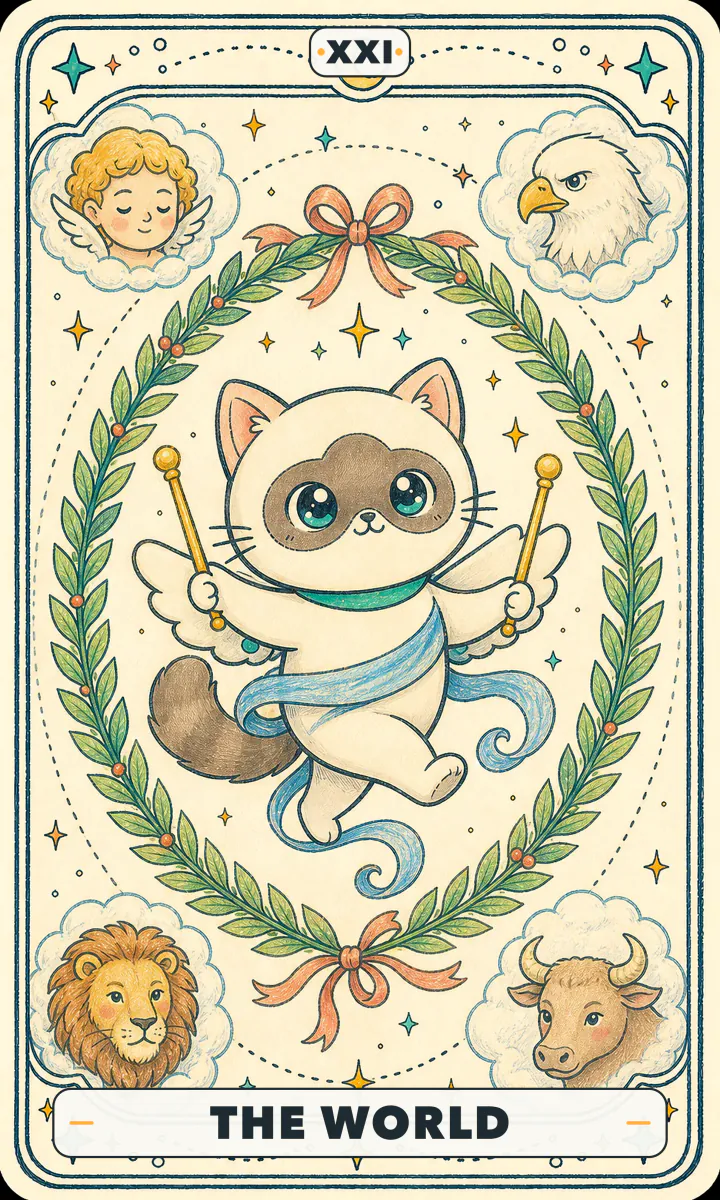
Una ballerina nuda volteggia all'interno di una grande corona di alloro verde, avvolta in una fascia viola, con una bacchetta in ciascuna mano. Ai quattro angoli della corona compaiono le teste dei quattro esseri viventi: l'uomo, l'aquila, il leone e il toro.
Significato al dritto
Realizzazione, completamento, integrazione, viaggio. Simboleggia la perfetta conclusione di un viaggio, l'armonia di corpo, mente e spirito e un momento per godersi i frutti del proprio lavoro.
Significato rovesciato
Incompletezza, stagnazione, mancanza di chiusura, rimpianti. Può indicare che siamo solo ad un passo dal successo, o un vuoto interiore che impedisce di scrivere il capitolo finale.
Amore, carriera, denaro e crescita
Amore
In amore, Il mondo indica Il finale perfetto del viaggio. Rileggilo confrontandolo con il modo in cui si comporta effettivamente la relazione e con ciò che scegliete entrambi.
Carriera
In materia di carriera, Il mondo indica Il finale perfetto del viaggio. Inizia individuando quali risorse controlli e quale sarà la tua prossima mossa.
Soldi
In materia di soldi, Il mondo indica Il finale perfetto del viaggio. Non considerare una lettura simbolica come una conclusione di investimento: segui i fatti, il budget e la tua tolleranza al rischio.
Crescita personale
Per la crescita personale, Il mondo indica Il finale perfetto del viaggio. Annota la domanda che solleva, quindi trasformala in un'azione che puoi effettivamente verificare.
Cosa prova l'altra persona
Quando Il mondo indica cosa prova l'altra persona, il tema del suo atteggiamento verso di te è: Il finale perfetto del viaggio. Al dritto il sentimento è rivolto all'esterno e si vede; rovesciata, per ora resta dentro di lei. Non prenderla come una sentenza: verificala con il modo in cui si comporta davvero.
Sì o no
Al dritto
Sì
Rovesciata
Forse
Questa è la nostra lettura veloce, basata sulla direzione in cui tende il significato della carta. Le tradizioni non sono d'accordo sulle singole carte, e un "Forse" deve essere valutato rispetto alla posizione nello spread e alla situazione reale piuttosto che essere preso come una risposta di una sola parola.
Testo originale di Waite (1911)
Simbolismo interiore (originale)
Poiché questo messaggio finale degli Arcani Maggiori è immutato — e anzi immutabile — nel suo disegno, è già stato descritto in parte riguardo al suo senso più profondo. Rappresenta anche la perfezione e la fine del Cosmo, il segreto che vi è racchiuso, il rapimento dell'universo quando comprende se stesso in Dio (Natura). È inoltre lo stato dell'anima nella coscienza della Visione Divina, riflessa dallo spirito che conosce se stesso. Ma questi significati non pregiudicano ciò che ne ho detto sul versante materiale.
Ha più di un messaggio sul versante macrocosmico ed è, per esempio, lo stato del mondo restaurato quando la legge della manifestazione sarà stata portata al più alto grado di perfezione naturale. Ma è forse, più in particolare, una storia del passato, che si riferisce al giorno in cui tutto fu dichiarato buono, quando le stelle del mattino cantavano insieme e tutti i Figli di Dio (Natura) esultavano di gioia. Una delle peggiori spiegazioni al riguardo è che la figura simboleggi il Mago giunto al più alto grado di iniziazione; un'altra versione dice che rappresenta l'assoluto, il che è ridicolo. Si è detto che la figura stia per la Verità, che però è più propriamente assegnata alla diciassettesima carta. Infine, è stata chiamata la Corona dei Magi.
Significato originale al dritto
Successo assicurato, ricompensa, viaggio, itinerario, emigrazione, fuga, cambiamento di luogo.
Significato originale invertito
Inerzia, fissità, stagnazione, permanenza.
Citato da A. E. Waite, The Pictorial Key to the Tarot (1911), illustrato da Pamela Colman Smith. Il testo è di pubblico dominio.
Origini del mito e dei simboli
Gli esseri viventi agli angoli sono la stessa visione di Ezechiele della Ruota della Fortuna, e l'anello al centro è una corona di vittoria classica.
Iconografia documentata
Attestata da oggetti o testi giunti fino a noi
Di nuovo i quattro esseri viventi, agli angoli
L'uomo, l'aquila, il bue e il leone ai quattro angoli sono lo stesso gruppo degli angoli della Ruota della Fortuna: i quattro esseri viventi di Ezechiele 1,10, ripresi in Apocalisse 4,7 e fissati da allora come emblemi dei quattro evangelisti. La ghirlanda ellittica intorno alla danzatrice al centro è una corona d'alloro, la corona che nel mondo classico spettava ai vincitori e a chi celebrava un trionfo. Una visione ebraica e una corona trionfale romana usate insieme su un'unica carta sono, di nuovo, del tutto normali nell'iconografia rinascimentale.
Fonte Ezechiele 1,10, Apocalisse 4,7; la corona d'alloro come corona classica della vittoria
Corrispondenza esoterica
Una tesi tradizionale con fonti, ma costruita dentro un sistema occulto
Ciò che Waite cita è Giobbe
Waite chiama la carta «la perfezione e la fine del Cosmo», e dice che è «forse più specialmente una storia del passato, che si riferisce a quel giorno in cui tutto fu dichiarato buono, quando le stelle del mattino cantavano insieme e tutti i Figli di Dio (la Natura) gridavano di gioia»: Giobbe 38,7. Nella stessa voce congeda anche due letture: che la figura centrale significhi il Mago al grado più alto dell'iniziazione è «una delle spiegazioni peggiori», e che significhi l'Assoluto è «ridicolo».
Fonte Giobbe 38,7; Waite, The Pictorial Key to the Tarot, 1911, Il Mondo
Saturno, la lettera Tau e i quattro segni fissi
La Golden Dawn associa il Mondo a Saturno (lettera ebraica Tau, l'ultima dell'alfabeto). Saturno è il corrispettivo romano del Crono greco, dio dei limiti e delle fini, il che si addice naturalmente all'ultima carta. All'interno dello stesso sistema le creature agli angoli vengono lette anche come i quattro segni fissi: Leone, Toro, Scorpione (con l'aquila come suo emblema superiore) e Acquario. Quello strato è un'aggiunta del sistema; non cambia il fatto che siano anzitutto i quattro esseri viventi di Ezechiele.
Fonte Attribuzione planetaria e quattro segni fissi nel Book T della Golden Dawn
Lettura moderna
Diffusa solo dal Novecento; estranea alle origini della carta
L'ermafrodito e il «completare un ciclo»
La danzatrice al centro viene spesso letta come l'ermafrodito alchemico, il Rebis, simbolo dell'unione finale degli opposti, e altrettanto spesso come «un ciclo concluso, pronti per il prossimo». La prima è una lettura incrociata che importa immagini alchemiche; il testo di Waite non lo dice. La seconda dipende dallo schema narrativo moderno del viaggio del Matto: l'ordine dei trionfi è di per sé una sequenza trionfale, non un cerchio che possa ricominciare.
Fonte Lettura moderna divulgativa; il Rebis è un'immagine alchemica, non ciò a cui si riferisce il testo di questa carta
Scritto da BESTAROT, non citato da fonti storiche. Ogni affermazione è contrassegnata da quanto bene è dimostrata; gli strati interpretativi moderni sono utili per la lettura, ma non costituiscono l’origine storica della carta.
Studia il tema: Mito e origini dei simboli (Accademia capitolo 6)