La Torre
The Tower
Sconvolgimento, crollo
Risposta rapida
Il significato principale di La Torre è Un risveglio improvviso. Al dritto, solitamente indica Cambiamento improvviso, collasso, risveglio, disastro. Simboleggia una struttura; rovesciata, potrebbe suggerire Disastro evitato, paura del cambiamento, resistenza a malapena, un lento collass.
Immagini della carta
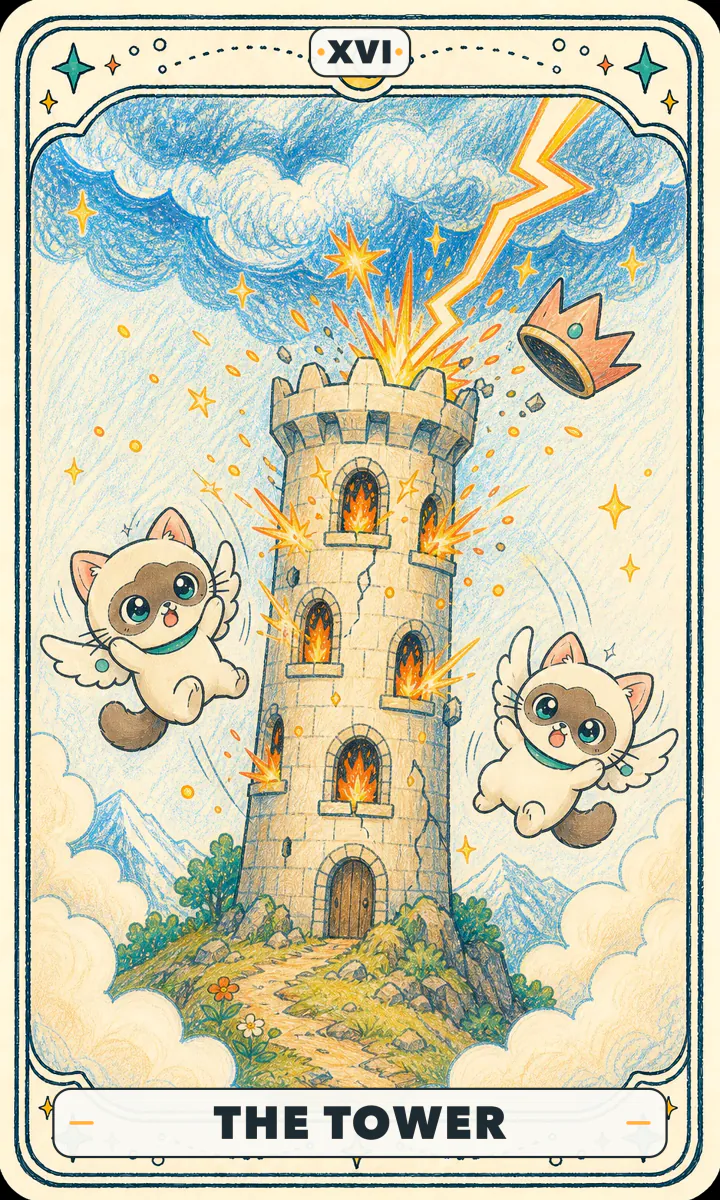
Una torre che svetta tra le nuvole viene colpita da un fulmine sulla sommità, che crolla dall'alto. La torre brucia quando due figure (che rappresentano lo status e la ricchezza) cadono a capofitto. Lo sfondo è un cielo notturno nero in cui piovono scintille.
Significato al dritto
Cambiamento improvviso, collasso, risveglio, disastro. Simboleggia una struttura costruita su false fondamenta che viene distrutta con la forza, dolorosa ma che fornisce la verità nuda.
Significato rovesciato
Disastro evitato, paura del cambiamento, resistenza a malapena, un lento collasso. Può indicare tumulto interiore o il tentativo di nascondere problemi che si sono già verificati.
Amore, carriera, denaro e crescita
Amore
In amore, La Torre indica Un risveglio improvviso. Rileggilo confrontandolo con il modo in cui si comporta effettivamente la relazione e con ciò che scegliete entrambi.
Carriera
In materia di carriera, La Torre indica Un risveglio improvviso. Inizia individuando quali risorse controlli e quale sarà la tua prossima mossa.
Soldi
In materia di soldi, La Torre indica Un risveglio improvviso. Non considerare una lettura simbolica come una conclusione di investimento: segui i fatti, il budget e la tua tolleranza al rischio.
Crescita personale
Per la crescita personale, La Torre indica Un risveglio improvviso. Annota la domanda che solleva, quindi trasformala in un'azione che puoi effettivamente verificare.
Cosa prova l'altra persona
Quando La Torre indica cosa prova l'altra persona, il tema del suo atteggiamento verso di te è: Un risveglio improvviso. Al dritto il sentimento è rivolto all'esterno e si vede; rovesciata, per ora resta dentro di lei. Non prenderla come una sentenza: verificala con il modo in cui si comporta davvero.
Sì o no
Al dritto
No
Rovesciata
Forse
Questa è la nostra lettura veloce, basata sulla direzione in cui tende il significato della carta. Le tradizioni non sono d'accordo sulle singole carte, e un "Forse" deve essere valutato rispetto alla posizione nello spread e alla situazione reale piuttosto che essere preso come una risposta di una sola parola.
Testo originale di Waite (1911)
Simbolismo interiore (originale)
Le spiegazioni occulte legate a questa carta sono scarne e per lo più sconcertanti. È inutile far notare che raffigura la rovina in tutti i suoi aspetti, perché ne porta l'evidenza in superficie. Si dice inoltre che contenga la prima allusione a un edificio materiale, ma non credo che la Torre sia più o meno materiale delle colonne che abbiamo incontrato in tre casi precedenti. Non vedo nulla che autorizzi Papus a supporre che si tratti letteralmente della caduta di Adamo, ma c'è di più a favore della sua alternativa — che significhi la materializzazione della parola spirituale. Il bibliografo Christian immagina che sia la caduta della mente che cerca di penetrare il mistero di Dio (Natura). Concordo piuttosto con Grand Orient che si tratti della rovina della Casa della Vita, quando il male vi ha prevalso, e soprattutto che sia lo squarcio di una Casa della Dottrina. Intendo però che il riferimento sia a una Casa della Falsità. Illustra inoltre, nel modo più ampio, l'antica verità che «se il Signore non costruisce la casa, invano vi faticano i costruttori».
C'è un senso in cui la catastrofe è un riflesso della carta precedente, ma non sul versante del simbolismo che ho cercato di indicarvi. È più propriamente una questione di analogia: l'una riguarda la caduta nello stato materiale e animale, mentre l'altra significa la distruzione sul versante intellettuale. Della Torre si è parlato come del castigo dell'orgoglio e dell'intelletto travolto nel tentativo di penetrare il Mistero di Dio (Natura); ma in nessuno dei due casi queste spiegazioni rendono conto delle due persone che ne sono le vittime viventi. L'una è la parola letterale resa vana, l'altra la sua falsa interpretazione. In un senso ancora più profondo, può significare anche la fine di una dispensazione, ma qui non c'è modo di prendere in esame questa intricata questione.
Significato originale al dritto
Miseria, angoscia, indigenza, avversità, calamità, disonore, inganno, rovina. È in particolare una carta di catastrofe imprevista.
Significato originale invertito
Secondo una versione, lo stesso in grado minore; anche oppressione, prigionia, tirannia.
Citato da A. E. Waite, The Pictorial Key to the Tarot (1911), illustrato da Pamela Colman Smith. Il testo è di pubblico dominio.
Origini del mito e dei simboli
Il nome antico è la Casa di Dio, e in questa voce Waite abbatte tre letture una dopo l'altra.
Iconografia documentata
Attestata da oggetti o testi giunti fino a noi
Il suo nome antico era la Casa di Dio
Nella tradizione marsigliese la carta si chiama La Maison Dieu, la Casa di Dio; i mazzi italiani la chiamano anche la Torre, o il Fuoco dell'Inferno. Nell'iconografia medievale una torre colpita dal fulmine rimanda di solito alla Torre di Babele (Genesi 11,1-9): uomini che costruiscono insieme per raggiungere il cielo, interrotti, con le lingue confuse. Le parole «Casa di Dio» nel nome della carta dicono che ciò che va in frantumi non è un edificio qualunque, ma una struttura che pretendeva di essere una via verso il cielo.
Fonte Il nome marsigliese La Maison Dieu; la Torre di Babele è in Genesi 11,1-9
Corrispondenza esoterica
Una tesi tradizionale con fonti, ma costruita dentro un sistema occulto
Tre letture, abbattute una per una
Qui Waite fa una cosa insolita e respinge tre autori di fila. Dice di non vedere alcuna ragione per accettare la lettura di Papus della carta come caduta di Adamo; non accoglie la tesi del bibliografo Paul Christian, per cui sarebbe la mente che tenta di penetrare il mistero di Dio e viene rovesciata; e preferisce la lettura di Grand Orient, la rovina della Casa della Vita e soprattutto lo squarcio di una Casa della Dottrina, aggiungendo il Salmo 127,1: «Se il Signore non costruisce la casa, invano vi faticano i costruttori».
Fonte Waite, The Pictorial Key to the Tarot, 1911, La Torre; Salmo 127,1
Marte: la forza che demolisce
La Golden Dawn associa la Torre a Marte (lettera ebraica Peh, letteralmente «bocca»). Marte è il dio romano corrispondente all'Ares greco. Improvviso, esterno, non negoziabile: ecco ciò che questa corrispondenza fornisce.
Fonte Attribuzioni planetarie nel Book T della Golden Dawn
Lettura moderna
Diffusa solo dal Novecento; estranea alle origini della carta
La «svolta» e Zeus che scaglia fulmini: due aggiunte moderne
Addolcire la Torre in «intuizione improvvisa, svolta, vecchie strutture che si allentano» è una lettura moderna consolatoria. Altri collegano il fulmine che cade sulla torre a Zeus che scaglia saette o al Ragnarök norreno, il che è pura associazione visiva. La discendenza iconografica della carta è la Torre di Babele e la Casa di Dio; nessuna delle due aggiunte moderne si trova su quella linea.
Fonte Lettura moderna divulgativa, senza fondamento storico
Scritto da BESTAROT, non citato da fonti storiche. Ogni affermazione è contrassegnata da quanto bene è dimostrata; gli strati interpretativi moderni sono utili per la lettura, ma non costituiscono l’origine storica della carta.
Studia il tema: Mito e origini dei simboli (Accademia capitolo 6)