L'Impiccato
The Hanged Man
Sacrificio, nuova prospettiva
Risposta rapida
Il significato principale di L'Impiccato è Vedere il mondo da un'altra angolazione. Al dritto, solitamente indica Sacrificio, una nuova prospettiva, sospensione, lasciar andare. Simboleggia l'ac; rovesciata, potrebbe suggerire Sacrificio inutile, ritardo, stallo, fatica. Può indicare sofferenza per ragioni.
Immagini della carta
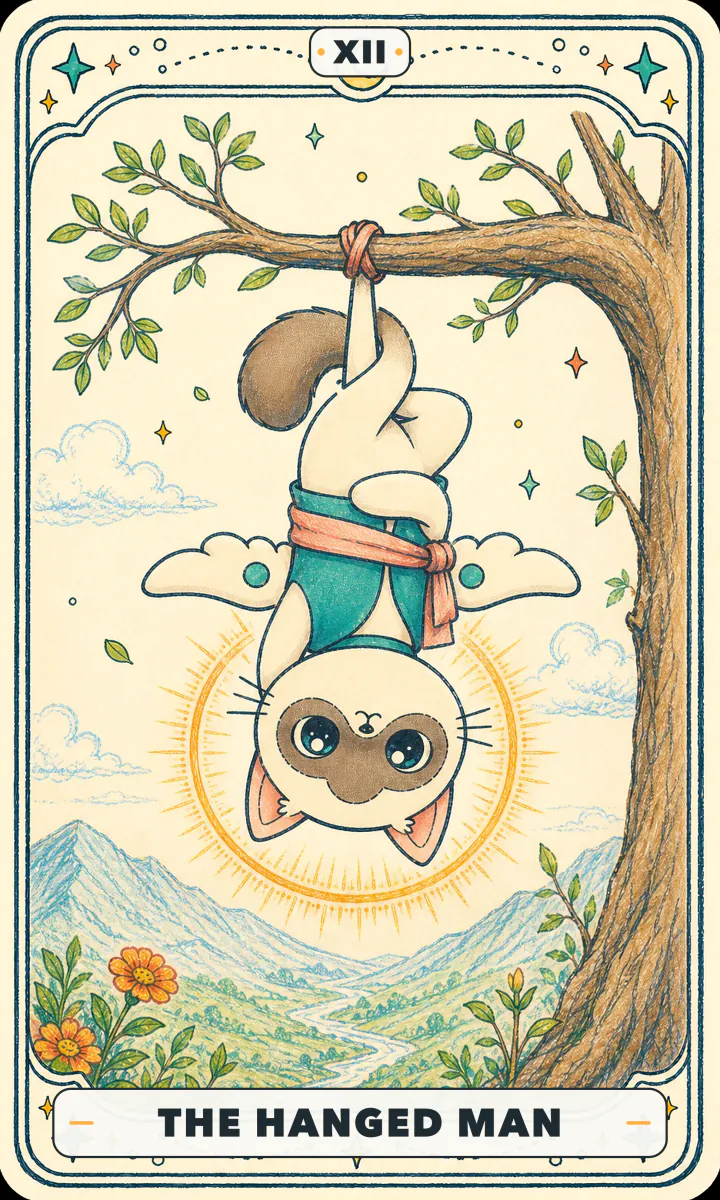
Un uomo è appeso a testa in giù per un piede a un albero a forma di T, con le gambe che formano la forma di un 4. Un alone brilla intorno alla sua testa e la sua espressione è serena piuttosto che sofferente. Indossa una tunica blu e leggings rossi.
Significato al dritto
Sacrificio, una nuova prospettiva, sospensione, lasciar andare. Simboleggia l'acquisizione di una saggezza superiore e una visione completamente nuova del mondo attraverso la calma deliberata o la resa dell'ego.
Significato rovesciato
Sacrificio inutile, ritardo, stallo, fatica. Può indicare sofferenza per ragioni sbagliate o incapacità di liberarsi da qualche schiavitù.
Amore, carriera, denaro e crescita
Amore
In amore, L'Impiccato indica Vedere il mondo da un'altra angolazione. Rileggilo confrontandolo con il modo in cui si comporta effettivamente la relazione e con ciò che scegliete entrambi.
Carriera
In materia di carriera, L'Impiccato indica Vedere il mondo da un'altra angolazione. Inizia individuando quali risorse controlli e quale sarà la tua prossima mossa.
Soldi
In materia di soldi, L'Impiccato indica Vedere il mondo da un'altra angolazione. Non considerare una lettura simbolica come una conclusione di investimento: segui i fatti, il budget e la tua tolleranza al rischio.
Crescita personale
Per la crescita personale, L'Impiccato indica Vedere il mondo da un'altra angolazione. Annota la domanda che solleva, quindi trasformala in un'azione che puoi effettivamente verificare.
Cosa prova l'altra persona
Quando L'Impiccato indica cosa prova l'altra persona, il tema del suo atteggiamento verso di te è: Vedere il mondo da un'altra angolazione. Al dritto il sentimento è rivolto all'esterno e si vede; rovesciata, per ora resta dentro di lei. Non prenderla come una sentenza: verificala con il modo in cui si comporta davvero.
Sì o no
Al dritto
Forse
Rovesciata
No
Questa è la nostra lettura veloce, basata sulla direzione in cui tende il significato della carta. Le tradizioni non sono d'accordo sulle singole carte, e un "Forse" deve essere valutato rispetto alla posizione nello spread e alla situazione reale piuttosto che essere preso come una risposta di una sola parola.
Testo originale di Waite (1911)
Simbolismo interiore (originale)
La forca da cui pende forma una croce a Tau, mentre la figura — per la posizione delle gambe — forma una croce uncinata. Attorno al capo di quello che sembra un martire c'è un nimbo. Va notato (1) che l'albero del sacrificio è legno vivo, con le foglie; (2) che il volto esprime una profonda estasi, non sofferenza; (3) che la figura nel suo insieme suggerisce una vita sospesa, ma vita e non morte. È una carta di significato profondo, ma tutto il significato è velato. Uno dei suoi curatori suggerisce che Eliphas Lévi non ne conoscesse il senso, il che è indubbio — né lo conosceva il curatore stesso. È stata chiamata a torto carta del martirio, carta della prudenza, carta della Grande Opera, carta del dovere; ma possiamo esaurire tutte le interpretazioni pubblicate e trovarvi solo vanità. Da parte mia dirò molto semplicemente che essa esprime la relazione, in uno dei suoi aspetti, tra il Divino e l'Universo.
Chi sa comprendere che la storia della propria natura superiore è racchiusa in questo simbolismo riceverà presagi di un grande risveglio possibile, e saprà che dopo il sacro Mistero della Morte c'è un glorioso Mistero della Resurrezione.
Significato originale al dritto
Saggezza, circospezione, discernimento, prove, sacrificio, intuizione, divinazione, profezia.
Significato originale invertito
Egoismo, la folla, il corpo politico.
Citato da A. E. Waite, The Pictorial Key to the Tarot (1911), illustrato da Pamela Colman Smith. Il testo è di pubblico dominio.
Origini del mito e dei simboli
L'immagine è una punizione medievale italiana per i traditori. Odino vi è stato accostato molto più tardi.
Iconografia documentata
Attestata da oggetti o testi giunti fino a noi
Le pitture infamanti: essere appesi a testa in giù era una pena
L'Italia medievale conosceva una pena pubblica chiamata pittura infamante: il ritratto di un traditore, di un debitore insolvente o di un nemico politico veniva dipinto appeso per un piede sul muro esterno di un edificio pubblico, perché tutti lo vedessero. Nei primi mazzi italiani questa carta si chiama L'Appeso, e compare anche come Il Traditore. Per uno spettatore del Quattrocento, in altre parole, la prima lettura della carta era «quest'uomo è stato condannato», non «quest'uomo sta meditando».
Fonte La pittura infamante dell'Italia medievale; i nomi italiani antichi L'Appeso / Il Traditore
Corrispondenza esoterica
Una tesi tradizionale con fonti, ma costruita dentro un sistema occulto
La lettura del martirio l'ha cancellata Waite stesso
Waite respinge una per una le letture diffuse: la carta, scrive, «è stata chiamata a torto una carta del martirio, una carta della prudenza, una carta della Grande Opera, una carta del dovere». Chiede al lettore di notare tre cose: l'albero del sacrificio è legno vivo con le foglie; il volto esprime una profonda estasi, non sofferenza; e la figura nel suo insieme suggerisce «la vita in sospensione, ma vita e non morte». La sua lettura è una relazione fra il Divino e l'Universo. La forca forma una croce a Tau, e le gambe incrociate quella che lui chiama una croce fylfot.
Fonte Waite, The Pictorial Key to the Tarot, 1911, L'Impiccato (confronta l'originale nel pannello delle fonti di questa pagina)
L'elemento acqua e la lettera Mem
La Golden Dawn associa l'Impiccato all'elemento acqua e alla lettera ebraica Mem, che significa letteralmente acqua. Sospensione, abbandono, lasciarsi portare dalla corrente: tutto questo registro viene da qui, non da un pianeta. In questo sistema tre trionfi (il Matto, l'Impiccato, il Giudizio) ricevono le tre lettere elementali invece delle attribuzioni planetarie.
Fonte Attribuzioni delle lettere elementali nel Book T della Golden Dawn
Lettura moderna
Diffusa solo dal Novecento; estranea alle origini della carta
Il sacrificio di Odino: utile, purché si sappia che è stato accostato
La lettura moderna più diffusa collega questa carta al mito norreno: Odino si appende all'albero del mondo per nove notti, ferito da una lancia, sacrificato a se stesso, e alla fine raccoglie le rune. Il passo esiste davvero (Hávamál 138-139). Due cose però vanno tenute ferme. Primo, il testo dice che rimase appeso «a un albero battuto dal vento per nove lunghe notti» e non dice mai a testa in giù; il capovolgimento è opera di lettori successivi che adattano il testo all'immagine. Secondo, il passo non ha alcun legame storico con i tarocchi: la distanza nel tempo e nello spazio è troppo grande. Come appiglio per la memoria funziona bene. Solo, non insegnarlo come l'origine della carta.
Fonte Lettura moderna divulgativa; l'autosacrificio di Odino è nell'Hávamál 138-139
Scritto da BESTAROT, non citato da fonti storiche. Ogni affermazione è contrassegnata da quanto bene è dimostrata; gli strati interpretativi moderni sono utili per la lettura, ma non costituiscono l’origine storica della carta.
Studia il tema: Mito e origini dei simboli (Accademia capitolo 6)