Morte
Death
Finali, Trasformazione
Risposta rapida
Il significato principale di Morte è La fine completa del vecchio. Al dritto, solitamente indica Fine, trasformazione, rinascita, cambiamento inevitabile. Simboleggia la chiusur; rovesciata, potrebbe suggerire Resistere al cambiamento, alla stagnazione, al decadimento, all'incapacità di la.
Immagini della carta
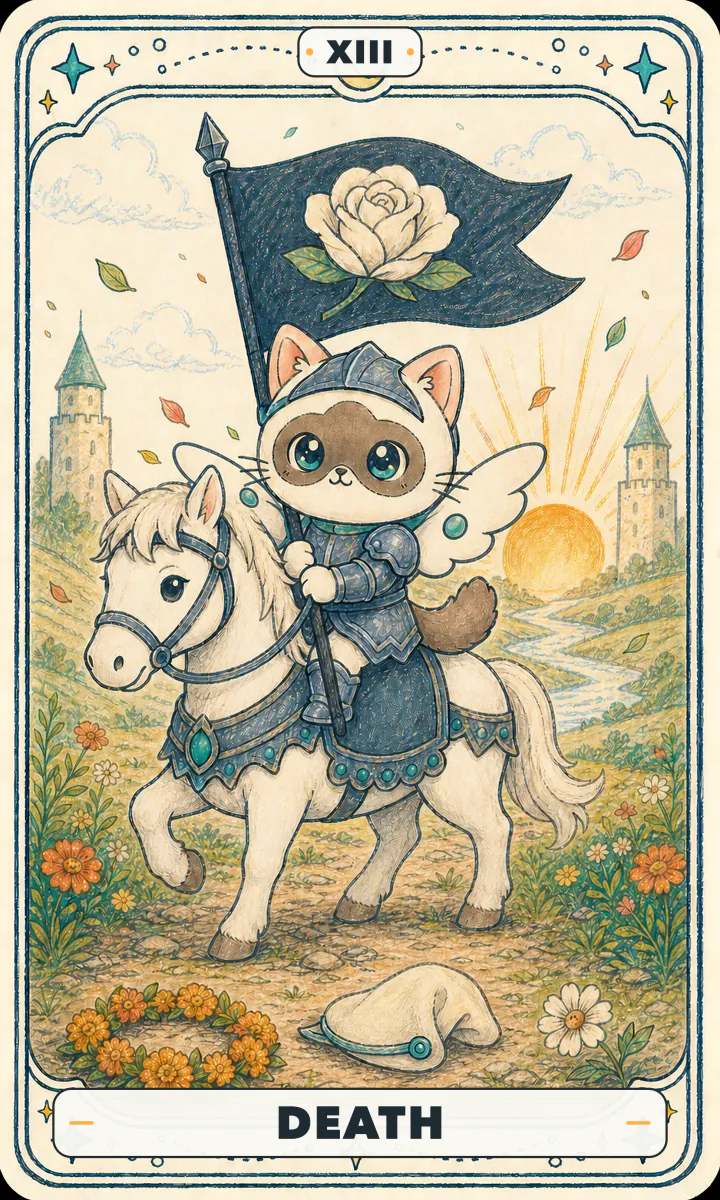
Un cavaliere scheletrico in armatura nera avanza lentamente su un cavallo bianco, portando uno stendardo nero con una rosa bianca. Sotto gli zoccoli del cavallo giacciono un re caduto, un vescovo in preghiera e un bambino innocente. Torri gemelle e un sole nascente segnano l'orizzonte.
Significato al dritto
Fine, trasformazione, rinascita, cambiamento inevitabile. Simboleggia la chiusura completa di un vecchio capitolo, liberando spazio affinché qualcosa di nuovo possa crescere.
Significato rovesciato
Resistere al cambiamento, alla stagnazione, al decadimento, all'incapacità di lasciare andare. Può indicare aggrapparsi al passato, prolungare il dolore e bloccare l'ingresso in una nuova fase.
Amore, carriera, denaro e crescita
Amore
In amore, Morte indica La fine completa del vecchio. Rileggilo confrontandolo con il modo in cui si comporta effettivamente la relazione e con ciò che scegliete entrambi.
Carriera
In materia di carriera, Morte indica La fine completa del vecchio. Inizia individuando quali risorse controlli e quale sarà la tua prossima mossa.
Soldi
In materia di soldi, Morte indica La fine completa del vecchio. Non considerare una lettura simbolica come una conclusione di investimento: segui i fatti, il budget e la tua tolleranza al rischio.
Crescita personale
Per la crescita personale, Morte indica La fine completa del vecchio. Annota la domanda che solleva, quindi trasformala in un'azione che puoi effettivamente verificare.
Cosa prova l'altra persona
Quando Morte indica cosa prova l'altra persona, il tema del suo atteggiamento verso di te è: La fine completa del vecchio. Al dritto il sentimento è rivolto all'esterno e si vede; rovesciata, per ora resta dentro di lei. Non prenderla come una sentenza: verificala con il modo in cui si comporta davvero.
Sì o no
Al dritto
No
Rovesciata
Forse
Questa è la nostra lettura veloce, basata sulla direzione in cui tende il significato della carta. Le tradizioni non sono d'accordo sulle singole carte, e un "Forse" deve essere valutato rispetto alla posizione nello spread e alla situazione reale piuttosto che essere preso come una risposta di una sola parola.
Testo originale di Waite (1911)
Simbolismo interiore (originale)
Il velo o maschera della vita si perpetua nel cambiamento, nella trasformazione e nel passaggio dal basso all'alto, e ciò è rappresentato in modo più adatto, nei Tarocchi rettificati, da una delle visioni apocalittiche che dalla rozza idea dello scheletro mietitore. Dietro di essa sta l'intero mondo dell'ascesa nello spirito. Il misterioso cavaliere avanza lentamente, portando uno stendardo nero con l'emblema della Rosa Mistica, che significa la vita. Tra due colonne, al limite dell'orizzonte, splende il sole dell'immortalità. Il cavaliere non porta armi visibili, ma il re, il fanciullo e la fanciulla cadono davanti a lui, mentre un prelato a mani giunte attende la propria fine.
Non dovrebbe esserci bisogno di far notare che il suggerimento di morte che ho avanzato a proposito della carta precedente va inteso, naturalmente, in senso mistico, ma non è così nel caso presente. Il naturale passaggio dell'uomo allo stadio successivo del suo essere è, o può essere, una forma del suo progresso; ma l'ingresso esotico e quasi sconosciuto, ancora in questa vita, nello stato di morte mistica è un mutamento nella forma della coscienza e il passaggio a uno stato di cui la morte ordinaria non è né la via né la porta. Le spiegazioni occulte esistenti della tredicesima carta sono, nel complesso, migliori del solito: rinascita, creazione, destinazione, rinnovamento e il resto.
Significato originale al dritto
Fine, mortalità, distruzione, corruzione; anche, per un uomo, la perdita di un benefattore; per una donna, molte contrarietà; per una fanciulla, il fallimento dei progetti di matrimonio.
Significato originale invertito
Inerzia, sonno, letargo, pietrificazione, sonnambulismo; speranza distrutta.
Citato da A. E. Waite, The Pictorial Key to the Tarot (1911), illustrato da Pamela Colman Smith. Il testo è di pubblico dominio.
Origini del mito e dei simboli
Lo scheletro mietitore è lo schema medievale della Danza macabra; Waite dice di averlo sostituito con il cavaliere dell'Apocalisse.
Iconografia documentata
Attestata da oggetti o testi giunti fino a noi
La Danza macabra prende tutti allo stesso modo
Le figure cadute in primo piano sono un re, un vescovo (il chierico che attende a mani giunte), una fanciulla e un bambino. È il cast standard delle tradizioni iconografiche medievali della Danza macabra e del Trionfo della Morte: la Morte conduce in un'unica danza persone di ogni condizione, il papa e il mendicante nella stessa fila, a significare che davanti a lei il rango non conta nulla. Anche nei Trionfi di Petrarca la Morte è il carro che vince la Pudicizia.
Fonte Le tradizioni iconografiche medievali della Danza macabra e del Trionfo della Morte; i Trionfi di Petrarca
Corrispondenza esoterica
Una tesi tradizionale con fonti, ma costruita dentro un sistema occulto
Waite sostituì lo scheletro con un cavaliere
Waite lo dice chiaramente: il significato è «rappresentato più convenientemente nei Tarocchi rettificati da una delle visioni apocalittiche che dalla rozza idea dello scheletro mietitore». La Morte a cavallo viene da Apocalisse 6,8. Scrive anche che lo stendardo nero porta la Rosa Mistica, che «significa la vita», e che fra due colonne all'orizzonte sorge «il sole dell'immortalità». Vale a dire: la vita e l'immortalità su questa carta ce le ha messe deliberatamente l'autore per tenere a bada la morte.
Fonte Apocalisse 6,8; Waite, The Pictorial Key to the Tarot, 1911, La Morte
Lo Scorpione e la lettera Nun
La Golden Dawn associa la Morte allo Scorpione (lettera ebraica Nun, che significa letteralmente «pesce» e viene spesso descritta come legata alla continuazione e alla generazione). Ciò che l'attribuzione allo Scorpione porta è il registro di un cambiamento completo di forma, non di un arresto.
Fonte Attribuzioni zodiacali nel Book T della Golden Dawn
Lettura moderna
Diffusa solo dal Novecento; estranea alle origini della carta
«La Morte non significa mai morte»: si è andati troppo oltre
Per non spaventare chi consulta, la divinazione moderna dice come cosa ovvia che questa carta parla solo di trasformazione e mai di morte. Il testo di Waite è più sfumato: dice che la morte menzionata nella carta precedente «va naturalmente intesa in senso mistico, ma non è questo il caso presente», e distingue una persona che passa naturalmente allo stadio successivo dall'ingresso nella morte mistica all'interno di questa vita. Inoltre, cosa insolita per lui, le fa un complimento: le letture esoteriche esistenti di questa carta sono «nel complesso migliori del solito», e rinascita, creazione e rinnovamento contano tutti. L'affermazione esatta è quindi questa: il peso della carta cade su una sostituzione completa della forma, non su «non ha niente a che fare con la morte».
Fonte L'avvertenza standard della divinazione moderna; la distinzione tracciata da Waite in questa stessa voce nel 1911
Scritto da BESTAROT, non citato da fonti storiche. Ogni affermazione è contrassegnata da quanto bene è dimostrata; gli strati interpretativi moderni sono utili per la lettura, ma non costituiscono l’origine storica della carta.
Studia il tema: Mito e origini dei simboli (Accademia capitolo 6)