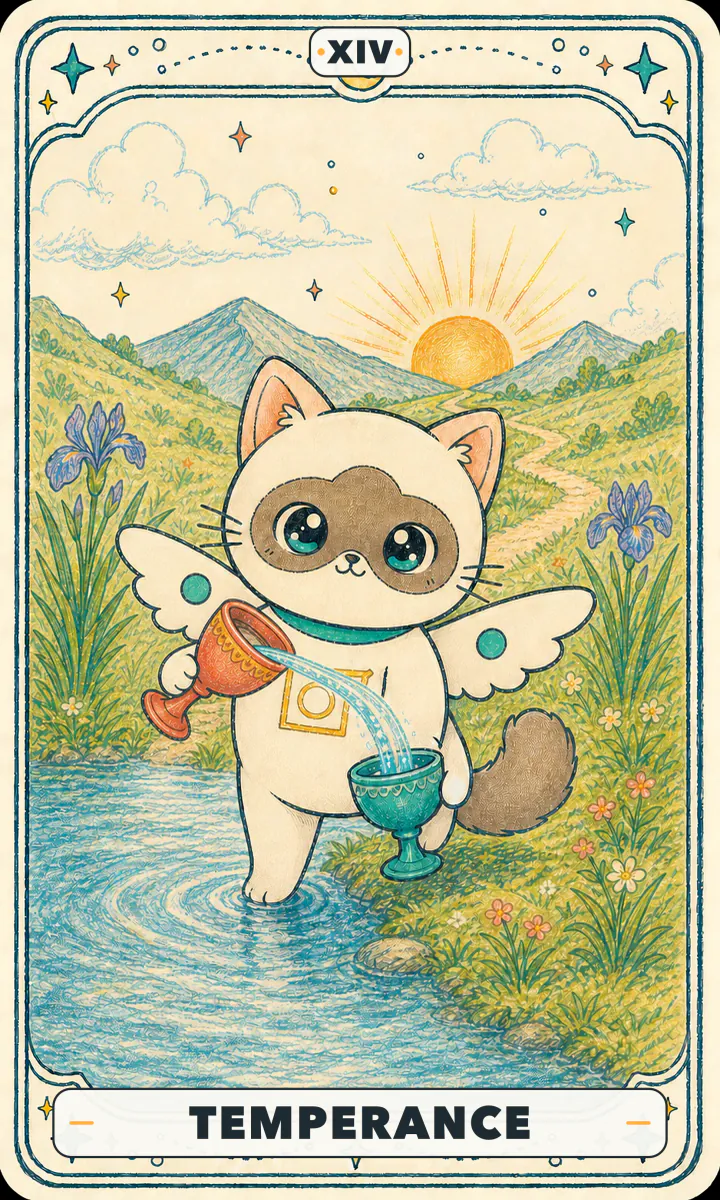
Temperanza
Temperance
Equilibrio, fusione
Risposta rapida
Il significato principale di Temperanza è L'alchimia e l'armonizzazione delle energie. Al dritto, solitamente indica Equilibrio, moderazione, fusione, pazienza. Simboleggia l'armonizzazione di elem; rovesciata, potrebbe suggerire Squilibrio, estremismo, eccesso, impazienza. Può indicare turbolenza emotiva o p.
Immagini della carta
Un angelo sta con un piede nell'acqua e l'altro sulla riva. Tiene in mano due tazze, miracolosamente versando l'acqua tra di loro in un angolo senza versare una goccia. Un emblema quadrato e triangolare segna il suo petto e un sentiero conduce verso il sole sullo sfondo.
Significato al dritto
Equilibrio, moderazione, fusione, pazienza. Simboleggia l'armonizzazione di elementi opposti, la ricerca della via di mezzo e la creazione di qualcosa di nuovo attraverso una fusione quasi alchemica.
Significato rovesciato
Squilibrio, estremismo, eccesso, impazienza. Può indicare turbolenza emotiva o perdita del punto di equilibrio in una relazione o situazione.
Amore, carriera, denaro e crescita
Amore
In amore, Temperanza indica L'alchimia e l'armonizzazione delle energie. Rileggilo confrontandolo con il modo in cui si comporta effettivamente la relazione e con ciò che scegliete entrambi.
Carriera
In materia di carriera, Temperanza indica L'alchimia e l'armonizzazione delle energie. Inizia individuando quali risorse controlli e quale sarà la tua prossima mossa.
Soldi
In materia di soldi, Temperanza indica L'alchimia e l'armonizzazione delle energie. Non considerare una lettura simbolica come una conclusione di investimento: segui i fatti, il budget e la tua tolleranza al rischio.
Crescita personale
Per la crescita personale, Temperanza indica L'alchimia e l'armonizzazione delle energie. Annota la domanda che solleva, quindi trasformala in un'azione che puoi effettivamente verificare.
Cosa prova l'altra persona
Quando Temperanza indica cosa prova l'altra persona, il tema del suo atteggiamento verso di te è: L'alchimia e l'armonizzazione delle energie. Al dritto il sentimento è rivolto all'esterno e si vede; rovesciata, per ora resta dentro di lei. Non prenderla come una sentenza: verificala con il modo in cui si comporta davvero.
Sì o no
Al dritto
Sì
Rovesciata
No
Questa è la nostra lettura veloce, basata sulla direzione in cui tende il significato della carta. Le tradizioni non sono d'accordo sulle singole carte, e un "Forse" deve essere valutato rispetto alla posizione nello spread e alla situazione reale piuttosto che essere preso come una risposta di una sola parola.
Testo originale di Waite (1911)
Simbolismo interiore (originale)
Un angelo alato, con il segno del sole sulla fronte e sul petto il quadrato e il triangolo del settenario. Ne parlo al maschile, ma la figura non è né maschio né femmina. Si ritiene che stia versando le essenze della vita da un calice all'altro. Ha un piede sulla terra e uno sulle acque, e illustra così la natura delle essenze. Un sentiero diritto sale verso certe alture al limite dell'orizzonte, e in alto c'è una grande luce attraverso la quale si scorge vagamente una corona. Qui sta una parte del Segreto della Vita Eterna, per quanto è possibile all'uomo nella sua incarnazione. Tutti gli emblemi convenzionali vi sono abbandonati.
Lo stesso vale per i significati convenzionali, che si riferiscono ai mutamenti delle stagioni, al movimento perpetuo della vita e perfino alla combinazione delle idee. Non è vero, inoltre, che la figura simboleggi il genio del sole, benché sia l'analogia della luce solare, realizzata nella terza parte della nostra triplicità umana. È chiamata Temperanza, in modo fantasioso, perché quando la sua regola prevale nella nostra coscienza, essa tempera, combina e armonizza la natura psichica e quella materiale. Sotto quella regola conosciamo, nella nostra parte razionale, qualcosa di ciò da cui veniamo e di ciò verso cui andiamo.
Significato originale al dritto
Economia, moderazione, frugalità, amministrazione, accomodamento.
Significato originale invertito
Cose legate a chiese, religioni, sette, al sacerdozio, talvolta perfino il sacerdote che celebrerà le nozze del consultante; anche disunione, combinazioni sfortunate, interessi in conflitto.
Citato da A. E. Waite, The Pictorial Key to the Tarot (1911), illustrato da Pamela Colman Smith. Il testo è di pubblico dominio.
Origini del mito e dei simboli
Versare un liquido fra due vasi è semplicemente il modo standard di raffigurare la virtù della Temperanza. Non serve alcuna deviazione per il mito greco.
Iconografia documentata
Attestata da oggetti o testi giunti fino a noi
Il gesto di versare è la Temperanza stessa
La Temperanza (Temperantia) è una delle quattro virtù cardinali, e la personificazione medievale fissa è una donna che versa un liquido fra due vasi, con riferimento all'antica pratica di tagliare il vino con l'acqua: non berlo puro è il modello quotidiano della temperanza. Il gesto centrale di questa carta non è altro che questo: un'illustrazione letterale della parola. Insieme alla Forza (Fortezza) e alla Giustizia, questo mazzo contiene tre delle virtù cardinali; manca solo la Prudenza.
Fonte Le quattro virtù cardinali classiche; lo schema dell'acqua mescolata nelle personificazioni medievali della Temperantia
Corrispondenza esoterica
Una tesi tradizionale con fonti, ma costruita dentro un sistema occulto
La figura di Waite non è né maschile né femminile
Waite scrive: il segno del sole sulla fronte, sul petto «il quadrato e il triangolo del settenario», un piede sulla terra e uno nell'acqua. Tiene a dichiarare che chiama la figura al maschile, «ma la figura non è né maschio né femmina», respinge l'idea che simboleggi il genio del sole, e dice che il nome Temperanza è applicato «in modo fantasioso», perché ciò che la figura sta davvero facendo è temperare le due nature, spirito e materia.
Fonte Waite, The Pictorial Key to the Tarot, 1911, La Temperanza (confronta l'originale nel pannello delle fonti di questa pagina)
Il Sagittario e la strada che sale
La Golden Dawn associa la Temperanza al Sagittario (lettera ebraica Samekh). Il sentiero sulla carta, che corre dritto verso colline lontane sovrastate da una luce, si accorda con il senso sagittariano del tirare verso qualcosa di lontano. È un risultato della progettazione del sistema, non l'origine dell'immagine.
Fonte Attribuzioni zodiacali nel Book T della Golden Dawn
Lettura moderna
Diffusa solo dal Novecento; estranea alle origini della carta
Iride e Ganimede: un'identificazione moderna
Poiché la carta mostra una figura alata che versa acqua, la si collega spesso a Iride, la dea greca dell'arcobaleno, o a Ganimede, il coppiere degli dèi legato all'Acquario. Entrambi sono figure reali del mito greco, ma nessuno dei due ha una linea di discendenza verso lo schema dell'acqua mescolata della virtù Temperanza: nella storia dell'iconografia, il gesto di versare fu prima il contrassegno di una virtù, e solo in seguito fu identificato da lettori successivi con qualche divinità.
Fonte Lettura moderna divulgativa; Iride e Ganimede sono figure del mito greco
Scritto da BESTAROT, non citato da fonti storiche. Ogni affermazione è contrassegnata da quanto bene è dimostrata; gli strati interpretativi moderni sono utili per la lettura, ma non costituiscono l’origine storica della carta.
Studia il tema: Mito e origini dei simboli (Accademia capitolo 6)