L'Imperatore
The Emperor
Autorità, struttura
Risposta rapida
Il significato principale di L'Imperatore è Stabilire ordine e regole. Al dritto, solitamente indica Autorità, struttura, figura paterna, logica, regole. Simboleggia la costruzione; rovesciata, potrebbe suggerire Tirannia, rigidità, mancanza di disciplina, abuso di potere. Può indicare un pre.
Immagini della carta
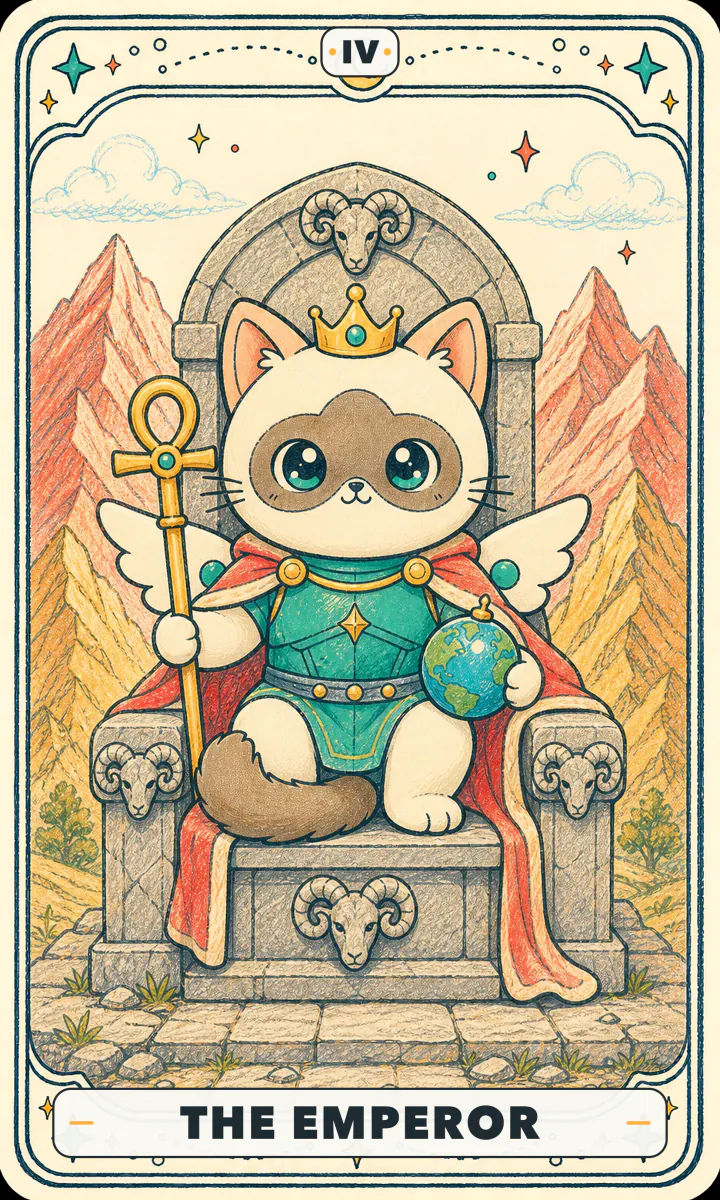
Un maestoso anziano siede su un trono di pietra ornato con teste di ariete, su uno sfondo di cieli rossi e montagne brulle. Indossa un'armatura sotto una veste rossa e tiene in mano uno scettro e una sfera, simboli di potere.
Significato al dritto
Autorità, struttura, figura paterna, logica, regole. Simboleggia la costruzione di ordine e basi solide, il raggiungimento del successo attraverso la disciplina e la leadership.
Significato rovesciato
Tirannia, rigidità, mancanza di disciplina, abuso di potere. Può indicare un prepotente bisogno di controllo o, al contrario, debolezza e completa mancanza di risolutezza.
Amore, carriera, denaro e crescita
Amore
In amore, L'Imperatore indica Stabilire ordine e regole. Rileggilo confrontandolo con il modo in cui si comporta effettivamente la relazione e con ciò che scegliete entrambi.
Carriera
In materia di carriera, L'Imperatore indica Stabilire ordine e regole. Inizia individuando quali risorse controlli e quale sarà la tua prossima mossa.
Soldi
In materia di soldi, L'Imperatore indica Stabilire ordine e regole. Non considerare una lettura simbolica come una conclusione di investimento: segui i fatti, il budget e la tua tolleranza al rischio.
Crescita personale
Per la crescita personale, L'Imperatore indica Stabilire ordine e regole. Annota la domanda che solleva, quindi trasformala in un'azione che puoi effettivamente verificare.
Cosa prova l'altra persona
Quando L'Imperatore indica cosa prova l'altra persona, il tema del suo atteggiamento verso di te è: Stabilire ordine e regole. Al dritto il sentimento è rivolto all'esterno e si vede; rovesciata, per ora resta dentro di lei. Non prenderla come una sentenza: verificala con il modo in cui si comporta davvero.
Sì o no
Al dritto
Sì
Rovesciata
No
Questa è la nostra lettura veloce, basata sulla direzione in cui tende il significato della carta. Le tradizioni non sono d'accordo sulle singole carte, e un "Forse" deve essere valutato rispetto alla posizione nello spread e alla situazione reale piuttosto che essere preso come una risposta di una sola parola.
Testo originale di Waite (1911)
Simbolismo interiore (originale)
Ha per scettro una forma della Crux ansata e un globo nella mano sinistra. È un monarca incoronato — imperioso, maestoso, seduto su un trono i cui braccioli sono ornati sul davanti da teste d'ariete. È l'esecuzione e la realizzazione, il potere di questo mondo, qui rivestito del più alto dei suoi attributi naturali. Talvolta è rappresentato seduto su una pietra cubica, il che però confonde alcune questioni. È il potere virile a cui l'Imperatrice risponde, e in questo senso è colui che cerca di sollevare il Velo di Iside; eppure lei rimane virgo intacta.
Va inteso che questa carta e quella dell'Imperatrice non rappresentano precisamente la condizione della vita coniugale, sebbene questo stato vi sia implicito. In superficie, come ho indicato, stanno per la regalità mondana, innalzata sui seggi dei potenti; ma al di sopra di ciò c'è il suggerimento di un'altra presenza. Significano anche — e la figura maschile in particolare — la regalità più alta, che occupa il trono dell'intelletto. Da qui viene la signoria del pensiero piuttosto che quella del mondo animale. Entrambe le personalità, ciascuna a suo modo, sono «piene di strana esperienza», ma la loro non è consapevolmente la saggezza che attinge da un mondo superiore. L'Imperatore è stato descritto (a) come la volontà nella sua forma incarnata, ma questa è solo una delle sue applicazioni, e (b) come espressione delle virtualità contenute nell'Essere Assoluto — ma questa è fantasia.
Significato originale al dritto
Stabilità, potere, protezione, realizzazione; una persona importante; aiuto, ragione, convinzione; anche autorità e volontà.
Significato originale invertito
Benevolenza, compassione, credito; anche confusione per i nemici, ostruzione, immaturità.
Citato da A. E. Waite, The Pictorial Key to the Tarot (1911), illustrato da Pamela Colman Smith. Il testo è di pubblico dominio.
Origini del mito e dei simboli
Le teste d'ariete sul trono sono l'Ariete; lo scettro che impugna è un ankh egizio. Il gusto ottocentesco per l'Egitto è rimasto sulla carta.
Iconografia documentata
Attestata da oggetti o testi giunti fino a noi
Lui e l'Imperatrice sono una coppia, ma non un matrimonio
Nei primi mazzi l'Imperatore e l'Imperatrice sono un'immagine accoppiata della carica secolare. Waite si premura di notare che le due carte «non rappresentano esattamente la condizione della vita coniugale, benché questo stato vi sia compreso»; sono piuttosto la regalità più alta sul trono dell'intelletto. Leggere la coppia senz'altro come genitori o come marito e moglie significa scambiare un diagramma rinascimentale delle cariche per un diagramma della famiglia.
Fonte Le immagini accoppiate dei sovrani nei primi tarocchi italiani; Waite, The Pictorial Key to the Tarot, 1911, L'Imperatore
Corrispondenza esoterica
Una tesi tradizionale con fonti, ma costruita dentro un sistema occulto
Le teste d'ariete significano Ariete
Waite afferma che i braccioli del trono terminano con teste d'ariete. L'ariete è il segno dell'Ariete, e l'attribuzione della Golden Dawn per l'Imperatore è infatti l'Ariete (lettera ebraica Heh); il governatore dell'Ariete è Marte, il Mars romano, corrispettivo dell'Ares greco. Tutto il registro dell'iniziare, del dare ordini e dell'imporre l'ordine con la forza discende lungo questa catena.
Fonte Waite, The Pictorial Key to the Tarot, 1911, L'Imperatore; attribuzioni zodiacali nel Book T della Golden Dawn
L'ankh e «colui che cerca di sollevare il Velo di Iside»
Lo scettro che tiene in mano Waite lo chiama Crux ansata, la croce con l'ansa, cioè l'ankh egizio, il segno della vita. Nello stesso paragrafo scrive che l'Imperatore è «colui che cerca di sollevare il Velo di Iside; eppure ella resta virgo intacta». Sono entrambe tracce del gusto occultista ottocentesco per l'Egitto: segni egizi presi in prestito come vocabolario simbolico generale, non l'affermazione che la carta venga dall'Egitto. Waite enuncia questa distinzione in modo molto chiaro alla voce della Ruota della Fortuna.
Fonte Waite, The Pictorial Key to the Tarot, 1911, L'Imperatore; l'ankh è il segno egizio della vita
Lettura moderna
Diffusa solo dal Novecento; estranea alle origini della carta
L'archetipo del padre arriva dopo Jung
Leggere l'Imperatore come l'archetipo del padre, come il patriarcato, usa il vocabolario della psicologia del profondo novecentesca. In pratica la lettura funziona bene, e si collega davvero a una carica che stabilisce le regole. Ma la psicologia degli archetipi è una costruzione junghiana, e non ha nulla a che vedere con chi dipinse questa carta nel Quattrocento.
Fonte Lettura moderna divulgativa; il concetto di archetipo viene dagli scritti di Jung
Scritto da BESTAROT, non citato da fonti storiche. Ogni affermazione è contrassegnata da quanto bene è dimostrata; gli strati interpretativi moderni sono utili per la lettura, ma non costituiscono l’origine storica della carta.
Studia il tema: Mito e origini dei simboli (Accademia capitolo 6)