Il Mago
The Magician
Creazione, forza di volontà
Risposta rapida
Il significato principale di Il Mago è Il potere di manifestare la realtà. Al dritto, solitamente indica Manifestazione, forza di volontà, abilità, concentrazione. Simboleggia che ogni; rovesciata, potrebbe suggerire Inganno, manipolazione, talento sprecato, scarsa pianificazione. Può indicare l'.
Immagini della carta
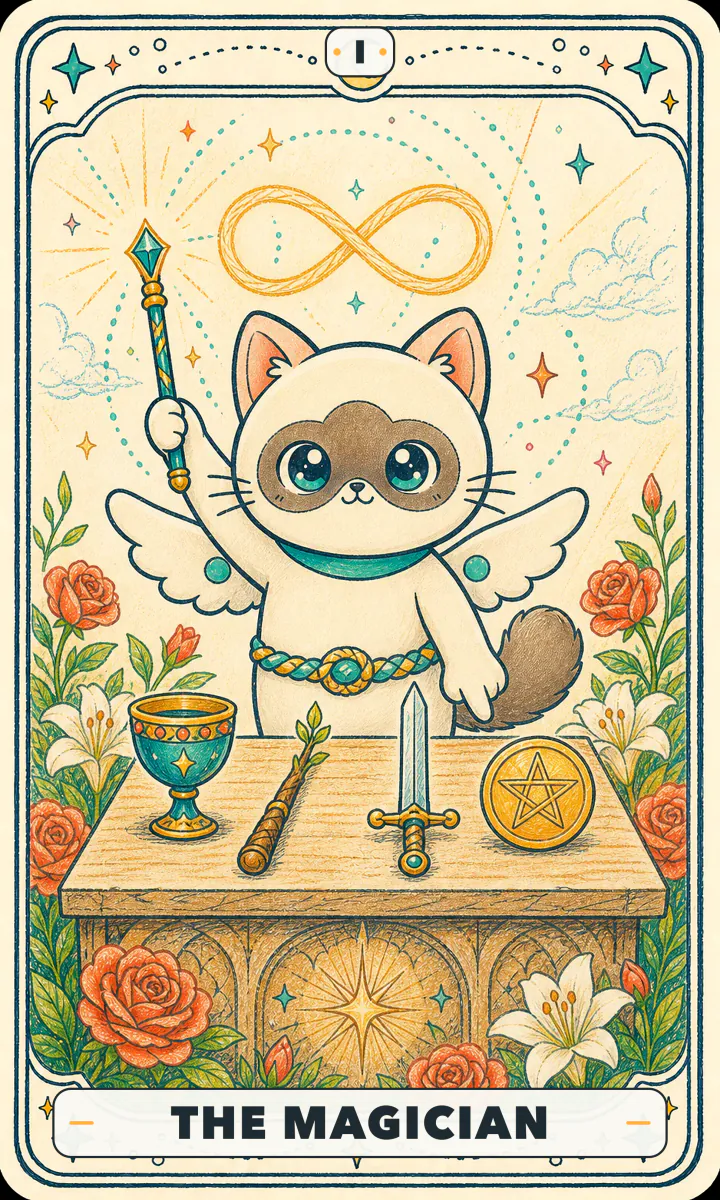
Un mago vestito di rosso sta davanti a una tavola apparecchiata con una coppa, una bacchetta, una spada e un pentacolo, simboli dei quattro elementi. Una mano alza una bacchetta verso il cielo mentre l'altra punta verso la terra. Sopra la sua testa fluttua il simbolo dell'infinito e un serpente ouroboros gli circonda la vita.
Significato al dritto
Manifestazione, forza di volontà, abilità, concentrazione. Simboleggia che ogni risorsa è ora nelle tue mani, pronta a trasformare le idee in realtà.
Significato rovesciato
Inganno, manipolazione, talento sprecato, scarsa pianificazione. Può indicare l'uso di abilità per fuorviare gli altri o il possesso di abilità che rimangono inespresse.
Amore, carriera, denaro e crescita
Amore
In amore, Il Mago indica Il potere di manifestare la realtà. Rileggilo confrontandolo con il modo in cui si comporta effettivamente la relazione e con ciò che scegliete entrambi.
Carriera
In materia di carriera, Il Mago indica Il potere di manifestare la realtà. Inizia individuando quali risorse controlli e quale sarà la tua prossima mossa.
Soldi
In materia di soldi, Il Mago indica Il potere di manifestare la realtà. Non considerare una lettura simbolica come una conclusione di investimento: segui i fatti, il budget e la tua tolleranza al rischio.
Crescita personale
Per la crescita personale, Il Mago indica Il potere di manifestare la realtà. Annota la domanda che solleva, quindi trasformala in un'azione che puoi effettivamente verificare.
Cosa prova l'altra persona
Quando Il Mago indica cosa prova l'altra persona, il tema del suo atteggiamento verso di te è: Il potere di manifestare la realtà. Al dritto il sentimento è rivolto all'esterno e si vede; rovesciata, per ora resta dentro di lei. Non prenderla come una sentenza: verificala con il modo in cui si comporta davvero.
Sì o no
Al dritto
Sì
Rovesciata
No
Questa è la nostra lettura veloce, basata sulla direzione in cui tende il significato della carta. Le tradizioni non sono d'accordo sulle singole carte, e un "Forse" deve essere valutato rispetto alla posizione nello spread e alla situazione reale piuttosto che essere preso come una risposta di una sola parola.
Testo originale di Waite (1911)
Simbolismo interiore (originale)
Una figura giovanile con la veste del mago, dal volto simile al divino Apollo, con un sorriso di sicurezza e gli occhi splendenti. Sopra il suo capo c'è il misterioso segno dello Spirito Santo, il segno della vita, simile a una corda senza fine, che forma la cifra 8 in posizione orizzontale ∞. Attorno alla vita porta una cintura a forma di serpente, e il serpente sembra divorare la propria coda. Ai più è noto come simbolo convenzionale dell'eternità, ma qui indica più in particolare l'eternità della conquista nello spirito. Nella mano destra del Mago c'è una verga levata verso il cielo, mentre la mano sinistra indica la terra. Questo duplice segno è conosciuto nei gradi più alti dei Misteri Istituiti; mostra la discesa della grazia, della virtù e della luce, attinte dalle cose di sopra e trasmesse alle cose di sotto. Il senso complessivo è dunque il possesso e la comunicazione dei Poteri e dei Doni dello Spirito. Sul tavolo davanti al Mago ci sono i simboli dei quattro semi dei Tarocchi, che significano gli elementi della vita naturale: giacciono come gettoni davanti all'adepto, ed egli li adopera a suo piacimento. Più sotto ci sono rose e gigli, il flos campi e il lilium convallium, divenuti fiori di giardino, a mostrare la coltivazione dell'aspirazione. Questa carta significa il movente divino nell'uomo, che riflette Dio, la volontà nella liberazione della sua unione con ciò che sta in alto. È anche l'unità dell'essere individuale su tutti i piani e, in un senso molto elevato, è il pensiero, nel suo fissarsi. A proposito di ciò che ho chiamato il segno della vita e del suo legame con il numero 8, si può ricordare che lo gnosticismo cristiano parla della rinascita in Cristo come di un passaggio «nell'Ogdoade». Il numero mistico è chiamato Gerusalemme celeste, la Terra dove scorrono latte e miele, lo Spirito Santo e la Terra del Signore. Secondo il martinismo, 8 è il numero di Cristo.
Significato originale al dritto
Abilità, diplomazia, destrezza, sottigliezza; malattia, dolore, perdita, sciagura, insidie dei nemici; fiducia in sé, volontà; il consultante, se uomo.
Significato originale invertito
Medico, mago, malattia mentale, disonore, inquietudine.
Citato da A. E. Waite, The Pictorial Key to the Tarot (1911), illustrato da Pamela Colman Smith. Il testo è di pubblico dominio.
Origini del mito e dei simboli
La figura della carta nacque come prestigiatore da fiera. Il volto di Apollo è un'aggiunta di Waite.
Iconografia documentata
Attestata da oggetti o testi giunti fino a noi
Cominciò dietro un banchetto
Nei primi mazzi italiani questa carta si chiama Il Bagatto, e nei mazzi francesi Le Bateleur: in entrambi i casi un artista da fiera, un intrattenitore di strada. Nelle carte antiche sta dietro un banchetto su cui sono posati bicchieri e palline, gli attrezzi del gioco dei bussolotti. Nell'ordine dei trionfi è il primo del corteo, e anche il più umile. Questa carta dunque non parte dal «mago che comanda gli elementi», ma da «un uomo che si guadagna da vivere con le mani».
Fonte I nomi antichi italiano e francese Il Bagatto / Le Bateleur, e gli attrezzi del gioco dei bussolotti nelle carte antiche
Corrispondenza esoterica
Una tesi tradizionale con fonti, ma costruita dentro un sistema occulto
Il volto di Apollo: lo dice Waite stesso
Descrivendo questa carta, Waite parla di «una figura giovanile nella veste di un mago, con il volto del divino Apollo». È uno dei pochi punti del libro in cui l'autore nomina direttamente un dio greco, quindi qui non serve affidarsi a fonti di seconda mano. Lo stesso paragrafo riporta anche il segno dell'infinito sopra la sua testa, il serpente che si morde la coda alla sua vita (l'Uroboro) e i quattro emblemi dei semi disposti sul tavolo. La mano destra alza una bacchetta verso il cielo e la sinistra indica la terra; questo, dice, mostra «la discesa della grazia, della virtù e della luce» dall'alto verso il basso.
Fonte Waite, The Pictorial Key to the Tarot, 1911, Il Mago (confronta l'originale nel pannello delle fonti di questa pagina)
La catena Mercurio-Ermes
La Golden Dawn associa il Mago a Mercurio (lettera ebraica Beth). Mercurio è il Mercurius romano, corrispettivo dell'Ermes greco: dio dei messaggeri, dei confini e dell'abilità, e fonte del nome Ermete Trismegisto nella tradizione esoterica occidentale. Il gesto di una mano in alto e una in basso viene spesso letto come il «come in alto, così in basso» della Tavola di Smeraldo. Dentro il sistema esoterico la lettura regge, ma il testo di Waite parla della grazia che discende dall'alto, che non è la stessa affermazione.
Fonte Attribuzioni planetarie dei trionfi nel Book T della Golden Dawn; la Tavola di Smeraldo appartiene alla letteratura ermetica
Lettura moderna
Diffusa solo dal Novecento; estranea alle origini della carta
La lettura della manifestazione è contemporanea
Leggere il Mago come la legge della manifestazione, come «sei tu il creatore», è il risultato dell'ingresso nei tarocchi del linguaggio della crescita personale di fine Novecento. Il prestigiatore da fiera non ne ha traccia, e nemmeno Waite: ciò di cui scriveva era il movente divino nell'uomo. La lettura contemporanea ha la sua utilità. Solo, non va scambiata per il significato originario della carta.
Fonte Lettura moderna divulgativa, senza fondamento storico
Scritto da BESTAROT, non citato da fonti storiche. Ogni affermazione è contrassegnata da quanto bene è dimostrata; gli strati interpretativi moderni sono utili per la lettura, ma non costituiscono l’origine storica della carta.
Studia il tema: Mito e origini dei simboli (Accademia capitolo 6)