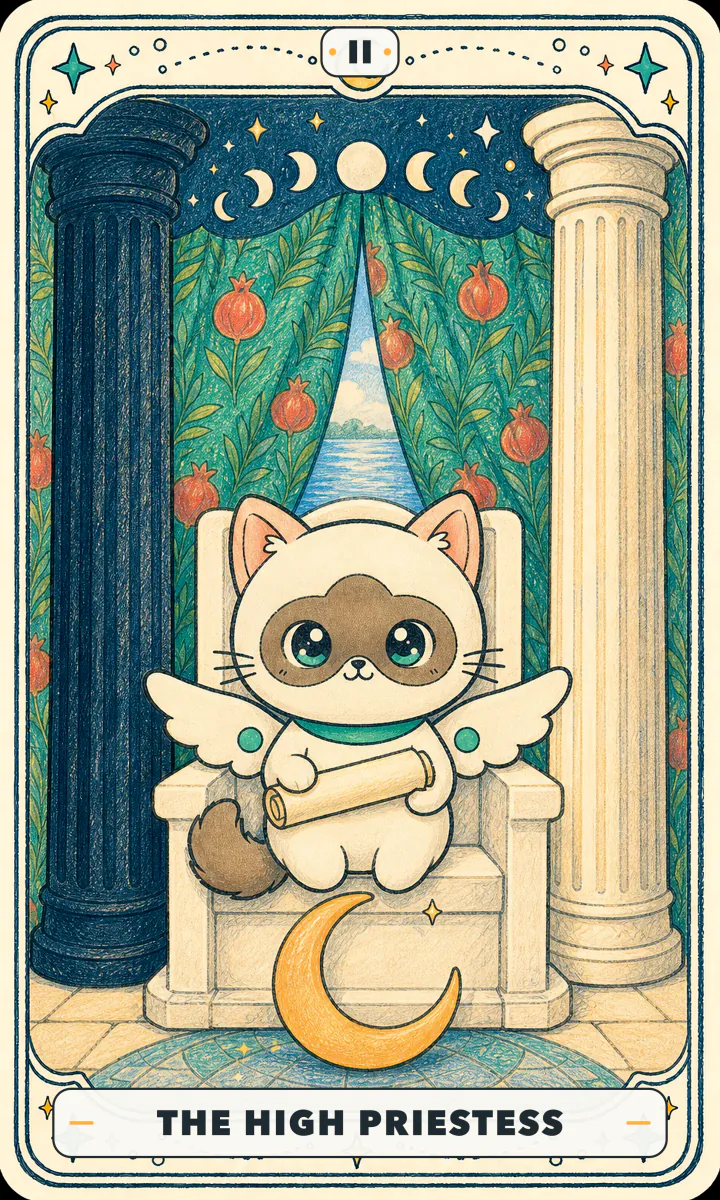
La Papessa
The High Priestess
Intuizione, Subconscio
Risposta rapida
Il significato principale di La Papessa è Saggezza interiore e intuizione. Al dritto, solitamente indica Intuizione, subconscio, mistero, saggezza interiore. Simboleggia l'osservazione; rovesciata, potrebbe suggerire Segreti rivelati, intuizione repressa, superficialità, instabilità emotiva. Può.
Immagini della carta
Una donna solenne siede tra due pilastri, uno nero e uno bianco (segnati B e J), davanti a un velo ricamato con melograni e palme. Tiene in mano un rotolo (TORA) e una falce di luna riposa ai suoi piedi.
Significato al dritto
Intuizione, subconscio, mistero, saggezza interiore. Simboleggia l'osservazione silenziosa e l'ascolto della voce interiore, trovando risposte attraverso l'intuizione piuttosto che la logica.
Significato rovesciato
Segreti rivelati, intuizione repressa, superficialità, instabilità emotiva. Può indicare che si ignora la voce interiore o che si diventa ritirati e distanti.
Amore, carriera, denaro e crescita
Amore
In amore, La Papessa indica Saggezza interiore e intuizione. Rileggilo confrontandolo con il modo in cui si comporta effettivamente la relazione e con ciò che scegliete entrambi.
Carriera
In materia di carriera, La Papessa indica Saggezza interiore e intuizione. Inizia individuando quali risorse controlli e quale sarà la tua prossima mossa.
Soldi
In materia di soldi, La Papessa indica Saggezza interiore e intuizione. Non considerare una lettura simbolica come una conclusione di investimento: segui i fatti, il budget e la tua tolleranza al rischio.
Crescita personale
Per la crescita personale, La Papessa indica Saggezza interiore e intuizione. Annota la domanda che solleva, quindi trasformala in un'azione che puoi effettivamente verificare.
Cosa prova l'altra persona
Quando La Papessa indica cosa prova l'altra persona, il tema del suo atteggiamento verso di te è: Saggezza interiore e intuizione. Al dritto il sentimento è rivolto all'esterno e si vede; rovesciata, per ora resta dentro di lei. Non prenderla come una sentenza: verificala con il modo in cui si comporta davvero.
Sì o no
Al dritto
Forse
Rovesciata
No
Questa è la nostra lettura veloce, basata sulla direzione in cui tende il significato della carta. Le tradizioni non sono d'accordo sulle singole carte, e un "Forse" deve essere valutato rispetto alla posizione nello spread e alla situazione reale piuttosto che essere preso come una risposta di una sola parola.
Testo originale di Waite (1911)
Simbolismo interiore (originale)
Ha ai piedi la falce lunare, sul capo un diadema a corna con un globo al centro, e sul petto una grande croce solare. Il rotolo che tiene fra le mani reca la parola Tora, che significa la Legge Maggiore, la Legge Segreta e il secondo senso della Parola. È in parte coperto dal suo manto, a mostrare che alcune cose sono sottintese e altre dette. Siede tra le colonne bianca e nera — J. e B. — del Tempio mistico, e alle sue spalle c'è il velo del Tempio, ricamato di palme e melagrane. Le vesti sono fluenti e vaporose, e il manto suggerisce la luce — un chiarore scintillante. È stata chiamata la Scienza Occulta sulla soglia del Santuario di Iside, ma in realtà è la Chiesa Segreta, la Casa che è di Dio (Natura) e dell'uomo. Rappresenta anche le Seconde Nozze del Principe che non è più di questo mondo; è la Sposa e Madre spirituale, la figlia delle stelle e il Giardino dell'Eden superiore. È, in breve, la Regina della luce riflessa, ma questa è la luce di tutti. È la Luna nutrita dal latte della Madre Superna.
In un certo modo è anche la Madre Superna stessa — vale a dire, ne è il riflesso luminoso. È in questo senso di riflesso che il suo nome più vero e più alto nel simbolismo è Shekinah — la gloria che dimora insieme. Secondo la Cabala, esiste una Shekinah sia in alto sia in basso. Nel mondo superiore si chiama Binah, l'Intelligenza Superna che si riflette sulle emanazioni sottostanti. Nel mondo inferiore è Malkuth — mondo inteso qui come un Regno benedetto — e ciò per cui esso è benedetto è la Gloria che vi dimora. In termini mistici, la Shekinah è la Sposa Spirituale dell'uomo giusto, e quando egli legge la Legge è lei a dargliene il significato divino. Per certi aspetti questa carta è la più alta e la più santa degli Arcani Maggiori.
Significato originale al dritto
Segreti, mistero, il futuro non ancora rivelato; la donna che interessa il consultante, se uomo; la consultante stessa, se donna; silenzio, tenacia; mistero, saggezza, scienza.
Significato originale invertito
Passione, ardore morale o fisico, presunzione, conoscenza superficiale.
Citato da A. E. Waite, The Pictorial Key to the Tarot (1911), illustrato da Pamela Colman Smith. Il testo è di pubblico dominio.
Origini del mito e dei simboli
I primi mazzi italiani la chiamavano la Papessa. Waite la spostò fra le due colonne del Tempio di Salomone.
Iconografia documentata
Attestata da oggetti o testi giunti fino a noi
In origine era la Papessa
Nei primi mazzi italiani questa carta si chiama La Papessa. La figura del mazzo Visconti-Sforza indossa un abito monacale e il triregno papale. Un'ipotesi degli studiosi la identifica con Manfreda Visconti, parente della famiglia Visconti eletta «papessa» dalla setta dei guglielmiti e bruciata come eretica intorno al 1300. Un'altra la collega alla leggendaria papessa Giovanna. Entrambe restano congetture, ma che la carta sia nata come figura ecclesiastica è attestato dai mazzi sopravvissuti.
Fonte Mazzo Visconti-Sforza (metà del XV secolo); l'identificazione con Manfreda è un'ipotesi degli studiosi
Le colonne B e J vengono dal Primo libro dei Re
Le colonne nera e bianca alle sue spalle, segnate B e J, sono Boaz e Jachin, le due colonne di bronzo del portico del Tempio di Salomone. Il velo teso fra di esse è ricamato con palme e melograni, entrambi motivi decorativi tipici di quello stesso Tempio, con palme scolpite sulle pareti e melograni sui capitelli, tutti descritti nel Primo libro dei Re. L'intera scenografia della carta, in altre parole, viene dalla Bibbia ebraica, non da un santuario greco.
Fonte 1 Re 7,21 (le colonne), 6,29 (le palme scolpite), 7,18 (i melograni sui capitelli); Waite 1911 chiama le colonne J. e B.
Corrispondenza esoterica
Una tesi tradizionale con fonti, ma costruita dentro un sistema occulto
Iside: Waite la nomina, e poi dissente
Si dice spesso che Waite abbia disegnato la Papessa come Iside. Il testo dice quasi il contrario. Waite scrive che «è stata chiamata la Scienza Occulta sulla soglia del Santuario di Iside», e subito corregge: «ma in realtà è la Chiesa Segreta». Le diede sì il diadema cornuto e il globo lunare, cioè l'iconografia di Iside, e scrisse sì Tora, la Legge, sul rotolo che tiene in grembo. Ma sull'equazione «lei è Iside» l'autore stesso prese le distanze. Vale la pena ricordarlo: leggere la fonte primaria è meglio che ereditare il riassunto di qualcun altro.
Fonte Waite, The Pictorial Key to the Tarot, 1911, La Papessa (confronta l'originale nel pannello delle fonti di questa pagina)
Tre volti della luna
La Golden Dawn associa la Papessa alla Luna (lettera ebraica Gimel). Il mito classico conosce più di una dea lunare: Selene è la luna stessa, Artemide governa la caccia e la verginità, Ecate governa i crocevia, le soglie e il passaggio agli inferi. Una sacerdotessa seduta su una soglia con un velo alle spalle corrisponde meglio al dominio di Ecate. Ma si tratta di una corrispondenza costruita dentro un sistema occulto: nell'antichità classica erano tre dee, non tre fasi di una sola.
Fonte Attribuzioni planetarie nel Book T della Golden Dawn; fonti classiche per le dee stesse
Lettura moderna
Diffusa solo dal Novecento; estranea alle origini della carta
Melograno uguale Persefone? Controlla prima la fonte più vicina
I melograni sul velo vengono letti di solito come Persefone, che mangiò i chicchi negli inferi e per questo deve tornarvi ogni anno. Il mito esiste davvero (Inno omerico a Demetra), ma applicarlo a questa carta è una lettura moderna. Waite scrisse soltanto che il velo è «ricamato con palme e melograni», senza alcuna glossa sugli inferi, e palme più melograni è esattamente la coppia decorativa del Tempio. La fonte più vicina è già a portata di mano; non serve la deviazione per la Grecia. Anche lo schema della triplice dea fanciulla-madre-anziana è moderno, e viene da The White Goddess di Robert Graves (1948).
Fonte Lettura moderna divulgativa; il mito di Persefone è nell'Inno omerico a Demetra; lo schema della triplice dea è di Robert Graves, The White Goddess, 1948
Scritto da BESTAROT, non citato da fonti storiche. Ogni affermazione è contrassegnata da quanto bene è dimostrata; gli strati interpretativi moderni sono utili per la lettura, ma non costituiscono l’origine storica della carta.
Studia il tema: Mito e origini dei simboli (Accademia capitolo 6)