Gli Amanti
The Lovers
Amore, scelta
Risposta rapida
Il significato principale di Gli Amanti è Profonda unione emotiva. Al dritto, solitamente indica Amore, armonia, scelta di valori, unione. Simboleggia una profonda connessione u; rovesciata, potrebbe suggerire Disarmonia, separazione, scelte sbagliate, tentazione. Può indicare una relazion.
Immagini della carta
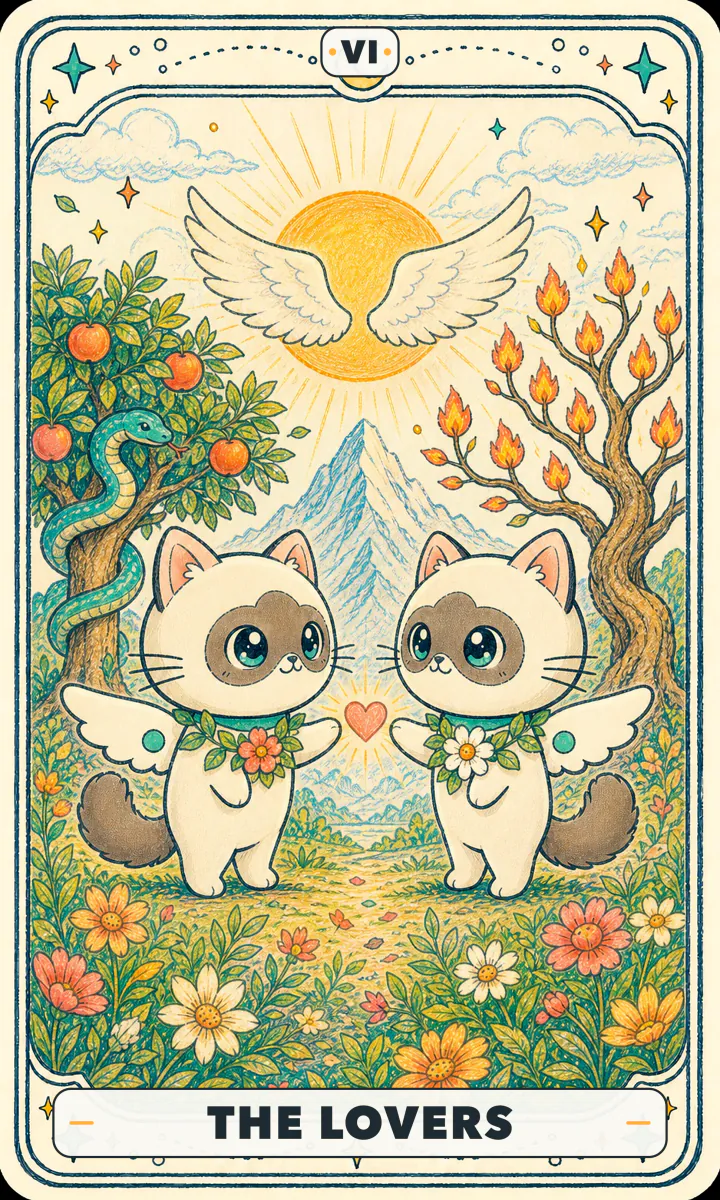
L'arcangelo Raffaele allarga le braccia tra le nuvole sopra le figure nude di Adamo ed Eva. Dietro Eva c'è l'Albero della Conoscenza intrecciato da un serpente; dietro Adamo, l'Albero della Vita in fiamme. Sullo sfondo si erge un'alta montagna.
Significato al dritto
Amore, armonia, scelta di valori, unione. Simboleggia una profonda connessione umana o l'affrontare un'importante decisione morale ed emotiva.
Significato rovesciato
Disarmonia, separazione, scelte sbagliate, tentazione. Può indicare una relazione interrotta o una decisione deplorevole presa sulla base di valori fuori luogo.
Amore, carriera, denaro e crescita
Amore
In amore, Gli Amanti indica Profonda unione emotiva. Rileggilo confrontandolo con il modo in cui si comporta effettivamente la relazione e con ciò che scegliete entrambi.
Carriera
In materia di carriera, Gli Amanti indica Profonda unione emotiva. Inizia individuando quali risorse controlli e quale sarà la tua prossima mossa.
Soldi
In materia di soldi, Gli Amanti indica Profonda unione emotiva. Non considerare una lettura simbolica come una conclusione di investimento: segui i fatti, il budget e la tua tolleranza al rischio.
Crescita personale
Per la crescita personale, Gli Amanti indica Profonda unione emotiva. Annota la domanda che solleva, quindi trasformala in un'azione che puoi effettivamente verificare.
Cosa prova l'altra persona
Quando Gli Amanti indica cosa prova l'altra persona, il tema del suo atteggiamento verso di te è: Profonda unione emotiva. Al dritto il sentimento è rivolto all'esterno e si vede; rovesciata, per ora resta dentro di lei. Non prenderla come una sentenza: verificala con il modo in cui si comporta davvero.
Sì o no
Al dritto
Sì
Rovesciata
No
Questa è la nostra lettura veloce, basata sulla direzione in cui tende il significato della carta. Le tradizioni non sono d'accordo sulle singole carte, e un "Forse" deve essere valutato rispetto alla posizione nello spread e alla situazione reale piuttosto che essere preso come una risposta di una sola parola.
Testo originale di Waite (1911)
Simbolismo interiore (originale)
Il sole splende allo zenit, e sotto c'è una grande figura alata con le braccia distese, che riversa influssi dall'alto. In primo piano ci sono due figure umane, un uomo e una donna, svelati l'uno davanti all'altra, come Adamo ed Eva quando abitarono per la prima volta il paradiso del corpo terreno. Dietro l'uomo c'è l'Albero della Vita, che porta dodici frutti, e dietro la donna l'Albero della Conoscenza del Bene e del Male; il serpente vi si avvolge attorno. Le figure suggeriscono giovinezza, verginità, innocenza e l'amore prima che sia contaminato dal desiderio materiale più grossolano. Questa è, in tutta semplicità, la carta dell'amore umano, qui mostrato come parte della via, della verità e della vita. Sostituisce, tornando ai primi principi, l'antica carta del matrimonio che ho descritto in precedenza, e le stravaganze più tarde che raffiguravano l'uomo tra il vizio e la virtù. In un senso molto alto, la carta è un mistero dell'Alleanza e del Sabato.
Ciò che si suggerisce riguardo alla donna è che ella significa quell'attrazione verso la vita sensibile che porta in sé l'idea della Caduta dell'Uomo; ma è piuttosto l'operare di una Legge Segreta della Provvidenza che una tentatrice volontaria e consapevole. È attraverso la caduta che le viene imputata che l'uomo alla fine risorgerà, e soltanto per mezzo di lei egli può compiersi. La carta è dunque, a suo modo, un'altra allusione al grande mistero della femminilità. Gli antichi significati vanno in pezzi per forza insieme alle antiche immagini, ma anche come interpretazioni di queste ultime, alcuni erano di ordine banale e altri erano falsi quanto al simbolismo.
Significato originale al dritto
Attrazione, amore, bellezza, prove superate.
Significato originale invertito
Fallimento, progetti sciocchi. Un'altra versione parla di matrimonio mancato e di contrarietà di ogni genere.
Citato da A. E. Waite, The Pictorial Key to the Tarot (1911), illustrato da Pamela Colman Smith. Il testo è di pubblico dominio.
Origini del mito e dei simboli
Le carte antiche mostrano un giovane a un bivio, che è una favola greca. Waite vi mise al suo posto l'Eden.
Iconografia documentata
Attestata da oggetti o testi giunti fino a noi
La carta che fu sostituita: la scelta al bivio
I primi mazzi disegnano questa carta in due modi: come un matrimonio, o come un giovane fra due donne. Il secondo prosegue «Eracle al bivio», la favola di Prodico riportata nei Memorabili di Senofonte: la Virtù e il Vizio compaiono in forma umana e chiedono al giovane di scegliere la sua strada. Waite dice nel suo stesso libro che la sua carta sostituisce «la vecchia carta del matrimonio e le successive sciocchezze che raffiguravano l'uomo fra il vizio e la virtù». La favola greca è dunque davvero fra gli antenati di questa carta: semplicemente, l'ha tolta l'autore stesso.
Fonte Prodico, «Eracle al bivio», nei Memorabili di Senofonte II.1; Waite 1911 descrive lui stesso la sostituzione
Al suo posto è entrato l'Eden
La versione di Waite raffigura Adamo ed Eva: dietro l'uomo c'è l'Albero della Vita con dodici frutti, dietro la donna l'Albero della Conoscenza del Bene e del Male, con il serpente avvolto intorno. Tutte queste immagini vengono da Genesi 2-3. Il senso della carta si sposta quindi da «quale strada prendo» a «unione, alleanza e condizione precedente alla caduta». Non sono la stessa cosa.
Fonte Genesi 2-3; Waite, The Pictorial Key to the Tarot, 1911, Gli Amanti
Corrispondenza esoterica
Una tesi tradizionale con fonti, ma costruita dentro un sistema occulto
I Gemelli, e l'arcangelo che non viene mai nominato
La Golden Dawn associa gli Amanti ai Gemelli (lettera ebraica Zain). La figura alata in alto con le braccia aperte viene comunemente identificata con l'arcangelo Raffaele, ma il testo di Waite dice soltanto «una grande figura alata con le braccia tese, che riversa influssi» e non nomina nessuno. Il nome l'hanno aggiunto commentatori successivi; è un'identificazione fatta dentro il sistema.
Fonte Attribuzioni zodiacali nel Book T della Golden Dawn; Waite 1911 non dà un nome alla figura
Lettura moderna
Diffusa solo dal Novecento; estranea alle origini della carta
Le fiamme gemelle sono un prodotto contemporaneo
Leggere questa carta come fiamme gemelle, come l'altra metà destinata, è linguaggio New Age degli ultimi due o tre decenni. Né la scelta al bivio né l'alleanza nell'Eden parlano di un'unione voluta dal destino. Naturalmente in un consulto puoi usare la carta per parlare di relazioni. È una domanda diversa da quella su che cosa trattasse la carta in origine.
Fonte Lettura moderna divulgativa, senza fondamento storico
Scritto da BESTAROT, non citato da fonti storiche. Ogni affermazione è contrassegnata da quanto bene è dimostrata; gli strati interpretativi moderni sono utili per la lettura, ma non costituiscono l’origine storica della carta.
Studia il tema: Mito e origini dei simboli (Accademia capitolo 6)