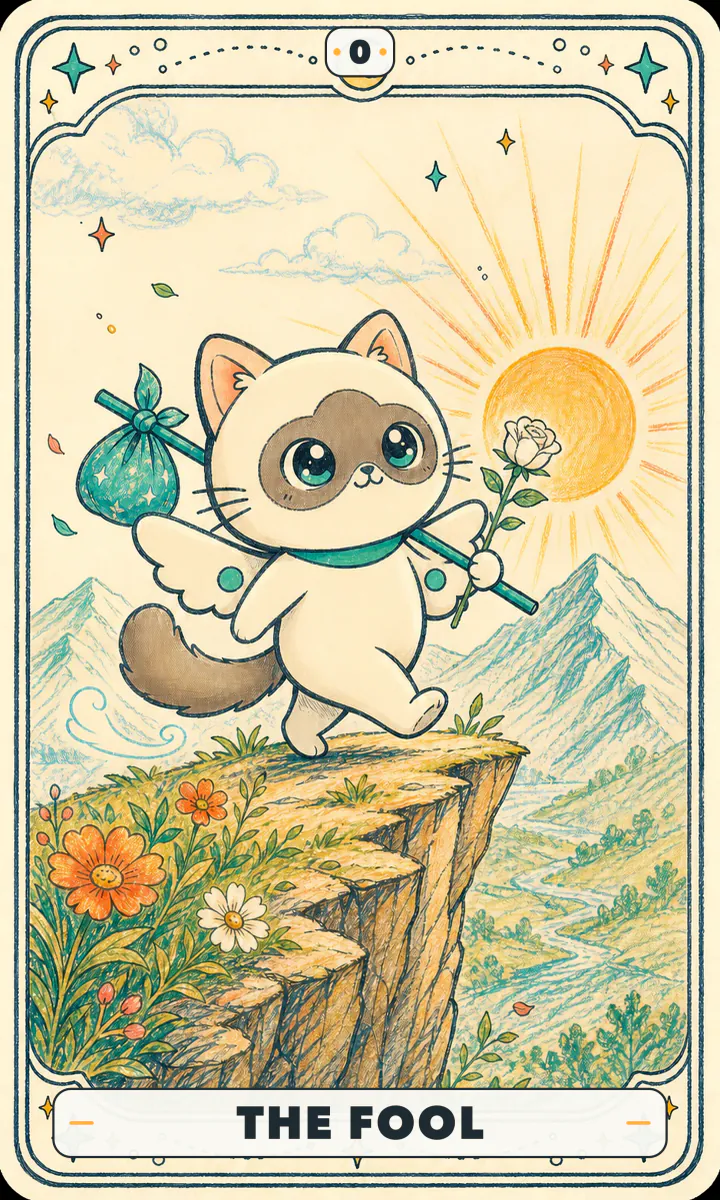
Il Matto
The Fool
Nuovi inizi, Avventura
Risposta rapida
Il significato principale di Il Matto è Partire per un viaggio sconosciuto. Al dritto, solitamente indica Nuovi inizi, innocenza, spontaneità, spirito libero. Simboleggia l'ingresso in u; rovesciata, potrebbe suggerire Incoscienza, avventura spericolata, decisioni sbagliate, esitazione. Può indicar.
Immagini della carta
Un giovane viaggiatore in abiti colorati si trova sul bordo di una scogliera, guardando il cielo, mentre un piccolo cane bianco salta con gioia ai suoi piedi. Tiene una rosa bianca (purezza) nella mano sinistra e porta un piccolo zaino (esperienza) sulla spalla destra. Dietro di lui si estendono la luce del sole dorata e le montagne innevate.
Significato al dritto
Nuovi inizi, innocenza, spontaneità, spirito libero. Simboleggia l'ingresso in un viaggio sconosciuto, pieno di potenziale ma non privo di rischi.
Significato rovesciato
Incoscienza, avventura spericolata, decisioni sbagliate, esitazione. Può indicare il caos causato da una mancanza di pianificazione o dalla troppa paura per fare il primo passo.
Amore, carriera, denaro e crescita
Amore
In amore, Il Matto indica Partire per un viaggio sconosciuto. Rileggilo confrontandolo con il modo in cui si comporta effettivamente la relazione e con ciò che scegliete entrambi.
Carriera
In materia di carriera, Il Matto indica Partire per un viaggio sconosciuto. Inizia individuando quali risorse controlli e quale sarà la tua prossima mossa.
Soldi
In materia di soldi, Il Matto indica Partire per un viaggio sconosciuto. Non considerare una lettura simbolica come una conclusione di investimento: segui i fatti, il budget e la tua tolleranza al rischio.
Crescita personale
Per la crescita personale, Il Matto indica Partire per un viaggio sconosciuto. Annota la domanda che solleva, quindi trasformala in un'azione che puoi effettivamente verificare.
Cosa prova l'altra persona
Quando Il Matto indica cosa prova l'altra persona, il tema del suo atteggiamento verso di te è: Partire per un viaggio sconosciuto. Al dritto il sentimento è rivolto all'esterno e si vede; rovesciata, per ora resta dentro di lei. Non prenderla come una sentenza: verificala con il modo in cui si comporta davvero.
Sì o no
Al dritto
Sì
Rovesciata
No
Questa è la nostra lettura veloce, basata sulla direzione in cui tende il significato della carta. Le tradizioni non sono d'accordo sulle singole carte, e un "Forse" deve essere valutato rispetto alla posizione nello spread e alla situazione reale piuttosto che essere preso come una risposta di una sola parola.
Testo originale di Waite (1911)
Simbolismo interiore (originale)
Con passo leggero, come se la terra e i suoi lacci avessero ben poco potere di trattenerlo, un giovane in vesti sfarzose si ferma sull'orlo di un precipizio tra le grandi altezze del mondo; contempla la distesa azzurra davanti a sé — la vastità del cielo più che il panorama sottostante. Il suo gesto di camminare impaziente è ancora percepibile, benché in quel preciso istante sia fermo; il suo cane sta ancora saltellando. Il ciglio che si apre sull'abisso non ha nulla di terribile; è come se degli angeli attendessero di sorreggerlo, se mai gli accadesse di saltare dall'alto. Il suo volto è pieno di intelligenza e di sogno in attesa. Tiene una rosa in una mano e nell'altra una verga preziosa, dalla quale pende, sopra la spalla destra, una bisaccia curiosamente ricamata. È un principe dell'altro mondo in viaggio attraverso questo — il tutto nella gloria del mattino, nell'aria frizzante. Il sole che splende alle sue spalle sa da dove è venuto, dove sta andando e come ritornerà per un'altra via dopo molti giorni. È lo spirito in cerca di esperienza. Molti simboli dei Misteri Istituiti sono riassunti in questa carta, che rovescia, con alte garanzie, tutte le confusioni che l'hanno preceduta.
Nel suo Manual of Cartomancy, Grand Orient avanza una curiosa proposta sull'ufficio del Matto Mistico, come parte del suo procedimento di divinazione superiore; ma per metterla in pratica potrebbero servire doti fuori dal comune. Vedremo che sorte tocca a questa carta secondo le arti comuni della predizione della sorte, e sarà un esempio, per chi sa discernere, di un fatto peraltro evidentissimo: che gli Arcani Maggiori in origine non avevano alcun posto nelle arti del gioco d'azzardo psichico, quando le carte vengono usate come gettoni e come pretesti. Delle circostanze in cui quest'arte è sorta, tuttavia, sappiamo ben poco. Le spiegazioni convenzionali dicono che il Matto significa la carne, la vita sensibile, e per una singolare ironia un tempo il suo nome secondario fu l'alchimista, a raffigurare la follia nel suo stadio più insensato.
Significato originale al dritto
Follia, mania, stravaganza, ebbrezza, delirio, frenesia, indiscrezione.
Significato originale invertito
Negligenza, assenza, dispersione, trascuratezza, apatia, nullità, vanità.
Citato da A. E. Waite, The Pictorial Key to the Tarot (1911), illustrato da Pamela Colman Smith. Il testo è di pubblico dominio.
Origini del mito e dei simboli
Nei mazzi più antichi è il pazzo, che sta del tutto fuori dalla sequenza. Il «viaggio del Matto» è una lettura del Novecento.
Iconografia documentata
Attestata da oggetti o testi giunti fino a noi
Nacque come carta d'eccezione in un gioco di carte
Nei primi mazzi italiani questa carta si chiama Il Matto, cioè il pazzo. Non porta numero e non sta nel corteo dei trionfi: gli altri trionfi sono figure ordinate per precedenza, mentre il Matto è l'eccezione prevista dalle regole del gioco, che non prende la mano e non viene preso. La figura discende dal buffone di corte medievale e dalla Festa dei Folli: un giorno all'anno in cui al folle era concesso di rovesciare le gerarchie. Questo senso di stare fuori dall'ordine è più vicino alle origini della carta di qualsiasi mito.
Fonte Il nome italiano antico Il Matto e la sua assenza di numerazione; la Festa dei Folli medievale e l'iconografia del buffone
Corrispondenza esoterica
Una tesi tradizionale con fonti, ma costruita dentro un sistema occulto
Il principe di un altro mondo in cui lo trasformò Waite
Waite ridisegnò il pazzo come un giovane riccamente vestito sull'orlo di un precipizio, e scrisse che è «un principe dell'altro mondo in viaggio attraverso questo», «lo spirito in cerca di esperienza»; il vuoto sottostante non ha nulla di terribile, «è come se degli angeli attendessero di sorreggerlo». Dal pazzo di strada al principe di un altro mondo: è il risultato della ridefinizione dell'intero mazzo operata dai circoli occultisti di fine Ottocento. Non è il significato originario della carta.
Fonte Waite, The Pictorial Key to the Tarot, 1911, Il Matto (confronta l'originale nel pannello delle fonti di questa pagina)
L'elemento aria e la lettera Aleph
La Golden Dawn associa il Matto all'elemento aria e alla lettera ebraica Aleph. Come l'Impiccato (acqua) e il Giudizio (fuoco), riceve una delle tre lettere elementali anziché un pianeta o un segno. Da qui viene il suo tono lieve, non ancora definito, non ancora approdato.
Fonte Attribuzioni delle lettere elementali nel Book T della Golden Dawn
Lettura moderna
Diffusa solo dal Novecento; estranea alle origini della carta
Il viaggio del Matto è uno strumento didattico moderno
Leggere i ventidue trionfi come il Matto che cresce da 0 a 21 è un'invenzione del Novecento, che ha preso forma stabile soprattutto con i libri divulgativi di Eden Gray intorno al 1970; solo più tardi qualcuno l'ha innestata sul viaggio dell'eroe di Campbell. Le immagini rinascimentali dei trionfi sono un corteo di vincitori ordinati per precedenza, non una linea narrativa, e il Matto è proprio l'unica carta di quel corteo a non avere un rango. Come schema didattico funziona benissimo. Resta però un'aggiunta successiva.
Fonte Lettura moderna divulgativa; il viaggio del Matto fu reso popolare dai libri sui tarocchi di Eden Gray (anni Sessanta e Settanta); lo schema del viaggio dell'eroe è di Joseph Campbell, The Hero with a Thousand Faces, 1949
Scritto da BESTAROT, non citato da fonti storiche. Ogni affermazione è contrassegnata da quanto bene è dimostrata; gli strati interpretativi moderni sono utili per la lettura, ma non costituiscono l’origine storica della carta.
Studia il tema: Mito e origini dei simboli (Accademia capitolo 6)