la estrella
The Star
esperanza, inspiración
Respuesta rápida
El significado principal de la estrella es La luz tranquila de la curación.. Del derecho, suele apuntar a Esperanza, inspiración, curación, serenidad. Simboliza la calma tras la destrucc; invertida, puede sugerir Desesperación, falta de fe, oportunidades perdidas, esperanzas poco realistas. P.
Imagen de la carta
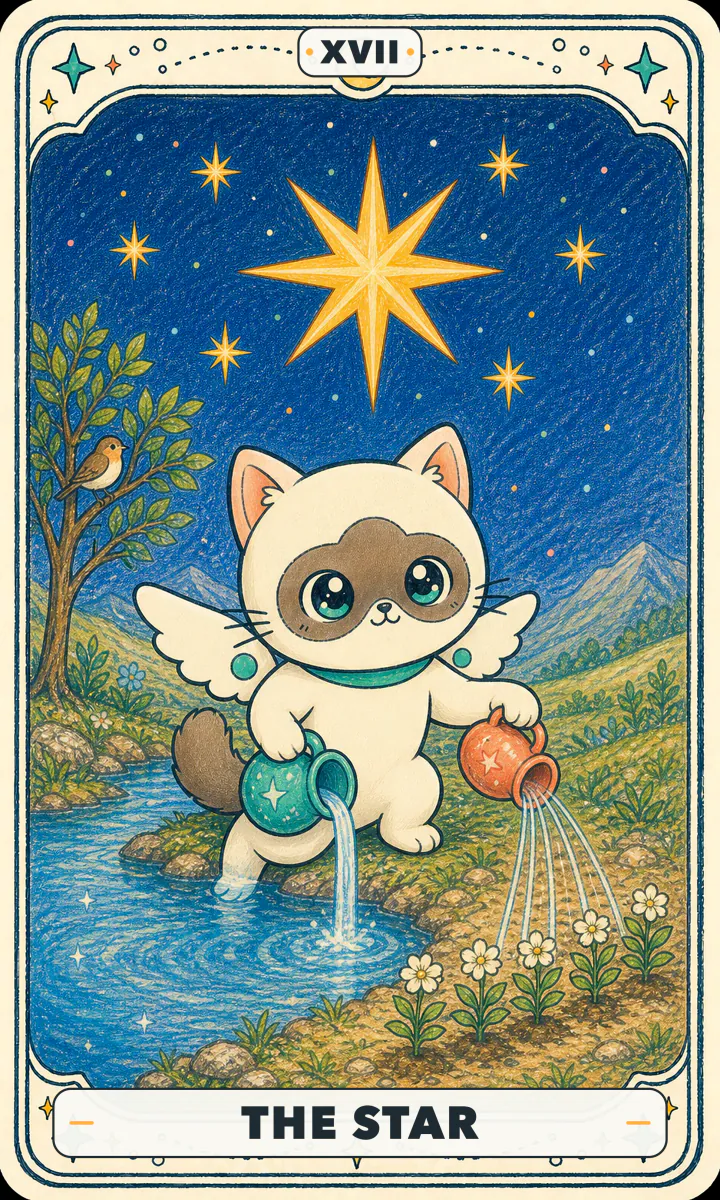
Una mujer desnuda se arrodilla sobre una rodilla bajo un cielo estrellado. Sostiene dos cántaros, vierte uno en un estanque (el subconsciente) y otro en la tierra (el consciente). Arriba brillan una gran estrella de ocho puntas y siete estrellas más pequeñas.
Significado al derecho
Esperanza, inspiración, curación, serenidad. Simboliza la calma tras la destrucción de la Torre, reconectando con la energía del universo, lleno de fe en el futuro.
Significado invertido
Desesperación, falta de fe, oportunidades perdidas, esperanzas poco realistas. Puede indicar que se siente perdido o que tiene expectativas elevadas sin tomar medidas reales.
Amor, carrera, dinero y crecimiento
Amor
En el amor, la estrella señala a La luz tranquila de la curación.. Vuelve a leerlo teniendo en cuenta cómo se comporta realmente la relación y lo que ambos están eligiendo.
Carrera
En cuestiones profesionales, la estrella apunta a La luz tranquila de la curación.. Empiece por determinar qué recursos controla y cuál será su próximo paso.
Dinero
En cuestiones de dinero, la estrella apunta a La luz tranquila de la curación.. No trates una lectura simbólica como una conclusión de inversión; guíate por los hechos, el presupuesto y tu propia tolerancia al riesgo.
Crecimiento personal
Para el crecimiento personal, la estrella apunta a La luz tranquila de la curación.. Escribe la pregunta que plantea y luego conviértela en una acción que realmente puedas comprobar.
Lo que siente la otra persona
Cuando la estrella indica lo que siente la otra persona, el tema de su actitud hacia ti es: La luz tranquila de la curación.. Al derecho, ese sentimiento se muestra hacia fuera; invertida, por ahora se queda dentro. No la tomes como un veredicto: contrástala con cómo actúa realmente.
Sí o no
Al derecho
Sí
Invertida
No
Esta es nuestra propia lectura rápida, basada en la dirección en la que se inclina el significado de la carta. Las tradiciones no están de acuerdo con respecto a las cartas individuales, y un "Quizás" debe sopesarse con la posición en la distribución y su situación real en lugar de tomarse como una respuesta de una sola palabra.
Texto original de Waite (1911)
Simbolismo interior (original)
Una gran estrella radiante de ocho rayos, rodeada de siete estrellas menores, también de ocho rayos. La figura femenina en primer plano está completamente desnuda. Su rodilla izquierda está en tierra y su pie derecho sobre el agua. Vierte el Agua de la Vida de dos grandes jarras, regando el mar y la tierra. Detrás de ella el terreno se eleva y, a la derecha, hay un arbusto o árbol en el que se posa un pájaro. La figura expresa la juventud y la belleza eternas. La estrella es l'étoile flamboyante, que aparece en el simbolismo masónico, pero que allí se ha confundido. Lo que la figura comunica a la escena viva es la sustancia de los cielos y de los elementos. Se ha dicho con verdad que los lemas de esta carta son «Aguas de Vida gratuitamente» y «Dones del Espíritu».
El resumen de varias explicaciones de oropel dice que es una carta de esperanza. En otros planos se la ha acreditado como inmortalidad y luz interior. Para la mayoría de las mentes preparadas, la figura aparecerá como el tipo de la Verdad develada, gloriosa en su belleza imperecedera, que derrama sobre las aguas del alma alguna parte y medida de su posesión inestimable. Pero en realidad es la Gran Madre en la Sefirá cabalística Biná, que es el Entendimiento supremo, y que comunica a las Sefirot que están debajo en la medida en que pueden recibir su influjo.
Significado original del derecho
Pérdida, robo, privación, abandono; otra lectura dice: esperanza y perspectivas brillantes.
Significado original invertido
Arrogancia, altivez, impotencia.
Citado de A. E. Waite, The Pictorial Key to the Tarot (1911), ilustrado por Pamela Colman Smith. El texto es de dominio público.
Orígenes de mitos y símbolos
Waite llama a la estrella de ocho puntas la Estrella Flamígera masónica, y dice que la mujer que vierte el agua «es en realidad la Gran Madre» de la Cábala.
Correspondencia esotérica
Una afirmación tradicional con fuente, pero construida dentro de un sistema ocultista
La estrella de ocho puntas: Waite nombra la masonería
La carta muestra una gran estrella de ocho rayos con siete estrellas menores de ocho rayos a su alrededor. Waite afirma que esta estrella es l'étoile flamboyante, la Estrella Flamígera del simbolismo masónico, y añade que el símbolo «ha sido confundido» dentro de la propia masonería. La mujer que vierte el agua se arrodilla sobre una rodilla con un pie sobre el agua, vaciando el Agua de la Vida de dos grandes vasijas sobre el mar y la tierra.
Fuente Waite, The Pictorial Key to the Tarot, 1911, La Estrella; l'étoile flamboyante es un símbolo masónico
La lectura que él da es cabalística, no griega
La mayoría, dice Waite, tomará la figura por la Verdad desvelada, «pero en realidad es la Gran Madre en la Sefirá cabalística Biná», el Entendimiento Supremo, que derrama sobre las Sefirot inferiores la medida que cada una es capaz de recibir. El vertido descendente de la carta remite, en el libro original, a esa cadena cabalística de descenso, y no a ninguna deidad escanciadora. La correspondencia de la Golden Dawn es Acuario, letra hebrea Tsadi; Crowley, siguiendo la frase «Tsadi no es la Estrella» de The Book of the Law, intercambió las letras de la Estrella y el Emperador, una discusión interna de los sistemas del siglo XX que deja intacta la atribución original de la Golden Dawn.
Fuente Waite, The Pictorial Key to the Tarot, 1911, La Estrella; atribuciones zodiacales del Libro T de la Golden Dawn
Lectura moderna
Popular solo desde el siglo XX; sin relación con el origen de la carta
El propio autor no se cree mucho lo de «una carta de esperanza»
La lectura estándar es Estrella igual a esperanza. La frase del propio Waite: «el resumen de varias explicaciones de pacotilla dice que es una carta de esperanza», un tono poco generoso. Lo que ofrece a cambio es la inmortalidad y la luz interior, junto con la lectura de Biná mencionada arriba. «Esperanza» no es incorrecto, pero es una gota exprimida de la carta, no el párrafo que él escribió realmente.
Fuente El propio juicio de Waite sobre «una carta de esperanza» en la misma entrada, 1911; la lectura estándar moderna
Hebe y Acuario: otra identificación forzada
La mujer que vierte el agua se toma a menudo por Hebe, la diosa griega de la juventud y copera de los dioses, o se lee directamente como Acuario personificado. Es el mismo problema con que tropieza la Templanza: en la historia de la imagen el acto de verter fue primero el distintivo de otra cosa, y más tarde se le ajustó el nombre de un dios.
Fuente Lectura popular moderna; Hebe pertenece al mito griego
Escrito por BESTAROT, no citado de fuentes históricas. Cada afirmación se etiqueta según su grado de evidencia; Las capas interpretativas modernas son útiles para la lectura, pero no representan el origen histórico de la carta.
Estudie el tema: Orígenes de mitos y símbolos (capítulo 6 de la Academia)