el sol
The Sun
éxito, alegría
Respuesta rápida
El significado principal de el sol es Vitalidad radiante. Del derecho, suele apuntar a Éxito, alegría, vitalidad, claridad. Simboliza puro deleite y fuerza vital; toda; invertida, puede sugerir Nubes temporales, pesimismo, exceso de confianza, éxito retrasado. Puede indicar.
Imagen de la carta
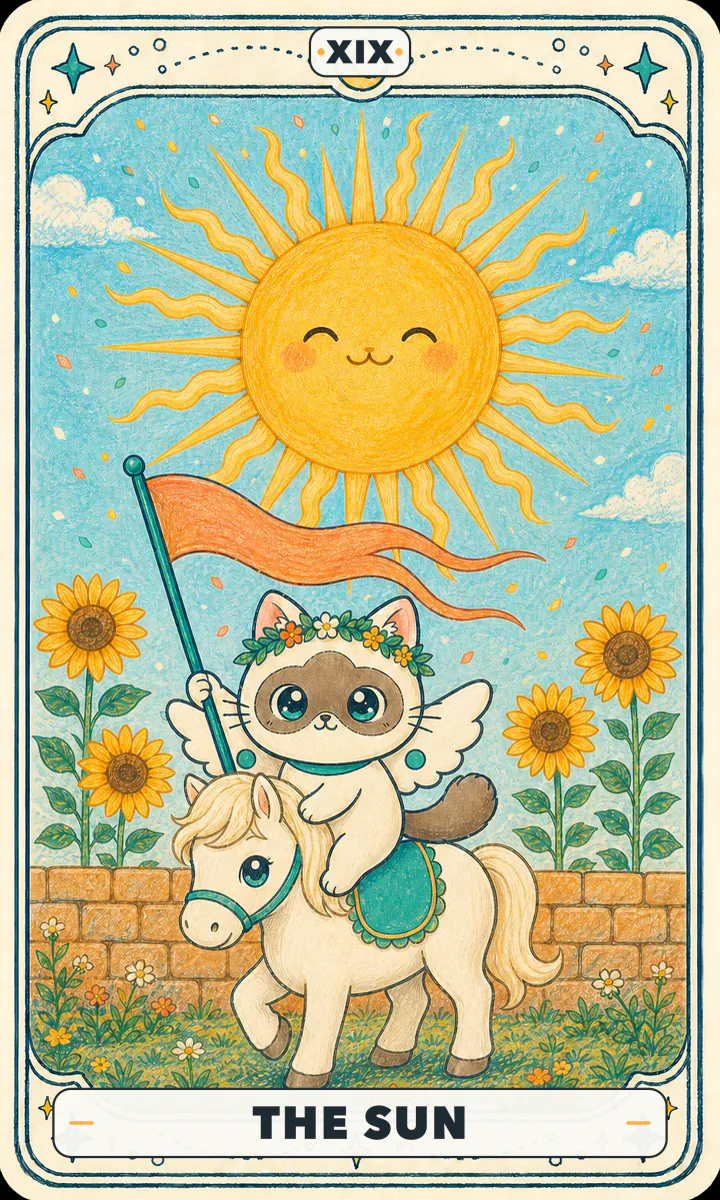
Un enorme sol llena la mayor parte del cielo, brillando con luz. Ante el muro de un jardín, un niño desnudo monta un caballo blanco, ondeando una pancarta roja, coronada de flores y una pluma.
Significado al derecho
Éxito, alegría, vitalidad, claridad. Simboliza puro deleite y fuerza vital; toda sombra se disipa y los acontecimientos avanzan en la dirección más positiva.
Significado invertido
Nubes temporales, pesimismo, exceso de confianza, éxito retrasado. Puede indicar que, si bien la dirección general es buena, persisten pequeñas sombras en el interior o que la alegría se siente menos brillante de lo esperado.
Amor, carrera, dinero y crecimiento
Amor
En el amor, el sol señala a Vitalidad radiante. Vuelve a leerlo teniendo en cuenta cómo se comporta realmente la relación y lo que ambos están eligiendo.
Carrera
En cuestiones profesionales, el sol apunta a Vitalidad radiante. Empiece por determinar qué recursos controla y cuál será su próximo paso.
Dinero
En cuestiones de dinero, el sol apunta a Vitalidad radiante. No trates una lectura simbólica como una conclusión de inversión; guíate por los hechos, el presupuesto y tu propia tolerancia al riesgo.
Crecimiento personal
Para el crecimiento personal, el sol apunta a Vitalidad radiante. Escribe la pregunta que plantea y luego conviértela en una acción que realmente puedas comprobar.
Lo que siente la otra persona
Cuando el sol indica lo que siente la otra persona, el tema de su actitud hacia ti es: Vitalidad radiante. Al derecho, ese sentimiento se muestra hacia fuera; invertida, por ahora se queda dentro. No la tomes como un veredicto: contrástala con cómo actúa realmente.
Sí o no
Al derecho
Sí
Invertida
Tal vez
Esta es nuestra propia lectura rápida, basada en la dirección en la que se inclina el significado de la carta. Las tradiciones no están de acuerdo con respecto a las cartas individuales, y un "Quizás" debe sopesarse con la posición en la distribución y su situación real en lugar de tomarse como una respuesta de una sola palabra.
Texto original de Waite (1911)
Simbolismo interior (original)
El niño desnudo montado en un caballo blanco y que enarbola un estandarte rojo ya se ha mencionado como el mejor simbolismo vinculado a esta carta. Es el destino del Oriente Sobrenatural y la gran y santa luz que va delante de la procesión interminable de la humanidad, que sale del jardín amurallado de la vida sensitiva y emprende el viaje de regreso a casa. La carta significa, por tanto, el tránsito desde la luz manifiesta de este mundo, representada por el glorioso sol de la tierra, a la luz del mundo venidero, que va delante de la aspiración y tiene por tipo el corazón de un niño.
Pero esta última alusión es, de nuevo, la clave de una forma o aspecto distinto del simbolismo. El sol es el de la conciencia en el espíritu: la luz directa como antítesis de la luz reflejada. El tipo característico de la humanidad se ha convertido en él en un niño pequeño: niño en el sentido de la sencillez, e inocente en el sentido de la sabiduría. En esa sencillez, lleva el sello de la Naturaleza y del Arte; en esa inocencia, significa el mundo restaurado. Cuando el espíritu que se conoce a sí mismo ha amanecido en la conciencia por encima de la mente natural, esa mente, en su renovación, conduce a la naturaleza animal en un estado de perfecta conformidad.
Significado original del derecho
Felicidad material, matrimonio afortunado, contento.
Significado original invertido
Lo mismo en un sentido menor.
Citado de A. E. Waite, The Pictorial Key to the Tarot (1911), ilustrado por Pamela Colman Smith. El texto es de dominio público.
Orígenes de mitos y símbolos
Las cartas antiguas muestran dos niños; Waite los sustituyó por un niño desnudo sobre un caballo blanco. El carro del dios solar es una asociación moderna.
Imaginería documentada
Atestiguada por objetos o textos conservados
De dos niños a un niño a caballo
La carta del Sol de Marsella suele mostrar dos niños de pie ante un muro bajo. Waite lo cambió por un único niño desnudo que monta un caballo blanco y enarbola un estandarte rojo, saliendo de un jardín amurallado. Él mismo lo llama «el mejor simbolismo asociado a esta carta». Recuerde el cambio y no leerá al jinete solitario de Waite como la pareja de las cartas antiguas.
Fuente El diseño de los dos niños en la carta del Sol de Marsella; Waite, The Pictorial Key to the Tarot, 1911, El Sol
Correspondencia esotérica
Una afirmación tradicional con fuente, pero construida dentro de un sistema ocultista
El niño significa aquí sencillez e inocencia de la sabiduría
Waite escribe que la carta es el tránsito «de la luz manifiesta de este mundo, representada por el glorioso sol de la tierra, a la luz del mundo venidero», y que el tipo característico de la humanidad «se ha convertido en ella en un niño pequeño: un niño en el sentido de la sencillez y de la inocencia en el sentido de la sabiduría». El jardín amurallado representa «la vida sensible», y salir de él es emprender el camino a casa. El niño no es aquí la juventud; es lo que queda una vez suprimidos los rodeos.
Fuente Waite, The Pictorial Key to the Tarot, 1911, El Sol
El Sol: lo que da la Golden Dawn es el propio astro
La Golden Dawn asigna esta carta al Sol (letra hebrea Resh). El sol es Sol en Roma y Helios en Grecia, y más tarde se fusionó a menudo con Apolo. La correspondencia sí vincula la carta con las deidades solares clásicas, pero lo que vincula es el cuerpo celeste, no ningún episodio mitológico.
Fuente Atribuciones planetarias del Libro T de la Golden Dawn; las figuras solares clásicas Sol / Helios / Apolo
Lectura moderna
Popular solo desde el siglo XX; sin relación con el origen de la carta
El carro solar de Apolo: no hay tal cosa en la carta
Una afirmación frecuente es que esta carta muestra a Apolo conduciendo el carro del sol. Lo que hay en la carta es un niño montado en un caballo blanco: ni carro, ni tiro de cuatro caballos, ni dios. La imagen del dios solar conduciendo procede del mito griego (en rigor, de Helios; la fusión con Apolo es un desarrollo posterior), y no tiene nada que ver con el linaje iconográfico de esta carta.
Fuente Lectura popular moderna; Helios conduciendo el carro del sol es mito griego
Escrito por BESTAROT, no citado de fuentes históricas. Cada afirmación se etiqueta según su grado de evidencia; Las capas interpretativas modernas son útiles para la lectura, pero no representan el origen histórico de la carta.
Estudie el tema: Orígenes de mitos y símbolos (capítulo 6 de la Academia)