la luna
The Moon
Ilusión, inquietud
Respuesta rápida
El significado principal de la luna es La niebla del subconsciente. Del derecho, suele apuntar a Ilusión, subconsciente, malestar, intuición. Simboliza caminar a través de la ni; invertida, puede sugerir Ilusiones disipadas, confusión, engaño expuesto, miedo disminuyendo. Puede indic.
Imagen de la carta
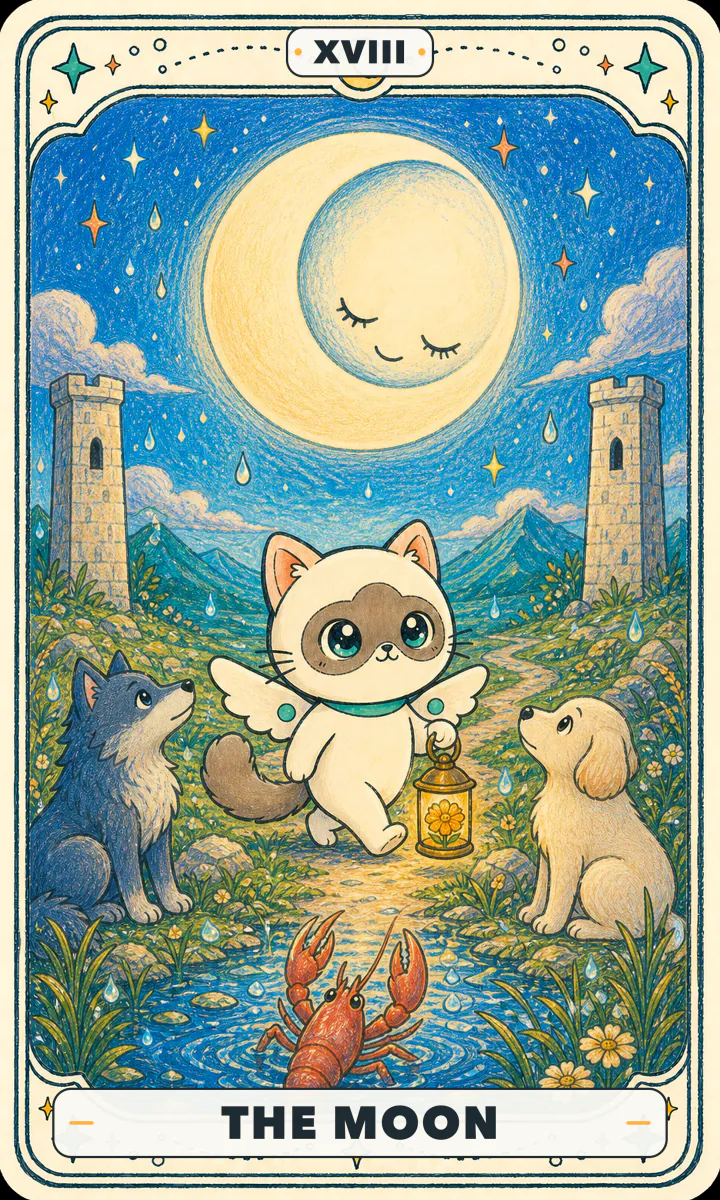
Una luna que combina media luna, disco lleno y una cara dormida cuelga en el cielo. Abajo, un lobo y un perro le aúllan. Un cangrejo de río sale de un estanque y, a lo lejos, un camino serpentea entre las torres gemelas.
Significado al derecho
Ilusión, subconsciente, malestar, intuición. Simboliza caminar a través de la niebla donde las cosas no son lo que parecen, llamándote a enfrentar miedos y sombras interiores.
Significado invertido
Ilusiones disipadas, confusión, engaño expuesto, miedo disminuyendo. Puede indicar que se despierta de un desconcierto o que está plagado de pesadillas y ansiedad.
Amor, carrera, dinero y crecimiento
Amor
En el amor, la luna señala a La niebla del subconsciente. Vuelve a leerlo teniendo en cuenta cómo se comporta realmente la relación y lo que ambos están eligiendo.
Carrera
En cuestiones profesionales, la luna apunta a La niebla del subconsciente. Empiece por determinar qué recursos controla y cuál será su próximo paso.
Dinero
En cuestiones de dinero, la luna apunta a La niebla del subconsciente. No trates una lectura simbólica como una conclusión de inversión; guíate por los hechos, el presupuesto y tu propia tolerancia al riesgo.
Crecimiento personal
Para el crecimiento personal, la luna apunta a La niebla del subconsciente. Escribe la pregunta que plantea y luego conviértela en una acción que realmente puedas comprobar.
Lo que siente la otra persona
Cuando la luna indica lo que siente la otra persona, el tema de su actitud hacia ti es: La niebla del subconsciente. Al derecho, ese sentimiento se muestra hacia fuera; invertida, por ahora se queda dentro. No la tomes como un veredicto: contrástala con cómo actúa realmente.
Sí o no
Al derecho
No
Invertida
Tal vez
Esta es nuestra propia lectura rápida, basada en la dirección en la que se inclina el significado de la carta. Las tradiciones no están de acuerdo con respecto a las cartas individuales, y un "Quizás" debe sopesarse con la posición en la distribución y su situación real en lugar de tomarse como una respuesta de una sola palabra.
Texto original de Waite (1911)
Simbolismo interior (original)
Lo que distingue esta carta de algunos de los tipos convencionales es que la luna crece del lado que se llama de la misericordia, a la derecha del observador. Tiene dieciséis rayos principales y dieciséis secundarios. La carta representa la vida de la imaginación, separada de la vida del espíritu. El camino entre las torres es la salida hacia lo desconocido. El perro y el lobo son los miedos de la mente natural ante ese lugar de salida, cuando no hay más que luz reflejada para guiarla.
Esta última referencia es la clave de otra forma de simbolismo. La luz intelectual es un reflejo, y más allá de ella está el misterio desconocido que no puede mostrar. Ilumina nuestra naturaleza animal, cuyos tipos se representan abajo: el perro, el lobo y aquello que sube de las profundidades, la tendencia sin nombre y horrenda que es más baja que la bestia salvaje. Se esfuerza por alcanzar la manifestación, simbolizada por el arrastrarse desde el abismo de las aguas hasta la tierra, pero por lo general vuelve a hundirse de donde vino. El rostro de la mente dirige una mirada serena a la inquietud de abajo; cae el rocío del pensamiento; el mensaje es: Paz, calla; y puede que sobrevenga una calma sobre la naturaleza animal, mientras el abismo de abajo deje de entregar una forma.
Significado original del derecho
Enemigos ocultos, peligro, calumnia, oscuridad, terror, engaño, fuerzas ocultas, error.
Significado original invertido
Inestabilidad, inconstancia, silencio, grados menores de engaño y error.
Citado de A. E. Waite, The Pictorial Key to the Tarot (1911), ilustrado por Pamela Colman Smith. El texto es de dominio público.
Orígenes de mitos y símbolos
Waite la define como la vida de la imaginación separada de la vida del espíritu. Las diosas lunares se le asociaron después.
Imaginería documentada
Atestiguada por objetos o textos conservados
Dos torres, dos perros, un cangrejo de río: todo estaba ya en las barajas antiguas
Un sendero que corre entre dos torres, dos cánidos aullando, un cangrejo de río que sale del agua: esta configuración ya estaba fijada en las cartas de Marsella, y Waite la conservó prácticamente tal cual. La única diferencia que él mismo señala es que la luna crece por «el lado de la misericordia» (la derecha del espectador), y que tiene dieciséis rayos principales y dieciséis secundarios. La imagen de esta carta, en otras palabras, procede de la propia tradición de la baraja, no de ningún texto mitológico.
Fuente La disposición de Marsella de la carta; Waite, The Pictorial Key to the Tarot, 1911, La Luna
Correspondencia esotérica
Una afirmación tradicional con fuente, pero construida dentro de un sistema ocultista
Él clasifica esta carta bajo la imaginación, no bajo el inconsciente
Waite lo zanja en una sola frase: la carta «representa la vida de la imaginación separada de la vida del espíritu». El sendero entre las torres es la «salida hacia lo desconocido», el perro y el lobo son «los temores de la mente natural» ante esa salida, y la luz de la razón es solo luz reflejada, que cae sobre nuestra naturaleza animal. Fíjese en las palabras que usa: imaginación y razón, no el inconsciente. Ese vocabulario no llega hasta el siglo XX.
Fuente Waite, The Pictorial Key to the Tarot, 1911, La Luna (compárese con el original en el panel de fuentes de esta página)
Piscis y lo que sale arrastrándose del agua
La Golden Dawn asigna a la Luna el signo de Piscis (letra hebrea Qof). El agua, los límites que no se sostienen, algo que emerge de las profundidades: esta correspondencia encaja a la perfección con el cangrejo que trepa fuera del estanque en la carta.
Fuente Atribuciones zodiacales del Libro T de la Golden Dawn
Lectura moderna
Popular solo desde el siglo XX; sin relación con el origen de la carta
Hécate y la «sombra»: dos capas de añadido moderno
Relacionar esta carta con Hécate o con una triple diosa lunar es práctica habitual en los materiales didácticos modernos; leerla como la sombra junguiana, o como material inconsciente, es aún más tardío. Ambas cosas son útiles en una lectura, pero lo que Waite escribió fue imaginación y luz reflejada, y el propio marco de la triple diosa procede de The White Goddess de Graves, de 1948, quinientos años más joven que la carta.
Fuente Lectura popular moderna; el marco de la triple diosa procede de Robert Graves, The White Goddess, 1948
Escrito por BESTAROT, no citado de fuentes históricas. Cada afirmación se etiqueta según su grado de evidencia; Las capas interpretativas modernas son útiles para la lectura, pero no representan el origen histórico de la carta.
Estudie el tema: Orígenes de mitos y símbolos (capítulo 6 de la Academia)