juicio
Judgement
Despertar, llamar
Respuesta rápida
El significado principal de juicio es La convocatoria final del alma. Del derecho, suele apuntar a Despertar, un llamado, renacimiento, ajuste de cuentas kármico. Simboliza escuch; invertida, puede sugerir Dudas, rechazo de la llamada, incapacidad para seguir adelante, arrepentimiento.
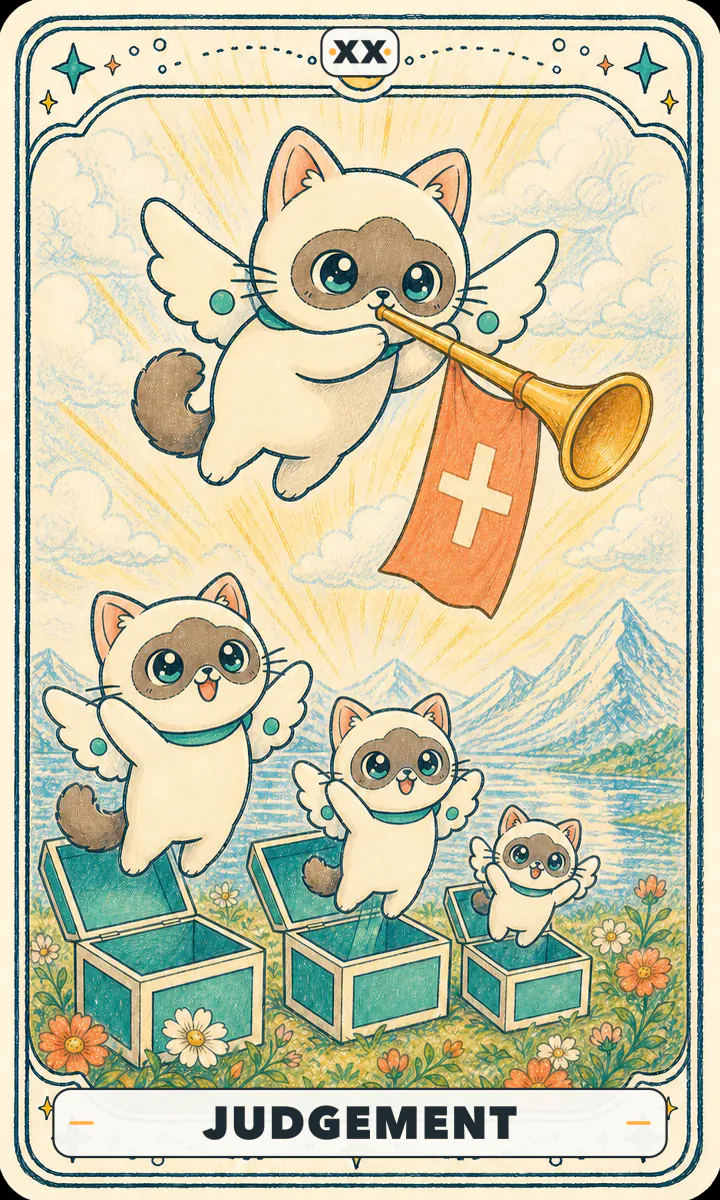
Imagen de la carta
Un gran ángel toca una trompeta desde las nubes, con una cruz roja adherida a ella. Abajo, en el suelo, figuras grises (hombres, mujeres y niños) se levantan de ataúdes abiertos, con los brazos extendidos hacia el ángel.
Significado al derecho
Despertar, un llamado, renacimiento, ajuste de cuentas kármico. Simboliza escuchar la convocatoria interior, revisar el pasado, tomar una decisión trascendental y renacer.
Significado invertido
Dudas, rechazo de la llamada, incapacidad para seguir adelante, arrepentimiento. Puede indicar que se pasa por alto una oportunidad de cambiar o se ahoga en errores del pasado sin liberación.
Amor, carrera, dinero y crecimiento
Amor
En el amor, juicio señala a La convocatoria final del alma. Vuelve a leerlo teniendo en cuenta cómo se comporta realmente la relación y lo que ambos están eligiendo.
Carrera
En cuestiones profesionales, juicio apunta a La convocatoria final del alma. Empiece por determinar qué recursos controla y cuál será su próximo paso.
Dinero
En cuestiones de dinero, juicio apunta a La convocatoria final del alma. No trates una lectura simbólica como una conclusión de inversión; guíate por los hechos, el presupuesto y tu propia tolerancia al riesgo.
Crecimiento personal
Para el crecimiento personal, juicio apunta a La convocatoria final del alma. Escribe la pregunta que plantea y luego conviértela en una acción que realmente puedas comprobar.
Lo que siente la otra persona
Cuando juicio indica lo que siente la otra persona, el tema de su actitud hacia ti es: La convocatoria final del alma. Al derecho, ese sentimiento se muestra hacia fuera; invertida, por ahora se queda dentro. No la tomes como un veredicto: contrástala con cómo actúa realmente.
Sí o no
Al derecho
Sí
Invertida
No
Esta es nuestra propia lectura rápida, basada en la dirección en la que se inclina el significado de la carta. Las tradiciones no están de acuerdo con respecto a las cartas individuales, y un "Quizás" debe sopesarse con la posición en la distribución y su situación real en lugar de tomarse como una respuesta de una sola palabra.
Texto original de Waite (1911)
Simbolismo interior (original)
He dicho que este símbolo es en esencia invariable en todas las barajas de Tarot, o que al menos las variantes no alteran su carácter. El gran ángel está aquí rodeado de nubes, pero toca su trompeta con estandarte, y en el estandarte aparece, como de costumbre, la cruz. Los muertos se levantan de sus tumbas: una mujer a la derecha, un hombre a la izquierda y, entre ellos, su hijo, que está de espaldas. Pero en esta carta son más de tres los restaurados, y se ha juzgado que valía la pena introducir esta variante para ilustrar la insuficiencia de las explicaciones corrientes. Ha de notarse que todas las figuras son como una sola en el asombro, la adoración y el éxtasis que expresan sus actitudes. Es la carta que registra la consumación de la gran obra de transformación en respuesta a la llamada de lo Supremo, llamada que se oye y se responde desde dentro.
Aquí se insinúa un significado que no puede llevarse mucho más lejos en el presente lugar. ¿Qué es eso que hay dentro de nosotros que toca una trompeta, y todo lo que es inferior en nuestra naturaleza se levanta en respuesta, casi en un momento, casi en un abrir y cerrar de ojos? Que la carta siga representando, para quienes no pueden ver más allá, el Juicio Final y la resurrección en el cuerpo natural; pero que quienes tienen ojos interiores miren y descubran con ellos. Entenderán que con razón se la llamó en el pasado carta de la vida eterna, y que por eso puede compararse con la que lleva el nombre de Templanza.
Significado original del derecho
Cambio de posición, renovación, desenlace. Otra versión especifica la pérdida total por un pleito.
Significado original invertido
Debilidad, pusilanimidad, simpleza; también deliberación, decisión, sentencia.
Citado de A. E. Waite, The Pictorial Key to the Tarot (1911), ilustrado por Pamela Colman Smith. El texto es de dominio público.
Orígenes de mitos y símbolos
Un ángel que toca la trompeta, los muertos que se levantan: la fuente es el Juicio Final cristiano, y Waite traslada incluso las palabras de Pablo.
Imaginería documentada
Atestiguada por objetos o textos conservados
Es la composición estándar del Juicio Final
El título que le da Waite es EL JUICIO FINAL. Un ángel que toca la trompeta, una cruz en el estandarte, los muertos que se levantan de sus tumbas: una de las escenas más comunes en las fachadas y pinturas murales de las iglesias medievales. La base textual es Mateo 24:31, donde los ángeles tocan la trompeta y reúnen a los elegidos, y 1 Tesalonicenses 4:16, con su trompeta y su resurrección. La imagen de esta carta procede de la escatología cristiana. No hay un segundo candidato.
Fuente Mateo 24:31, 1 Tesalonicenses 4:16; la tradición iconográfica medieval del Juicio Final
Correspondencia esotérica
Una afirmación tradicional con fuente, pero construida dentro de un sistema ocultista
«En un abrir y cerrar de ojos» es una expresión del propio Pablo
Waite pregunta en esta entrada qué es lo que en nuestro interior toca la trompeta, de modo que toda la naturaleza inferior se alza en respuesta, «casi en un momento, casi en un abrir y cerrar de ojos». «En un abrir y cerrar de ojos» procede de 1 Corintios 15:52, en el pasaje sobre el sonido de la última trompeta y la resurrección de los muertos. Traslada la expresión para releer el Juicio Final exterior como una llamada que surge desde dentro.
Fuente 1 Corintios 15:52; Waite, The Pictorial Key to the Tarot, 1911, El Juicio Final
El elemento fuego y la letra Shin
La Golden Dawn asigna al Juicio el elemento fuego y la letra hebrea Shin. Al igual que el Tonto (aire) y el Hombre Ahorcado (agua), recibe una de las tres letras elementales en lugar de un planeta o un signo. La forma de la Shin se describe a menudo como tres lenguas de fuego, lo que concuerda con la fuerza que convoca la trompeta.
Fuente Atribuciones de las letras elementales en el Libro T de la Golden Dawn
Lectura moderna
Popular solo desde el siglo XX; sin relación con el origen de la carta
La «llamada de atención» y el ajuste de cuentas kármico: vocabulario moderno
Hoy la carta se lee habitualmente como la llamada de atención del alma, o como un ajuste de cuentas kármico final. La primera no está, de hecho, lejos de la idea de Waite de que la llamada se oye y se responde desde dentro; simplemente cambia el vocabulario. La segunda sigue siendo el marco kármico que solo existe después de la Teosofía, y no es lo mismo que el contexto cristiano del Juicio Final. En esta carta alguien toca la trompeta fuera y alguien responde dentro; reducir ambas cosas a «el universo está saldando tus cuentas» la empobrece.
Fuente Lectura popular moderna; el marco kármico no es una fuente de la imaginería de esta carta
Escrito por BESTAROT, no citado de fuentes históricas. Cada afirmación se etiqueta según su grado de evidencia; Las capas interpretativas modernas son útiles para la lectura, pero no representan el origen histórico de la carta.
Estudie el tema: Orígenes de mitos y símbolos (capítulo 6 de la Academia)