El mundo
The World
Finalización, Cumplimiento
Respuesta rápida
El significado principal de El mundo es El final perfecto del viaje.. Del derecho, suele apuntar a Cumplimiento, finalización, integración, viaje. Simboliza el cierre perfecto de; invertida, puede sugerir Inconclusión, estancamiento, falta de cierre, arrepentimiento. Puede indicar est.
Imagen de la carta
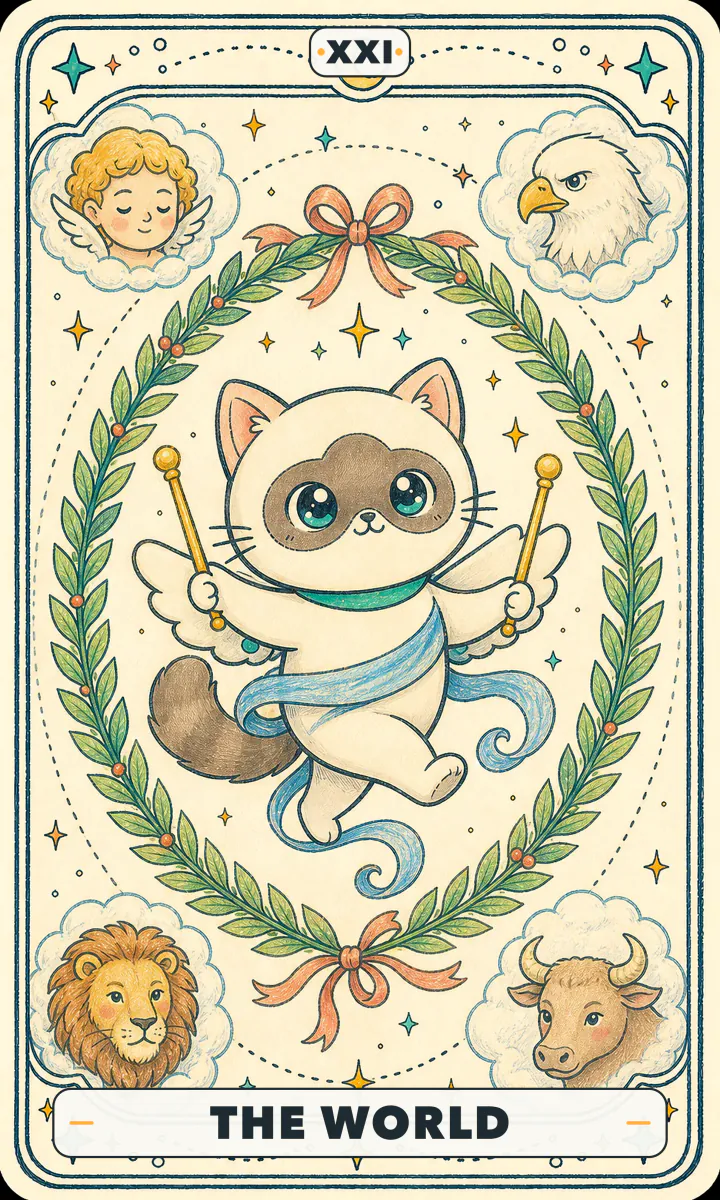
Una bailarina desnuda gira dentro de una gran corona de laurel verde, envuelta en una faja violeta y con una varita en cada mano. En las cuatro esquinas de la corona aparecen las cabezas de los cuatro seres vivientes: hombre, águila, león y toro.
Significado al derecho
Cumplimiento, finalización, integración, viaje. Simboliza el cierre perfecto de un viaje, la armonía de cuerpo, mente y espíritu, y un momento para disfrutar los frutos de tu trabajo.
Significado invertido
Inconclusión, estancamiento, falta de cierre, arrepentimiento. Puede indicar estar a sólo un paso del éxito, o un vacío interior que impide escribir el capítulo final.
Amor, carrera, dinero y crecimiento
Amor
En el amor, El mundo señala a El final perfecto del viaje.. Vuelve a leerlo teniendo en cuenta cómo se comporta realmente la relación y lo que ambos están eligiendo.
Carrera
En cuestiones profesionales, El mundo apunta a El final perfecto del viaje.. Empiece por determinar qué recursos controla y cuál será su próximo paso.
Dinero
En cuestiones de dinero, El mundo apunta a El final perfecto del viaje.. No trates una lectura simbólica como una conclusión de inversión; guíate por los hechos, el presupuesto y tu propia tolerancia al riesgo.
Crecimiento personal
Para el crecimiento personal, El mundo apunta a El final perfecto del viaje.. Escribe la pregunta que plantea y luego conviértela en una acción que realmente puedas comprobar.
Lo que siente la otra persona
Cuando El mundo indica lo que siente la otra persona, el tema de su actitud hacia ti es: El final perfecto del viaje.. Al derecho, ese sentimiento se muestra hacia fuera; invertida, por ahora se queda dentro. No la tomes como un veredicto: contrástala con cómo actúa realmente.
Sí o no
Al derecho
Sí
Invertida
Tal vez
Esta es nuestra propia lectura rápida, basada en la dirección en la que se inclina el significado de la carta. Las tradiciones no están de acuerdo con respecto a las cartas individuales, y un "Quizás" debe sopesarse con la posición en la distribución y su situación real en lugar de tomarse como una respuesta de una sola palabra.
Texto original de Waite (1911)
Simbolismo interior (original)
Como este mensaje final de los Triunfos Mayores no ha cambiado, y de hecho es inmutable, en cuanto a su diseño, ya se ha descrito en parte en lo que toca a su sentido más hondo. Representa también la perfección y el fin del Cosmos, el secreto que hay en él, el arrobamiento del universo cuando se comprende a sí mismo en Dios (la Naturaleza). Es además el estado del alma en la conciencia de la Visión Divina, reflejada desde el espíritu que se conoce a sí mismo. Pero estos significados no perjudican a lo que he dicho de ella en el lado material.
Tiene más de un mensaje en el lado macrocósmico y es, por ejemplo, el estado del mundo restaurado cuando la ley de la manifestación haya sido llevada al grado más alto de perfección natural. Pero quizá sea más en particular una historia del pasado, que remite a aquel día en que todo fue declarado bueno, cuando las estrellas del alba cantaban juntas y todos los Hijos de Dios (la Naturaleza) gritaban de alegría. Una de las peores explicaciones al respecto es que la figura simboliza al Mago (Magus) cuando ha alcanzado el más alto grado de iniciación; otra versión dice que representa lo absoluto, lo cual es ridículo. Se ha dicho que la figura representa la Verdad, que, sin embargo, corresponde con más propiedad a la carta diecisiete. Por último, se la ha llamado la Corona de los Magos.
Significado original del derecho
Éxito asegurado, recompensa, viaje por mar, ruta, emigración, huida, cambio de lugar.
Significado original invertido
Inercia, fijeza, estancamiento, permanencia.
Citado de A. E. Waite, The Pictorial Key to the Tarot (1911), ilustrado por Pamela Colman Smith. El texto es de dominio público.
Orígenes de mitos y símbolos
Los seres vivientes de las esquinas son la misma visión de Ezequiel que en la Rueda de la Fortuna, y el anillo central es una corona de victoria clásica.
Imaginería documentada
Atestiguada por objetos o textos conservados
De nuevo los cuatro seres vivientes, en las esquinas
El hombre, el águila, el buey y el león de las cuatro esquinas son el mismo conjunto que en las esquinas de la Rueda de la Fortuna: los cuatro seres vivientes de Ezequiel 1:10, retomados en Apocalipsis 4:7 y fijados después como emblemas de los cuatro evangelistas. La guirnalda elíptica que rodea a la bailarina del centro es una corona de laurel, la corona que en el mundo clásico se otorgaba a los vencedores y a quienes celebraban un triunfo. Una visión hebrea y una corona triunfal romana usadas juntas en una misma carta es, de nuevo, algo del todo normal en la imaginería renacentista.
Fuente Ezequiel 1:10, Apocalipsis 4:7; la corona de laurel como corona clásica de la victoria
Correspondencia esotérica
Una afirmación tradicional con fuente, pero construida dentro de un sistema ocultista
Lo que cita Waite es Job
Waite llama a la carta «la perfección y el fin del Cosmos», y dice que es «quizá más especialmente una historia del pasado, que se refiere a aquel día en que todo fue declarado bueno, cuando las estrellas del alba cantaban juntas y todos los Hijos de Dios (la Naturaleza) gritaban de júbilo»: Job 38:7. En la misma entrada descarta además dos lecturas: que la figura central signifique al Mago en el grado más alto de iniciación es «una de las peores explicaciones», y que signifique lo Absoluto es «ridículo».
Fuente Job 38:7; Waite, The Pictorial Key to the Tarot, 1911, El Mundo
Saturno, la letra Tav y los cuatro signos fijos
La Golden Dawn asigna al Mundo el planeta Saturno (letra hebrea Tav, la última del alfabeto). Saturno es el equivalente romano del Cronos griego, dios de los límites y los finales, lo que encaja con naturalidad en la última carta. Dentro del mismo sistema, los seres de las esquinas se leen también como los cuatro signos fijos: Leo, Tauro, Escorpio (con el águila como su emblema superior) y Acuario. Esa capa es un añadido del sistema; no altera el hecho de que son ante todo los cuatro seres vivientes de Ezequiel.
Fuente Atribución planetaria del Libro T de la Golden Dawn y los cuatro signos fijos
Lectura moderna
Popular solo desde el siglo XX; sin relación con el origen de la carta
El hermafrodita y «completar un ciclo»
La bailarina del centro se lee a menudo como el hermafrodita alquímico, el Rebis, símbolo de la unión final de los opuestos, y con la misma frecuencia como «un ciclo terminado, listo para el siguiente». La primera es una lectura cruzada que importa imaginería alquímica; el texto de Waite no lo dice. La segunda depende del marco narrativo moderno del Viaje del Tonto: el orden de los triunfos es en sí mismo una secuencia triunfal, no un círculo que pueda volver a empezar.
Fuente Lectura popular moderna; el Rebis es imaginería alquímica, no aquello a lo que remite el texto de esta carta
Escrito por BESTAROT, no citado de fuentes históricas. Cada afirmación se etiqueta según su grado de evidencia; Las capas interpretativas modernas son útiles para la lectura, pero no representan el origen histórico de la carta.
Estudie el tema: Orígenes de mitos y símbolos (capítulo 6 de la Academia)