la emperatriz
The Empress
Abundancia, Maternidad
Respuesta rápida
El significado principal de la emperatriz es La generosidad y el cuidado de la naturaleza. Del derecho, suele apuntar a Abundancia, maternidad, creatividad, naturaleza, placer sensual. Simboliza rique; invertida, puede sugerir Dependencia, creatividad bloqueada, problemas domésticos, extravagancia. Puede i.
Imagen de la carta
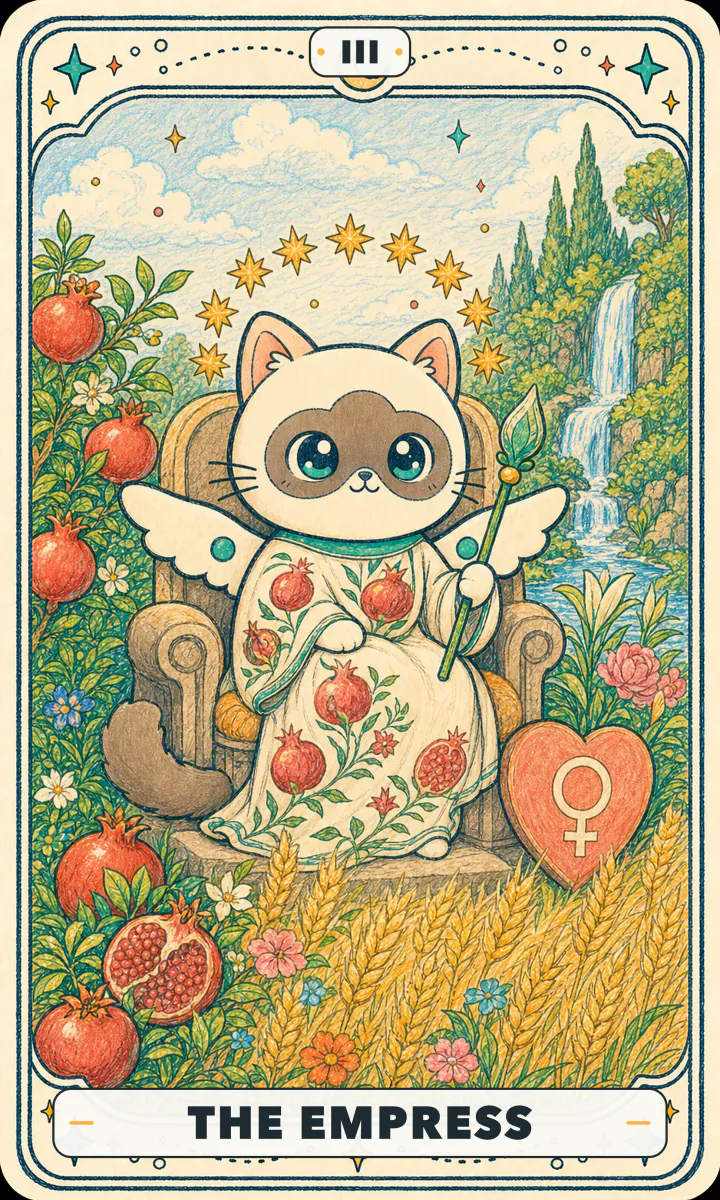
Una mujer de figura completa sentada en un trono rodeada de naturaleza, vestida con un vestido blanco estampado con granadas. Delante de ella hay un campo de trigo y detrás una cascada. Lleva una corona de doce estrellas, sostiene un cetro y a sus pies descansa un escudo en forma de corazón con el símbolo de Venus.
Significado al derecho
Abundancia, maternidad, creatividad, naturaleza, placer sensual. Simboliza riqueza material y emocional, momento propicio para alimentar nuevos planes o saborear la vida.
Significado invertido
Dependencia, creatividad bloqueada, problemas domésticos, extravagancia. Puede indicar cuidados sofocantes, falta de crecimiento o escasez material.
Amor, carrera, dinero y crecimiento
Amor
En el amor, la emperatriz señala a La generosidad y el cuidado de la naturaleza. Vuelve a leerlo teniendo en cuenta cómo se comporta realmente la relación y lo que ambos están eligiendo.
Carrera
En cuestiones profesionales, la emperatriz apunta a La generosidad y el cuidado de la naturaleza. Empiece por determinar qué recursos controla y cuál será su próximo paso.
Dinero
En cuestiones de dinero, la emperatriz apunta a La generosidad y el cuidado de la naturaleza. No trates una lectura simbólica como una conclusión de inversión; guíate por los hechos, el presupuesto y tu propia tolerancia al riesgo.
Crecimiento personal
Para el crecimiento personal, la emperatriz apunta a La generosidad y el cuidado de la naturaleza. Escribe la pregunta que plantea y luego conviértela en una acción que realmente puedas comprobar.
Lo que siente la otra persona
Cuando la emperatriz indica lo que siente la otra persona, el tema de su actitud hacia ti es: La generosidad y el cuidado de la naturaleza. Al derecho, ese sentimiento se muestra hacia fuera; invertida, por ahora se queda dentro. No la tomes como un veredicto: contrástala con cómo actúa realmente.
Sí o no
Al derecho
Sí
Invertida
No
Esta es nuestra propia lectura rápida, basada en la dirección en la que se inclina el significado de la carta. Las tradiciones no están de acuerdo con respecto a las cartas individuales, y un "Quizás" debe sopesarse con la posición en la distribución y su situación real en lugar de tomarse como una respuesta de una sola palabra.
Texto original de Waite (1911)
Simbolismo interior (original)
Una figura majestuosa, sentada, de ricas vestiduras y porte regio, como una hija del cielo y de la tierra. Su diadema es de doce estrellas, reunidas en un racimo. El símbolo de Venus está en el escudo que descansa a su lado. Ante ella madura un campo de trigo y, más allá, cae una cascada. El cetro que lleva está coronado por el globo de este mundo. Es el Jardín del Edén inferior, el Paraíso Terrenal, todo lo que simboliza la casa visible del hombre. No es la Regina coeli, pero sí es el refugium peccatorum, la madre fecunda de millares. Hay también ciertos aspectos en los que se la ha descrito con acierto como el deseo y sus alas, como la mujer vestida de sol, como la Gloria Mundi y el velo del Sanctum Sanctorum; pero no es, puedo añadir, el alma que ha alcanzado alas, a menos que todo el simbolismo se cuente de otra manera, poco habitual. Es, por encima de todo, la fecundidad universal y el sentido exterior de la Palabra. Esto es evidente, porque no se ha dado al hombre ningún mensaje directo como el que porta la mujer; pero ella misma no lleva su interpretación.
En otro orden de ideas, la carta de la Emperatriz significa la puerta o portal por el que se obtiene la entrada en esta vida, como en el Jardín de Venus; y luego el camino que sale de allí hacia lo que está más allá es el secreto que conoce la Suma Sacerdotisa: ella lo comunica a los elegidos. La mayoría de las antiguas atribuciones de esta carta son del todo erróneas en cuanto al simbolismo, como, por ejemplo, su identificación con la Palabra, la Naturaleza Divina, la Tríada y otras semejantes.
Significado original del derecho
Fecundidad, acción, iniciativa, larga vida; lo desconocido, lo clandestino; también dificultad, duda, ignorancia.
Significado original invertido
Luz, verdad, el desenredo de asuntos complicados, regocijos públicos; según otra lectura, vacilación.
Citado de A. E. Waite, The Pictorial Key to the Tarot (1911), ilustrado por Pamela Colman Smith. El texto es de dominio público.
Orígenes de mitos y símbolos
El escudo lleva el signo de Venus, pero la corona de doce estrellas es iconografía mariana, y Waite trazó deliberadamente una línea al respecto.
Imaginería documentada
Atestiguada por objetos o textos conservados
Ella y el Emperador forman una pareja de soberanos seculares
En las primeras barajas esta carta es L'Imperatrice, la Emperatriz, emparejada con L'Imperatore, el Emperador, y representa el más alto cargo terrenal. Leída junto con la pareja de la Papisa y el Papa, la cabeza del cortejo triunfal consiste en dos juegos simétricos de cargos: el eclesiástico y el secular, cada uno con un hombre y una mujer. Es un diagrama del orden social renacentista, no un panteón.
Fuente Los nombres de las cartas y la estructura de la secuencia de triunfos en el tarot italiano temprano
Correspondencia esotérica
Una afirmación tradicional con fuente, pero construida dentro de un sistema ocultista
El escudo de Venus y el jardín de Venus
Waite afirma que el escudo que tiene al lado lleva la divisa de Venus, y describe la entrada en esta vida a través de esta carta como una entrada «como en el Jardín de Venus». La Venus del panteón romano corresponde a la Afrodita griega. La atribución de la Golden Dawn también es Venus (letra hebrea Dálet). El campo de grano maduro que tiene delante y el agua que corre detrás son imágenes de fertilidad añadidas por Waite.
Fuente Waite, The Pictorial Key to the Tarot, 1911, La Emperatriz; atribuciones planetarias del Libro T de la Golden Dawn
La corona de doce estrellas procede del Apocalipsis, y Waite trazó una línea
Lleva una corona de doce estrellas, y Waite usa además la expresión «la mujer vestida de sol», tomada de Apocalipsis 12:1, una de las fórmulas más fijas de las imágenes de la Virgen. Llega incluso a tomar prestados dos títulos de la letanía mariana: Regina coeli, reina del cielo, y refugium peccatorum, refugio de los pecadores. Y justo después escribe: «No es la Regina coeli». Es la segunda vez que coloca en una carta la iconografía de una tradición y luego rechaza la identidad que la acompaña, exactamente lo que hace con Isis en la entrada de la Suma Sacerdotisa.
Fuente Apocalipsis 12:1; Waite, The Pictorial Key to the Tarot, 1911, La Emperatriz
Lectura moderna
Popular solo desde el siglo XX; sin relación con el origen de la carta
Deméter y la madre tierra: una yuxtaposición moderna
Como en la carta hay grano, a menudo se la lee como Deméter, la diosa griega del cereal, o como una madre tierra genérica. El campo de grano está ahí de verdad, pero el marco que da Waite es el Jardín del Edén inferior, el paraíso terrenal, más la iconografía mariana, no el mito agrícola griego. Relacionarla con la madre de Perséfone da pie a un discurso muy fluido. Ese discurso lo pusieron en circulación los materiales didácticos modernos.
Fuente Lectura popular moderna; el mito de Deméter está en el Himno homérico a Deméter
Escrito por BESTAROT, no citado de fuentes históricas. Cada afirmación se etiqueta según su grado de evidencia; Las capas interpretativas modernas son útiles para la lectura, pero no representan el origen histórico de la carta.
Estudie el tema: Orígenes de mitos y símbolos (capítulo 6 de la Academia)