El tonto
The Fool
Nuevos comienzos, aventura
Respuesta rápida
El significado principal de El tonto es Emprender un viaje desconocido. Del derecho, suele apuntar a Nuevos comienzos, inocencia, espontaneidad, espíritu libre. Simboliza emprender; invertida, puede sugerir Imprudencia, aventura imprudente, malas decisiones, vacilaciones. Puede indicar.
Imagen de la carta
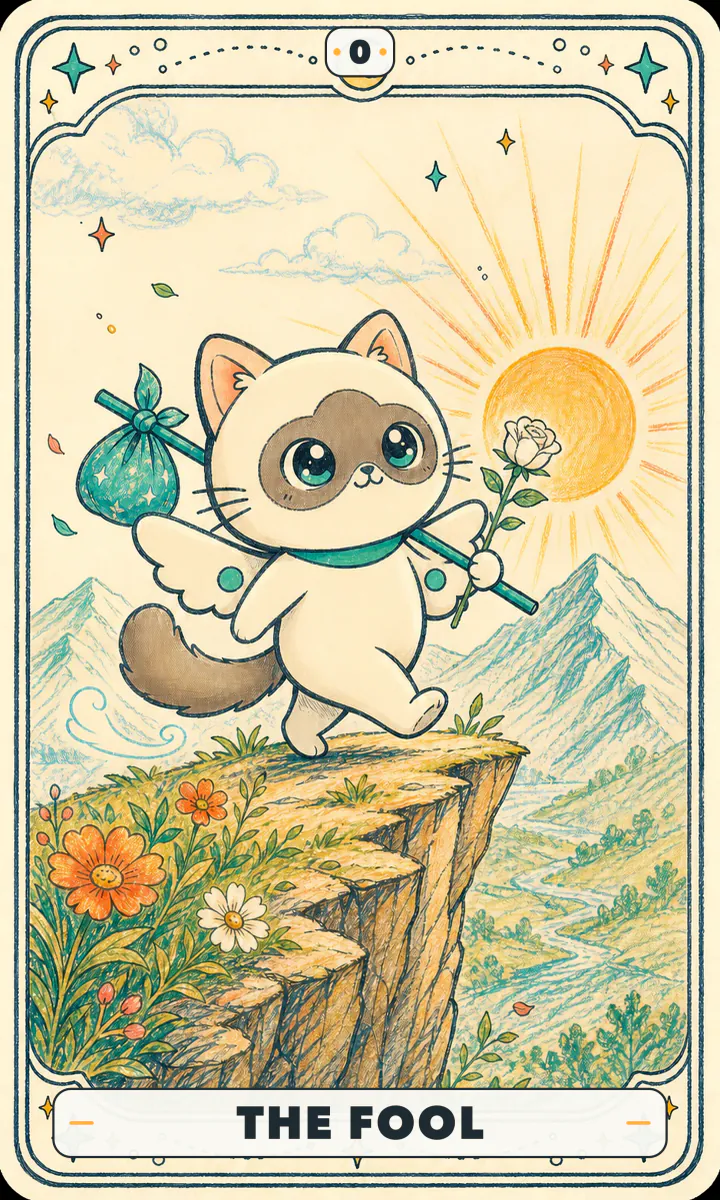
Un joven viajero vestido con ropas coloridas se encuentra al borde de un acantilado, mirando al cielo, mientras un pequeño perro blanco salta alegremente a sus pies. Sostiene una rosa blanca (pureza) en su mano izquierda y lleva una pequeña mochila (experiencia) sobre su hombro derecho. Detrás de él se extiende la dorada luz del sol y las montañas cubiertas de nieve.
Significado al derecho
Nuevos comienzos, inocencia, espontaneidad, espíritu libre. Simboliza emprender un viaje desconocido, lleno de potencial pero no exento de riesgos.
Significado invertido
Imprudencia, aventura imprudente, malas decisiones, vacilaciones. Puede indicar un caos causado por una falta de planificación o por tener demasiado miedo para dar el primer paso.
Amor, carrera, dinero y crecimiento
Amor
En el amor, El tonto señala a Emprender un viaje desconocido. Vuelve a leerlo teniendo en cuenta cómo se comporta realmente la relación y lo que ambos están eligiendo.
Carrera
En cuestiones profesionales, El tonto apunta a Emprender un viaje desconocido. Empiece por determinar qué recursos controla y cuál será su próximo paso.
Dinero
En cuestiones de dinero, El tonto apunta a Emprender un viaje desconocido. No trates una lectura simbólica como una conclusión de inversión; guíate por los hechos, el presupuesto y tu propia tolerancia al riesgo.
Crecimiento personal
Para el crecimiento personal, El tonto apunta a Emprender un viaje desconocido. Escribe la pregunta que plantea y luego conviértela en una acción que realmente puedas comprobar.
Lo que siente la otra persona
Cuando El tonto indica lo que siente la otra persona, el tema de su actitud hacia ti es: Emprender un viaje desconocido. Al derecho, ese sentimiento se muestra hacia fuera; invertida, por ahora se queda dentro. No la tomes como un veredicto: contrástala con cómo actúa realmente.
Sí o no
Al derecho
Sí
Invertida
No
Esta es nuestra propia lectura rápida, basada en la dirección en la que se inclina el significado de la carta. Las tradiciones no están de acuerdo con respecto a las cartas individuales, y un "Quizás" debe sopesarse con la posición en la distribución y su situación real en lugar de tomarse como una respuesta de una sola palabra.
Texto original de Waite (1911)
Simbolismo interior (original)
Con paso ligero, como si la tierra y sus trabas tuvieran poco poder para retenerlo, un joven de vestiduras suntuosas se detiene al borde de un precipicio entre las grandes alturas del mundo; contempla la lejanía azul que tiene delante, la extensión del cielo más que el paisaje de abajo. Todavía se adivina su andar impaciente, aunque en ese instante está inmóvil; su perro sigue dando saltos. El borde que se abre sobre el abismo no le infunde terror; es como si unos ángeles esperasen para sostenerlo, si llegara a saltar desde la altura. Su semblante está lleno de inteligencia y de un sueño expectante. Lleva una rosa en una mano y en la otra una vara preciosa, de la que cuelga sobre su hombro derecho un zurrón curiosamente bordado. Es un príncipe del otro mundo de viaje por este, todo ello en medio de la gloria de la mañana, en el aire vivo. El sol, que brilla a sus espaldas, sabe de dónde viene, adónde va y cómo regresará por otro camino al cabo de muchos días. Es el espíritu en busca de experiencia. En esta carta se resumen muchos símbolos de los Misterios Instituidos, y ella invierte, con altas garantías, todas las confusiones que la han precedido.
En su Manual of Cartomancy, Grand Orient hace una curiosa sugerencia sobre el oficio del Loco Místico, como parte de su procedimiento de adivinación superior; pero ponerla en práctica podría exigir dotes más que ordinarias. Veremos qué suerte corre la carta según las artes comunes de la buenaventura, y será un ejemplo, para quien sepa discernir, del hecho, por lo demás tan evidente, de que los Triunfos Mayores no tenían en su origen lugar alguno en las artes del juego psíquico, cuando las cartas se usan como fichas y pretextos. De las circunstancias en que surgió este arte sabemos, sin embargo, muy poco. Las explicaciones convencionales dicen que el Loco significa la carne, la vida sensitiva, y por una sátira peculiar su nombre secundario fue en otro tiempo el alquimista, como representación de la locura en su grado más insensato.
Significado original del derecho
Locura, manía, extravagancia, embriaguez, delirio, frenesí, delación.
Significado original invertido
Negligencia, ausencia, dispersión, descuido, apatía, nulidad, vanidad.
Citado de A. E. Waite, The Pictorial Key to the Tarot (1911), ilustrado por Pamela Colman Smith. El texto es de dominio público.
Orígenes de mitos y símbolos
En las barajas más antiguas es el loco, alguien que queda por completo fuera de la secuencia. El Viaje del Tonto es una lectura del siglo XX.
Imaginería documentada
Atestiguada por objetos o textos conservados
Empezó siendo la carta de excepción de un juego de naipes
En las primeras barajas italianas esta carta es Il Matto, el loco. No lleva número ni forma parte del cortejo triunfal: los demás triunfos son figuras triunfales ordenadas por precedencia, mientras que el Tonto es la excepción escrita en las reglas del juego, que ni gana una baza ni puede ser capturada. La figura desciende del bufón de la corte medieval y de la Fiesta de los Locos: un día al año en que al loco se le permite invertir las jerarquías. Esa idea de estar fuera del orden se acerca más al origen de esta carta que cualquier mito.
Fuente El nombre italiano temprano Il Matto y su condición de carta sin número; la Fiesta de los Locos medieval y la iconografía del bufón
Correspondencia esotérica
Una afirmación tradicional con fuente, pero construida dentro de un sistema ocultista
El príncipe de otro mundo en que Waite lo convirtió
Waite redibujó al loco como un joven ricamente vestido al borde de un precipicio, y escribió que es «un príncipe del otro mundo que viaja por este», «el espíritu en busca de experiencia»; el abismo a sus pies no le causa temor, «es como si los ángeles esperaran para sostenerlo». Pasar de loco callejero a príncipe de otro mundo fue obra de los círculos ocultistas de finales del siglo XIX, que reinterpretaron toda la baraja. No es lo que la carta significaba en su origen.
Fuente Waite, The Pictorial Key to the Tarot, 1911, El Tonto (compárese con el original en el panel de fuentes de esta página)
El elemento aire y la letra Aleph
La Golden Dawn asigna al Tonto el elemento aire y la letra hebrea Aleph. Al igual que el Hombre Ahorcado (agua) y el Juicio (fuego), recibe una de las tres letras elementales en lugar de un planeta o un signo. De ahí viene su tono de ligereza, de lo aún no fijado, de lo que todavía no ha tocado tierra.
Fuente Atribuciones de las letras elementales en el Libro T de la Golden Dawn
Lectura moderna
Popular solo desde el siglo XX; sin relación con el origen de la carta
El Viaje del Tonto es un recurso didáctico moderno
Leer los veintidós triunfos como el crecimiento del Tonto del 0 al 21 es una invención del siglo XX, que adquirió su forma definitiva sobre todo con los libros divulgativos de Eden Gray hacia 1970; solo más tarde alguien lo injertó en el viaje del héroe de Campbell. Las imágenes triunfales del Renacimiento son un cortejo de vencedores ordenados por precedencia, no una línea narrativa, y el Tonto es justamente la única carta de ese cortejo que no tiene rango. El marco resulta muy útil para enseñar. Aun así, se añadió a posteriori.
Fuente Lectura popular moderna; el Viaje del Tonto se difundió con los libros de tarot de Eden Gray (años sesenta y setenta); el marco del viaje del héroe procede de Joseph Campbell, The Hero with a Thousand Faces, 1949
Escrito por BESTAROT, no citado de fuentes históricas. Cada afirmación se etiqueta según su grado de evidencia; Las capas interpretativas modernas son útiles para la lectura, pero no representan el origen histórico de la carta.
Estudie el tema: Orígenes de mitos y símbolos (capítulo 6 de la Academia)