
From "Memorizing Meanings" to "Forgetting Meanings"

When we first start learning Tarot, we all walk a similar path: memorizing card meanings, studying spreads, and looking up keywords. Everyone longs to be the master who can interpret cards instantly and predict with precision. However, when you truly reach the final stages of learning, you'll find that the first things you must let go of are the very tools you once relied on most.
The true destination of Tarot is a state of "conscious ignorance." You no longer need to consciously remember that "the Ten of Wands represents pressure"; instead, the moment you see the card, your body naturally feels a heavy sense of tension. You no longer mechanically apply spread structures; instead, following the flow of energy, you intuitively combine the most suitable interpretation for the moment.
It’s like learning a musical instrument: a beginner must stare at the sheet music and practice fingerings relentlessly, but a master feels only the music flowing, the instrument itself having seemingly vanished. At the end of the Tarot journey, you are not just using the cards—you are breathing with them.
From "Predicting the Future" to "Creating the Present"

Many people begin learning Tarot with the intention of "foretelling the future." But once you deeply internalize this wisdom, you discover a core truth: Tarot is not meant to prophesy an unchangeable fate, but to help you see the energetic direction of your current choices.
Eventually, you will deeply resonate with the phrase: "Every card is the best reminder for the present moment." You will stop asking, "Will I marry that person?" and instead explore, "If I choose to continue this relationship, what lessons do I need to focus on? If I choose to leave, what fears do I need to let go of?"
At this point, you are no longer seeking "security" from the Tarot; instead, you are using it to cultivate the courage to face uncertainty. You become the protagonist of your own life, rather than a passive recipient of fate.
From "Reading Others" to "Inner Reflection"

In the middle stages, many Tarot readers become passionate about reading for others, enjoying the sense of achievement that comes from being needed and recognized. But by the end, you realize that the greatest value of Tarot is always the mirror it holds up to yourself.
You may have already experienced this: some cards, once flipped, pierce directly through to your inner pain, making it impossible to avoid; other cards remind you of talents you’ve long ignored. When you stop using Tarot as an escape and start using it to face your inner shadows and light, you have truly graduated.
The End: No Masters, Only Lifelong Learners
Finally, a true Tarot master will tell you: this discipline can never be fully mastered. Every card reveals a completely different face at different stages of life. When you become humble through understanding, free through application, and filled with love through service, you have reached the "destination"—which is actually the starting point of a much vaster world.
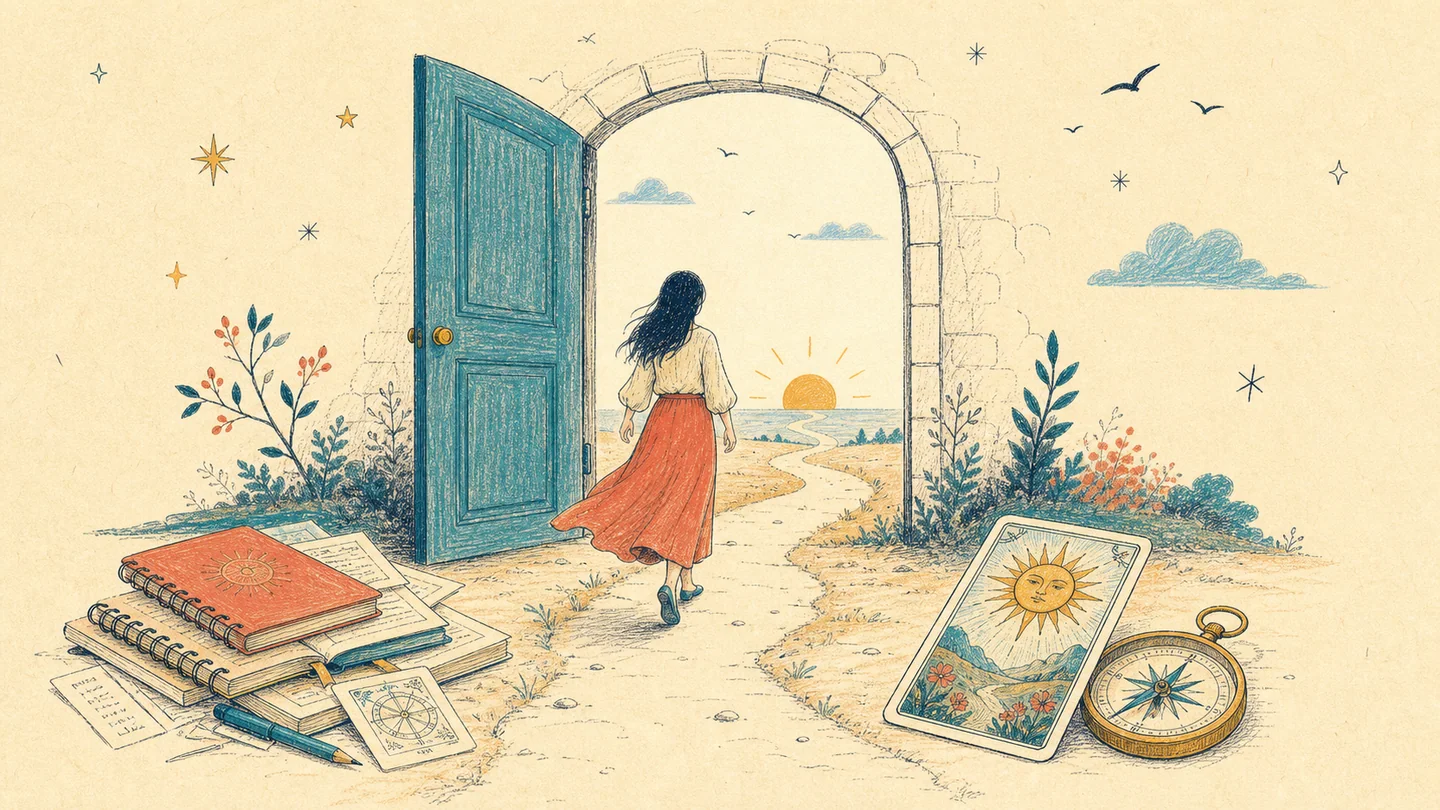
In this moment, you will realize that Tarot is not the door to the answer, but the path that keeps you clear-minded. You no longer obsess over whether a divination result was "right" or "wrong," but instead enjoy the present moment of connecting with the universe every time you shuffle the cards.
This is what the final stage of learning Tarot looks like: a composure bordering on Zen, a perspective that sees through the surface of life, and a gentle yet firm inner strength. You no longer need the Tarot to tell you what to do, because you are already in dialogue with your Higher Self.
If you feel lost on your journey of learning Tarot, remember: that seemingly distant "end" is actually hidden in every moment you sincerely face yourself. Keep going, and you will meet a version of yourself that is more transparent and free.